
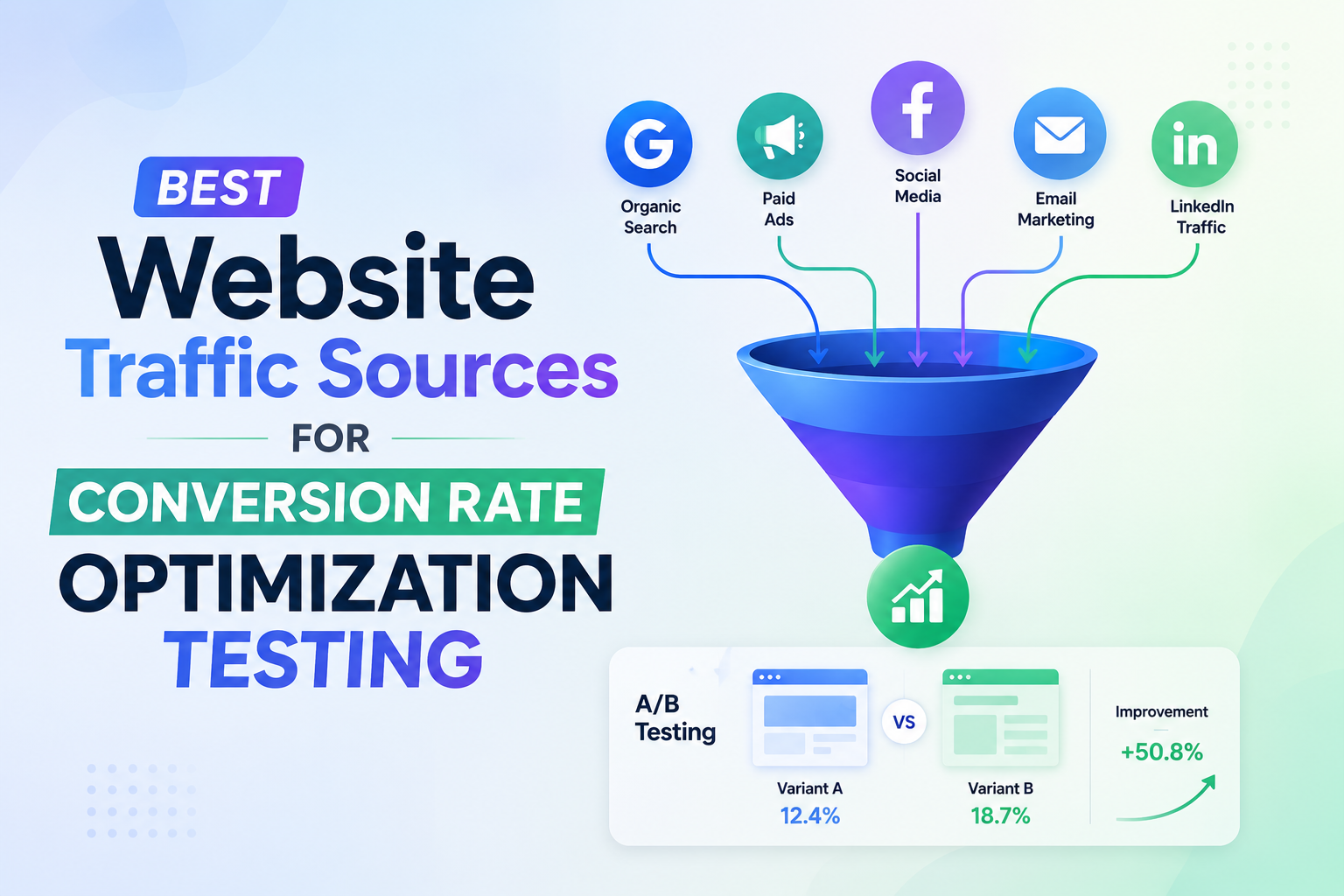
Did you know that nearly 70% of digital marketing budgets are wasted on visitors who never intend to buy? You might have a flawless landing page, but if your audience is wrong, your results will suffer. High-quality engagement starts long before a user clicks your link.
Selecting the best website traffic sources is the most critical step in your strategy. When you align your incoming visitors with your specific goals, you gain reliable data that drives real growth. Without this alignment, your efforts to improve performance will likely fall flat.
Understanding how different channels impact your bottom line is essential for long-term success. By focusing on intent-driven website traffic sources, you create a solid foundation for your next Conversion Rate Optimization Testing project. Precision in your outreach ensures that every experiment provides actionable insights for your business.
Key Takeaways
- Quality traffic is more valuable than high volume for accurate results.
- Aligning your audience with your offer is essential for success.
- Data integrity depends on the source of your visitors.
- Strategic channel selection reduces wasted marketing spend.
- Targeted outreach improves the reliability of your experiments.
Turn Better Traffic Into More Conversions
Your optimization efforts are only as strong as the visitors you attract. Discover how intent-driven traffic can improve test accuracy, uncover actionable insights, and increase revenue without increasing ad spend.
The Strategic Importance of Traffic Quality in Conversion Rate Optimization Testing
High-quality traffic acts as the foundation for every successful Conversion Rate Optimization Testing strategy. When you run experiments, you rely on user behavior to guide your design and copy decisions. If your visitors are not genuinely interested in your offer, their actions will not reflect the needs of your actual customer base.
Low-intent traffic introduces significant noise into your data sets. This interference often obscures genuine patterns, making it difficult to distinguish between a failed design and a disinterested visitor. Without clean data, your conversion rate optimization testing conclusions may lead you down the wrong path.
To ensure your results remain reliable, you must align your traffic acquisition strategy with your specific business goals. You should prioritize sources that bring users who are ready to engage with your brand during conversion rate optimization testing. Consider these key indicators of high-quality traffic:
- High engagement rates on landing pages.
- Clear alignment between ad messaging and site content.
- Consistent behavior patterns across different device types.
- A strong history of previous brand interactions.
When you focus on Conversion Rate Optimization Testing with a refined audience, you gain clearer insights into what truly drives action. By filtering out irrelevant visitors, you protect the integrity of your experiments. This proactive approach saves time and ensures that your optimization efforts produce measurable, long-term growth for your business.
Ultimately, the validity of your Conversion Rate Optimization Testing is only as good as the people visiting your site. By vetting your sources, you transform raw data into actionable intelligence that helps you scale effectively.
Evaluating Organic Search Traffic for A/B Testing Reliability
Organic search traffic offers a natural environment for gathering authentic user data. When you utilize this channel for Conversion Rate Optimization Testing, you tap into a pool of visitors who are actively seeking solutions to specific problems. This inherent motivation often leads to more reliable outcomes during your conversion rate optimization testing and A/B testing cycles.
Why Search Intent Matters for Conversion Consistency
Understanding the “why” behind a user’s click is essential for maintaining consistent results. If your landing page does not align with the specific query that brought the user there, your A/B testing data will likely suffer from high bounce rates and skewed metrics.
To ensure high-quality data, consider the following factors when mapping intent to your pages:
- Informational Intent: Users looking for answers or guides.
- Transactional Intent: Users ready to make a purchase or sign up.
- Navigational Intent: Users searching for a specific brand or site.
By segmenting your traffic based on these categories, you can refine your Conversion Rate Optimization Testing to target the right audience. This alignment ensures that your variations are tested against users who are genuinely interested in your specific value proposition.
Managing Seasonality and Algorithm Fluctuations
Organic traffic is rarely static, as it is subject to the ebb and flow of seasonal trends and search engine updates. These external variables can introduce noise into your data, making it difficult to determine if a change in conversion rate is due to your test or an outside factor.
The following table outlines how to handle common external disruptions during your testing periods:
| Variable | Impact on Testing | Mitigation Strategy |
|---|---|---|
| Seasonal Spikes | High volatility | Compare year-over-year data |
| Algorithm Updates | Traffic volume shifts | Pause tests during major rollouts |
| Competitor Activity | Conversion rate dips | Monitor market share trends |
Consistency is the ultimate goal when running conversion rate optimization testing experiments. By acknowledging these fluctuations, you can adjust your testing schedule to avoid periods of high instability. This proactive approach protects the integrity of your results and ensures that your optimization efforts remain data-driven and reliable.
Leveraging Paid Search Campaigns for Rapid Data Collection
When you need high-velocity data, paid search stands out as a premier choice among traffic sources for website optimization. Unlike organic methods that rely on search engine algorithms, paid campaigns grant you total control over your testing environment. This allows you to gather statistically significant conversion rate optimization testing results in a fraction of the time.
Stop Guessing. Start Testing With Qualified Traffic.
Running A/B tests on the wrong audience leads to misleading results and wasted marketing budgets. Our experts help you identify the highest-converting traffic sources, build reliable testing frameworks, and accelerate growth with data you can trust.
Controlling Variables with Targeted Keyword Bidding
Precision is the hallmark of effective experimentation. By utilizing targeted keyword bidding, you can isolate specific audience segments that align with your testing goals. This strategy ensures that your conversion rate optimization testing experiments are only exposed to users who demonstrate high intent.
You can adjust your bids to prioritize specific demographics or geographic locations. This level of granularity prevents noise from skewing your data. When you control the entry point, you gain a clearer understanding of how specific variables influence user behavior.
Using Google Ads for Immediate Landing Page Feedback
Google Ads provides the instant gratification required for rapid iteration. As soon as your campaign goes live, you begin receiving traffic that allows you to test new designs or messaging variations immediately. This immediate feedback loop is essential for teams that need to pivot quickly based on real-world performance.
The following table highlights why paid search is often superior for controlled testing environments compared to other common channels.
| Feature | Paid Search | Organic Search |
|---|---|---|
| Data Velocity | High (Immediate) | Low (Delayed) |
| Audience Control | High (Granular) | Low (Broad) |
| Cost Predictability | High (Budget-based) | Low (Variable) |
| Testing Stability | High (Consistent) | Low (Fluctuating) |
By integrating these traffic sources for website testing, you ensure that your conversion rate optimization testing efforts remain data-driven and efficient. You no longer have to wait for search engine rankings to stabilize before you can validate your hypotheses. This proactive approach keeps your conversion rates moving in the right direction.
Social Media Advertising as a Source for Demographic-Specific Testing
You can transform your testing strategy by utilizing the granular targeting capabilities of modern social networks. These platforms serve as highly effective traffic sources for website and conversion rate optimization testing experiments, allowing you to isolate specific user personas with ease. By controlling exactly who sees your variations, you ensure that your data reflects the behavior of your most valuable prospects.
“The secret to successful optimization is not just the volume of visitors, but the relevance of the audience you bring to your digital doorstep.”
Segmenting Audiences on Meta Platforms
Meta provides an expansive suite of tools that allow you to drill down into specific demographic profiles. You can filter users based on interests, job titles, and even recent purchasing behaviors to create a highly conversion rate optimization testing environment. This level of precision ensures that your traffic sources for website analysis remains focused on the segments that matter most to your business goals.
When you run A/B tests through these channels, you eliminate the noise often found in broader traffic streams. You gain the ability to see how specific age groups or interest-based cohorts interact with your landing page elements. This clarity is essential for making data-driven decisions that improve your overall conversion rates.
Testing Creative Variations with LinkedIn Sponsored Content
For B2B brands, LinkedIn offers a unique opportunity to reach professionals in specific industries or roles. You can deploy sponsored content to test how different value propositions resonate with decision-makers. By rotating creative assets, you quickly identify which messaging styles drive the highest engagement and conversion intent.
This approach allows you to refine your brand voice while simultaneously gathering actionable performance data. Because LinkedIn users are often in a professional mindset, the traffic you generate is frequently higher in intent than general social media visitors. Integrating these traffic sources for website testing protocols will ultimately lead to a more robust and reliable optimization strategy.
Email Marketing Traffic and Its Role in Retention-Based Optimization
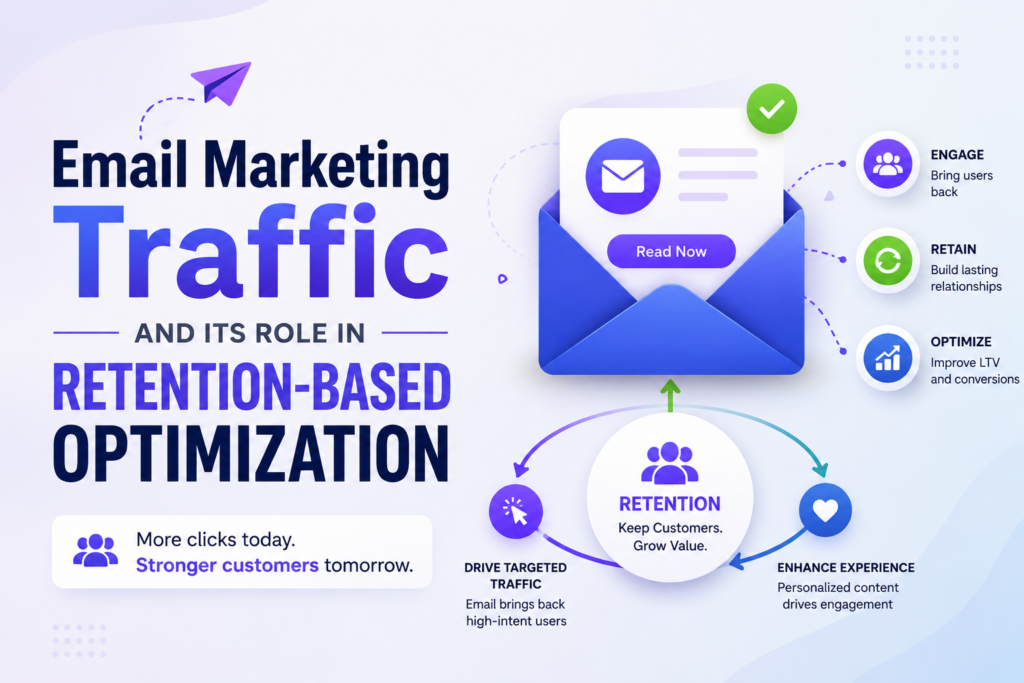
Your email list acts as a goldmine for testing because these users are already familiar with your value proposition. Unlike cold traffic, subscribers have already established a relationship with your brand, making them ideal candidates for retention-based optimization. By directing this warm audience to specific landing pages, you can gather high-quality conversion rate optimization testing data that reflects the behavior of your most loyal customers.
Analyzing Subscriber Behavior in Multivariate Testing
When you have a consistent flow of traffic from your newsletters, you can move beyond simple A/B testing to more complex experiments. Multivariate testing allows you to change multiple elements on a page simultaneously to see how they interact. This approach is particularly powerful when you want to understand how specific design changes influence repeat purchase behavior.
By segmenting your email list, you can send different groups to different variations of a page. This granular level of control ensures that your results are not just statistically significant, but also highly relevant to your long-term business goals. You will find that observing how subscribers interact with these variations provides deeper insights into their purchasing journey.
The Impact of Personalization on Conversion Metrics
Personalization is the secret weapon for improving your conversion metrics. When you tailor the landing page experience to match the content of the email, you create a seamless transition that builds trust. This consistency often leads to higher engagement rates and a more personalized path to checkout.
You should consider using subscriber data to dynamically update headlines, product recommendations, or even imagery on your landing pages. This level of customization makes your A/B testing efforts more effective by addressing the specific needs of individual users. Ultimately, multivariate testing combined with personalization helps you refine your strategy to maximize the lifetime value of every subscriber.
Referral Traffic and the Value of High-Intent Visitors
When you look for the best website traffic sources, referral links often stand out for their exceptional visitor quality. Unlike broad search traffic, referral visitors arrive with a pre-existing level of trust because they come from a source they already respect. This context makes them ideal candidates for your conversion rate optimization tests.
Identifying Quality Backlink Sources for Testing
To ensure your data remains reliable, you must carefully vet where your referral traffic originates. Not all backlinks are created equal, and some may introduce noise that skews your results. Focus on sources that share a genuine alignment with your brand values and target audience demographics.
Consider these criteria when evaluating potential referral partners:
- Audience Overlap: Does the referring site reach the same customer profile you are targeting?
- Content Relevance: Is the referring article or page contextually related to your landing page?
- Historical Engagement: Does the source have a track record of sending users who actually interact with content?
Assessing the Conversion Potential of Niche Industry Blogs
Niche industry blogs act as powerful testing grounds because they house highly specialized audiences. These readers are often deep in the research phase of their buying journey, making them prime targets for conversion experiments. You can use these platforms to validate your conversion rate optimization testing hypotheses with users who possess high purchase intent.
Use the following table to evaluate if a niche blog is a suitable conversion rate optimization testing environment for your specific goals:
| Metric | High Potential | Low Potential |
|---|---|---|
| Audience Size | Moderate/Targeted | Massive/Generic |
| Engagement Rate | High Comments/Shares | Low Interaction |
| Content Depth | Technical/Expert | Surface-level/Clickbait |
By prioritizing these high-intent channels, you refine your conversion rate optimization testing strategy and move closer to finding the best website traffic sources for your business. Always monitor how these specific segments behave compared to your baseline traffic to ensure your optimization efforts yield actionable insights.
Direct Traffic and the Challenge of User Behavior Analysis
When users type your URL directly into their browser, they bring a distinct set of expectations that differ from other website traffic sources. This segment often represents a blend of your most loyal customers and curious newcomers who heard about you through offline channels. Because this traffic lacks a clear referral path, interpreting their intent requires a more sophisticated analytical framework.
Distinguishing Returning Visitors from New Prospects
To gain actionable insights, you must first segment your direct traffic based on historical interaction data. Returning visitors typically exhibit predictable patterns, such as navigating straight to a login page or a specific product category. In contrast, new prospects arriving directly may be responding to a television ad, a podcast mention, or a physical mailer.
You can use cookie-based tracking or user account status to separate these groups effectively. By isolating these cohorts, you ensure that your conversion rate optimization testing data remains clean and free from the noise of mixed user motivations. This level of precision is vital when evaluating various website traffic sources to determine which segments respond best to your site changes.
Optimizing for Brand-Aware Audiences
Users who arrive directly often possess a higher level of brand awareness and trust than those coming from cold search results. Because these individuals already recognize your company, you can afford to be more direct with your value proposition. Personalization becomes a powerful tool here, as you can tailor landing pages to reflect their previous engagement history.
Consider conversion rate optimization testing simplified navigation paths or exclusive offers that reward their loyalty. When you optimize for these brand-aware users, you capitalize on the existing relationship to drive higher conversion rates. Ultimately, treating direct traffic as a unique category among your website traffic sources allows you to craft a more relevant and rewarding experience for your most valuable visitors.
The Role of Affiliate Traffic in Conversion Rate Analysis
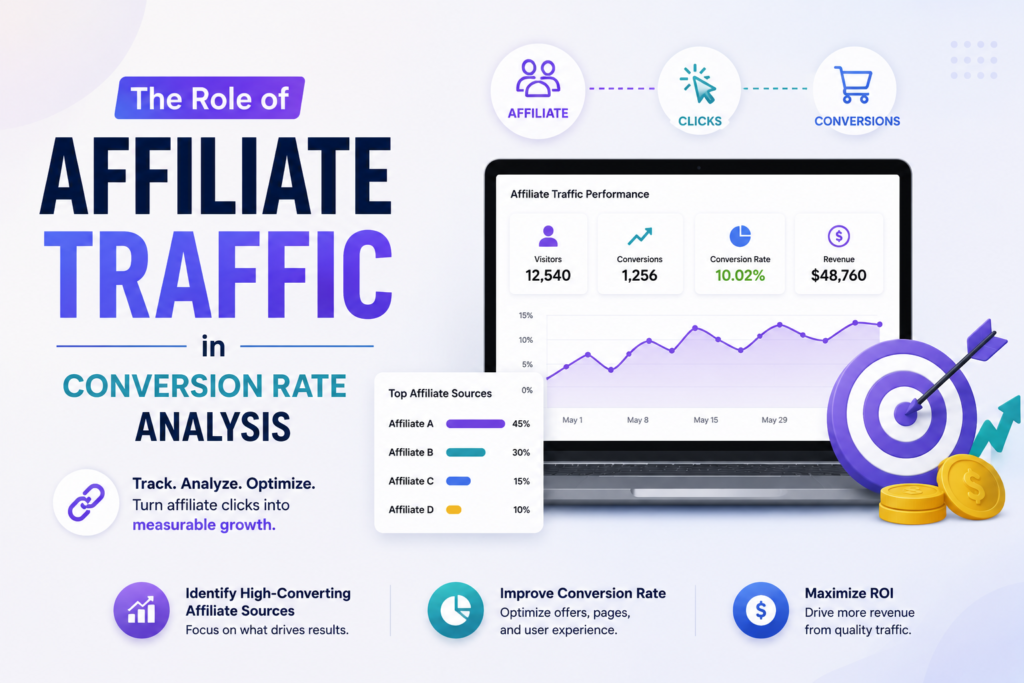
Many marketers overlook the potential of affiliate channels when conducting rigorous conversion rate optimization tests. While often viewed as a pure sales driver, these partnerships represent some of the best website traffic sources for gathering diverse user data. Integrating this channel into your conversion rate analysis allows you to see how external audiences interact with your brand before they reach your checkout page.
Ensuring Traffic Quality from Partner Networks
You must actively monitor your affiliate networks to prevent low-quality traffic from skewing your test results. Relying on automated traffic or click-farms can lead to misleading data that compromises your entire optimization strategy. Strict oversight is necessary to ensure that your partners deliver genuine, high-intent visitors for conversion rate optimization testing.
Implement robust tracking parameters to isolate affiliate performance from other channels. By filtering out suspicious referral patterns, you protect the validity of your A/B tests.
“Quality is not an act, it is a habit.”
This philosophy applies directly to how you curate your traffic sources for reliable testing.
Aligning Affiliate Messaging with On-Site Testing Goals
Consistency between your affiliate marketing materials and your landing pages is vital for success. If an affiliate promises a specific discount or feature that your landing page does not highlight, your conversion metrics will suffer. You must ensure that the value proposition remains uniform across every touchpoint.
Coordinate with your top-performing partners to align their promotional copy with your current testing objectives. When the messaging matches, you create a seamless journey that encourages users to complete the desired action. This alignment is a cornerstone of effective conversion rate analysis and helps you identify which offers truly resonate with your target audience.
Managing Traffic Volume Requirements for Statistical Significance
Statistical significance acts as the gatekeeper for your data-driven decisions. Without a clear understanding of the math behind your experiments, you risk making changes based on random noise rather than actual user behavior. Precision is the foundation of any successful conversion rate optimization testing strategy.
Calculating Sample Sizes for Reliable Results
To ensure your Conversion Rate Optimization Testing yields actionable insights, you must determine the required sample size before launching. If your sample is too small, your results will lack the power to detect true improvements. You should focus on these core variables when running your calculations:
- Baseline Conversion Rate: Your current performance metric.
- Minimum Detectable Effect: The smallest improvement you want to measure.
- Statistical Power: Usually set at 80% to avoid false negatives.
- Confidence Level: Typically set at 95% to ensure results are not due to chance.
Whether you are performing simple A/B testing or complex Multivariate testing, these parameters remain constant. Using an online calculator helps you estimate the time needed to reach these thresholds. Always remember that waiting for the full sample size is better than stopping a test early due to excitement.
Balancing Traffic Diversity with Data Accuracy
Maintaining a clean data set is difficult when your visitors arrive from various channels. While you want a diverse audience for your Conversion Rate Optimization Testing, you must ensure that traffic sources do not introduce bias. If one segment behaves differently, it can skew your overall results.
To maintain accuracy during A/B testing, consider segmenting your reports by source. This allows you to see if a winning variation performs consistently across different platforms. When conducting Multivariate testing, ensure that your traffic is distributed evenly across all combinations to prevent one source from dominating a specific variant.
Consistency is your best tool for reliable data. By monitoring your traffic quality alongside your volume requirements, you create a robust environment for testing. This disciplined approach ensures that every change you implement is backed by solid, verifiable evidence.
Common Pitfalls When Selecting Traffic Sources for Testing
Selecting the right audience is the foundation of successful Conversion Rate Optimization Testing. Many marketers rush into experiments without considering the origin of their visitors, which often leads to flawed conclusions. Understanding the nuances of various website traffic sources is essential to maintaining the integrity of your data.
Avoiding Skewed Data from Low-Quality Sources
Low-quality traffic often originates from click farms, bot networks, or poorly targeted display ads. These visitors rarely possess genuine intent, meaning they will not interact with your site in a meaningful way. When you include this noise in your tests, your conversion metrics become statistically unreliable.
“Data is a precious thing and will last longer than the systems themselves.”
To protect your results, you must filter out suspicious referral paths before launching a campaign. Always prioritize high-intent channels where users have demonstrated a clear interest in your brand. Relying on clean, verified data ensures that your optimization efforts lead to actual business growth rather than vanity metrics.
The Dangers of Mixing Traffic Types in Single Tests
A frequent mistake involves aggregating diverse traffic streams into one bucket during an experiment. Because different sources behave differently, mixing them creates uncontrolled variables that mask the true performance of your landing pages. For instance, organic search visitors often have a higher baseline trust than cold social media traffic.
If you combine these groups, you cannot determine which specific audience segment responded to your changes. This lack of clarity makes it impossible to iterate effectively on your design or copy. Instead, segment your tests by source to gain actionable insights that reflect the unique behavior of each visitor group.
| Traffic Source | Intent Level | Testing Reliability |
|---|---|---|
| Organic Search | High | Excellent |
| Paid Search | High | Very Good |
| Display Ads | Low | Poor |
By isolating your traffic, you maintain the statistical significance required for valid testing. Always remember that the quality of your input directly dictates the quality of your output. Focus on consistency to ensure your optimization strategy remains robust and effective.
Tools and Technologies for Tracking Traffic Source Performance
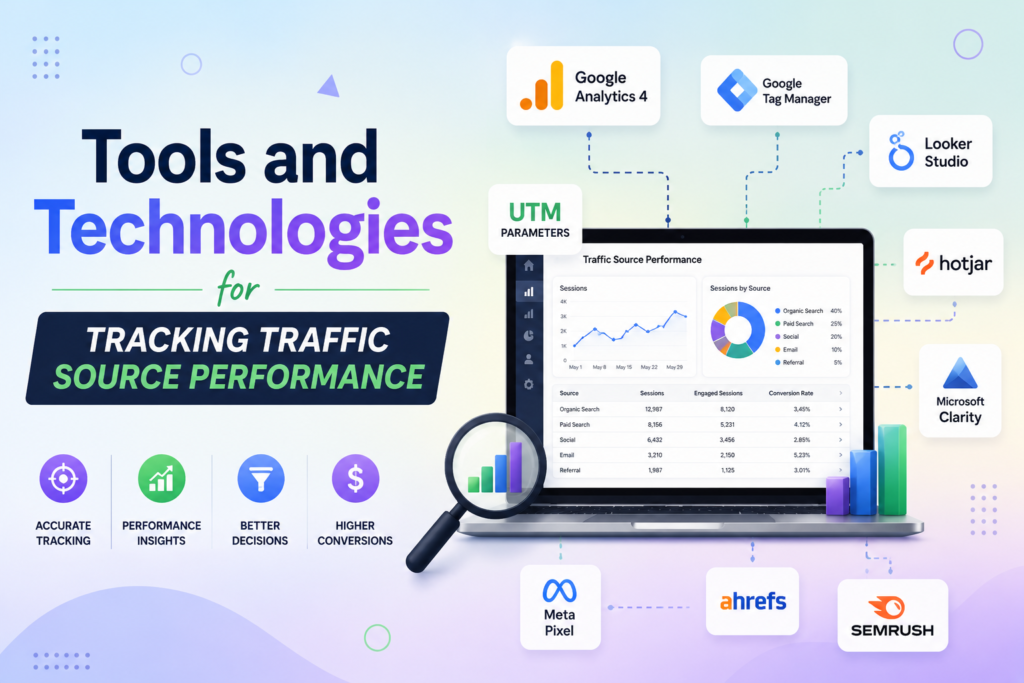
You need the right digital tools to accurately measure how different traffic sources for website visitors behave during your tests. Without a clear view of your data, you cannot determine which channels drive the most valuable conversions. Leveraging advanced technology ensures that your multivariate testing efforts remain grounded in reliable, actionable insights.
Integrating Google Analytics 4 with Testing Platforms
Connecting Google Analytics 4 (GA4) to your testing software is a critical step for data accuracy. This integration allows you to pass experiment IDs directly into your analytics dashboard. By doing so, you create a unified view of user behavior across every touchpoint.
When you align these platforms, you can easily segment your multivariate testing results by acquisition channel. This visibility helps you identify which traffic sources for website campaigns perform best under specific site variations. You will spend less time manually reconciling data and more time optimizing for growth.
Utilizing Heatmaps to Visualize Source-Specific Behavior
Heatmaps provide a visual representation of how users interact with your page elements. By filtering these maps by referral channel, you can see if visitors from social media engage differently than those from organic search. This granular level of analysis is essential for understanding user intent.
For instance, you might discover that paid search traffic prefers a direct call-to-action, while organic visitors explore your content more deeply. Using these insights, you can tailor your multivariate testing strategy to match the unique needs of each audience segment. Visualizing behavior in this way turns complex data into clear, actionable design improvements.
Ready to Maximize Every Visitor?
Whether you’re investing in organic search, paid ads, email marketing, or referral campaigns, the right traffic source can dramatically improve your conversion rates. Let our team help you build a traffic acquisition strategy that fuels smarter testing and sustainable growth.
Conclusion
Selecting the right traffic sources serves as the foundation for every successful optimization program. Your ability to gather clean, actionable data dictates the accuracy of your conversion rate analysis. When you prioritize high-quality visitors, you gain a clearer picture of how specific segments interact with your brand.
Reliable insights emerge when you align your conversion rate optimization testing goals with the intent of your audience. Platforms like Google Ads or Meta provide the precision needed to validate your hypotheses quickly. This disciplined approach transforms raw metrics into a roadmap for long-term revenue gains.
You now possess the framework to refine your digital strategy and improve user experiences across every channel. Consistent testing allows you to adapt to shifting market trends while maintaining a competitive edge. Apply these principles to your conversion rate analysis to ensure your website delivers measurable results for your business.
Start by auditing your current traffic streams to identify which sources offer the most value. Share your experiences with these testing methods to help others in the community improve their own digital performance. Your commitment to data-driven decisions will define the future success of your online presence.
FAQs
What are the best website traffic sources for conversion rate optimization testing?
The best website traffic sources for reliable testing are those with high intent, such as Google Ads and organic search. These traffic sources for website optimization provide a baseline of users who are actively seeking your services, making your a/b testing results much more accurate and actionable compared to low-intent social browsing.
Why is traffic quality crucial for accurate conversion rate analysis?
High-quality traffic reduces “noise” in your data. If you use low-intent website traffic sources, you may see high bounce rates that have nothing to do with your page design and everything to do with the user’s lack of interest. Ensuring quality during conversion rate optimization testing ensures that the changes you see in user behavior are a direct result of your experimental variables.
How does search intent affect the consistency of a/b testing?
Search intent dictates whether a visitor is ready to convert or simply gathering information. When conducting a/b testing on organic traffic, you must account for these different mindsets to ensure your results are consistent. Monitoring how Google algorithm updates or seasonal shifts change this intent is vital for maintaining the integrity of your conversion rate analysis.
Can I use Google Ads to speed up my conversion rate optimization testing?
Yes, Google Ads is an excellent tool for rapid data collection. Because you can control variables through targeted keyword bidding, you can drive high-intent traffic to specific landing pages immediately. This allows you to reach statistical significance in your a/b testing or multivariate testing much faster than waiting for organic traffic to accumulate.
How do Meta and LinkedIn help with demographic-specific testing?
A: Meta platforms (Facebook and Instagram) and LinkedIn allow you to segment audiences by precise demographics, interests, and job titles. This level of granularity is perfect for conversion rate optimization testing when you want to see how different personas respond to specific messaging or creative assets, such as LinkedIn Sponsored Content.
What role does email marketing play in multivariate testing?
Email marketing is a powerful source for retention-based multivariate testing because these users are already familiar with your brand. By analyzing how subscribers interact with your landing pages, you can use conversion rate analysis to refine personalization strategies that encourage repeat purchases and long-term loyalty.
How should I evaluate referral traffic from niche industry blogs?
You should treat referral traffic as a high-intent source if the backlink comes from a reputable, relevant site. Assessing the conversion potential of these traffic sources for website testing involves identifying which niche blogs align with your target audience’s pain points, ensuring the visitors they send are qualified for your a/b testing experiments.
How do I prevent direct traffic from skewing my testing data?
To keep your conversion rate optimization testing clean, you must segment direct traffic to distinguish between brand-aware returning visitors and new prospects. Returning users often behave differently than new ones; failing to separate them can lead to misleading results in your conversion rate analysis.
Is affiliate traffic reliable for conversion rate optimization testing?
Affiliate traffic can be useful, but you must ensure the messaging used by your partners aligns with your on-site goals. If an affiliate makes a promise that your landing page doesn’t keep, your a/b testing results will suffer. Monitoring partner networks is essential to maintain high-quality website traffic sources.
How do I calculate sample sizes to reach statistical significance?
Calculating the required sample size involves looking at your current conversion rate, the minimum detectable effect you want to see, and your desired confidence level (usually 95%). This ensures your conversion rate analysis is mathematically sound and that your a/b testing results are not the product of random chance.
What are the common pitfalls of mixing different traffic sources for website testing?
One of the biggest mistakes is mixing high-intent paid traffic with low-intent social traffic in a single test. This creates skewed data because the two groups have different motivations. For successful conversion rate optimization testing, it is better to run separate tests or use advanced segmentation to isolate each source.
How can I use Google Analytics 4 and heatmaps to track test performance?
Integrating Google Analytics 4 with testing platforms like Optimizely or VWO allows you to track how different traffic sources for website experiments perform in real-time. Complementing this data with heatmaps from Hotjar or Microsoft Clarity helps you visualize exactly where users from different sources are clicking or dropping off during your multivariate testing.