
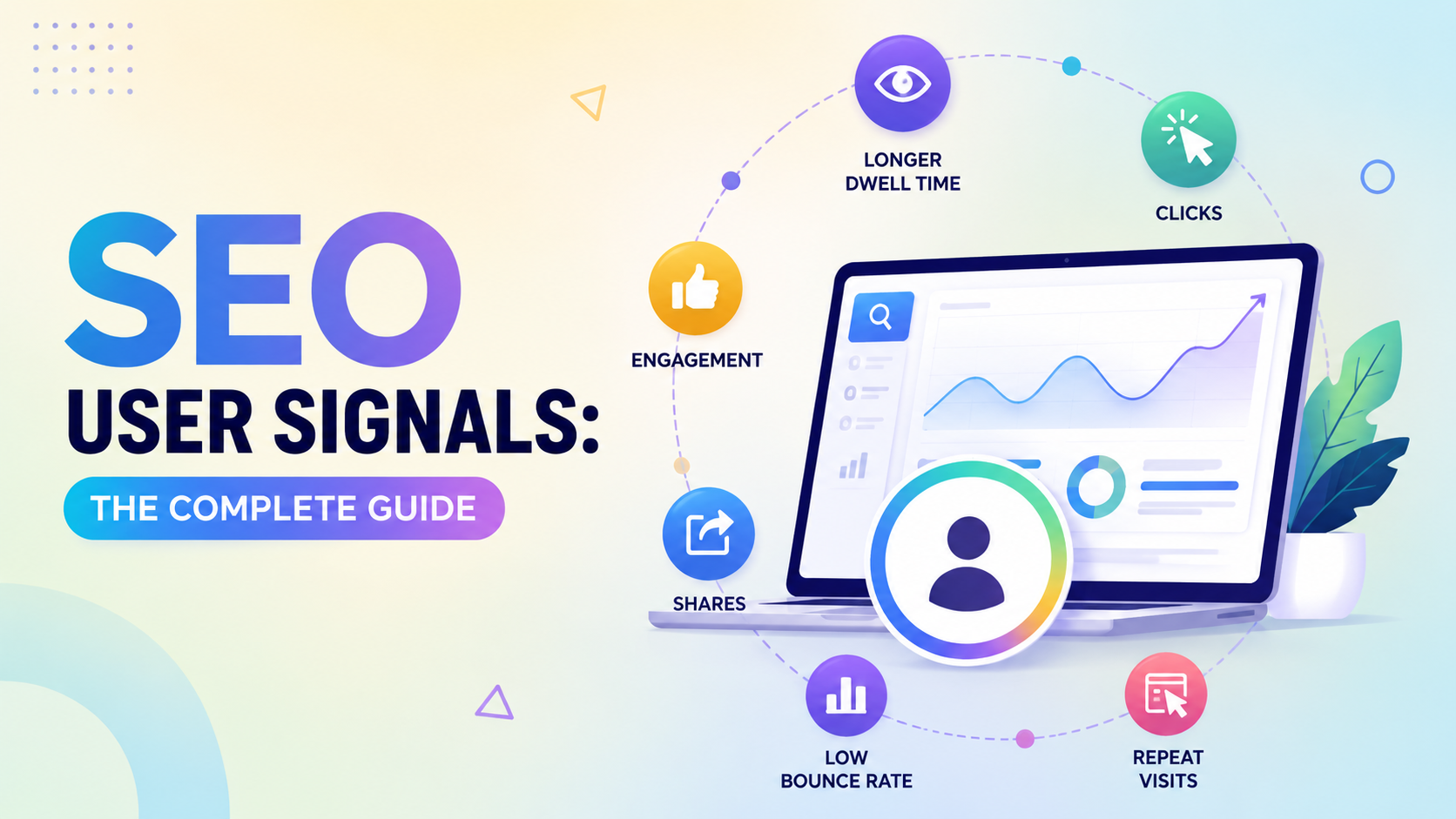
Have you ever wondered why a website with mediocre content sometimes outranks your perfectly optimized pages? The secret often lies in how visitors interact with your site. Search engines now prioritize behavioral data to determine the true value of your content.
These user signals act as a digital report card for your domain. When people spend time on your pages or click through your links, they send positive feedback to search algorithms. This process helps engines identify which resources provide the most relevant answers to common queries.
Mastering these metrics is essential for any modern SEO strategy. By focusing on how your audience engages with your site, you can align your growth with the expectations of major search engines. Understanding these user signals ensures your content remains competitive in an ever-changing digital landscape.
Key Takeaways
- Search engines use behavioral data to rank web pages effectively.
- High engagement levels indicate that your content meets visitor needs.
- Optimizing for human behavior is critical for long-term SEO success.
- Positive interactions signal quality to automated ranking systems.
- Aligning your site with visitor expectations improves overall search visibility.
Optimize for Real User Engagement
Create content that matches user intent, improves engagement, and encourages meaningful interactions. Strong user signals help search engines recognize your website as valuable and trustworthy.
What is the Role of User Signals in Modern SEO?
The digital landscape has shifted, placing the spotlight firmly on how real people interact with your online content. Search engines no longer rely solely on static data points to determine the value of a webpage. Instead, they prioritize user behavior as a primary indicator of quality and relevance.
Defining User Signals and Their Impact on Rankings
User signals are the data points that reflect how visitors engage with your site after they click through from a search result. These metrics provide a direct window into whether your content satisfies the intent of the searcher. When users spend significant time on your page or interact with your elements, search engines interpret this as a positive signal of authority.
Conversely, if visitors leave your site immediately, it suggests that your content failed to meet their needs. This user behavior directly influences your ability to maintain or improve your search rankings. By focusing on these signals, you align your strategy with the core goals of modern search technology.
The Evolution of Search Engine Algorithms and User Behavior
In the early days of the internet, search algorithms focused almost exclusively on keyword density and backlink counts. This approach was often manipulated by low-quality content that prioritized machines over humans. Today, the focus has transitioned toward dynamic, engagement-based metrics that reward genuine value.
Search engines now utilize advanced machine learning to interpret the nuances of user behavior across millions of queries. This evolution ensures that the most helpful and relevant sites rise to the top of the results page. The following table highlights the shift from traditional ranking factors to modern engagement metrics.
| Metric Category | Traditional SEO Focus | Modern SEO Focus |
|---|---|---|
| Primary Goal | Keyword Matching | User Satisfaction |
| Content Value | Word Count | Dwell Time |
| Navigation | Internal Links | Click-Through Rate |
| Success Indicator | Backlink Volume | Reduced Bounce Rate |
The Core Metrics That Define User Behavior
Search engines rely on a set of core user signals to determine if your content provides genuine value to visitors. By tracking these specific data points, you gain a clearer picture of how your audience interacts with your digital assets. Mastering these metrics allows you to make data-driven decisions that directly influence your visibility in search results.
Analyzing Click-Through Rate as a Primary Indicator
Your click-through rate is one of the most important user signals and serves as the first point of contact between your brand and a potential visitor. It measures the percentage of users who see your link in search results and decide to click on it. A high rate suggests that your meta titles and descriptions are highly relevant to the user’s search intent.
If your click-through rate remains low, it may indicate that your search snippets fail to capture attention or address the user’s needs effectively. You should treat this metric as a diagnostic tool to refine your messaging. When you align your titles with what users are actively searching for, you naturally increase your chances of attracting qualified traffic.
Interpreting Bounce Rate and Dwell Time
Once a user arrives on your site, their subsequent actions reveal the true quality of your landing page. The bounce rate tracks the percentage of visitors who leave your site after viewing only one page. A high bounce rate often signals that the content did not meet the user’s expectations or that the page design is difficult to navigate.
In contrast, dwell time is one of the strongest user signals and measures the duration a visitor spends on your page before returning to the search results. This metric is a powerful indicator of engagement and content depth. When users stay longer, it signals to search engines that your page provides a satisfying experience.
Balancing your bounce rate with meaningful dwell time is essential for long-term success. By focusing on creating high-quality, readable content, you encourage visitors to explore your site further. This strategy not only improves your behavioral signals but also builds lasting trust with your audience.
How Search Engines Interpret User Signals
Your website’s success depends on how well search engines decode the signals sent by your visitors. These user signals act as a digital feedback loop, telling platforms like Google whether your content truly satisfies a searcher’s needs. By analyzing how people interact with your pages, search engines can determine the quality and utility of your site.
The Relationship Between Engagement and Relevance
Search engines prioritize content that keeps users engaged because it suggests high relevance. When a visitor lands on your page and stays to read your content, it sends a positive message to the algorithm. This interaction confirms that your page provides the specific information the user sought.
High-quality content serves as the primary driver for these positive user signals and seo signals. To maintain strong engagement, focus on these key areas:
- Providing clear, direct answers to user queries.
- Using compelling headings to guide the reader.
- Ensuring your content matches the user’s search intent.
Machine Learning and the Role of RankBrain
Modern search engines rely on sophisticated machine learning systems to process vast amounts of data. RankBrain is a critical component of this process, acting as an AI layer that helps interpret complex search queries. It looks beyond simple keywords to understand the context and intent behind every search.
By analyzing how users interact with search results, RankBrain learns which pages provide the best experience. It continuously refines its understanding of user signals to ensure that the most helpful content ranks higher. This means your site’s performance is directly tied to the satisfaction of your audience, as the system constantly adapts to human behavior.
Ultimately, the goal of these systems is to bridge the gap between a query and a meaningful result. When you prioritize the user experience, you align your site with the core objectives of modern seo signals. This strategy creates a sustainable path toward better visibility and long-term growth.
Optimizing Your Click-Through Rate for Better Visibility
Your search results act as a digital storefront that determines whether users choose your site over the competition. When a potential visitor scans a list of results, they make a split-second decision based on what they see. Improving your click-through rate is the most effective way to turn those passive searchers into active visitors.
Crafting Compelling Meta Titles and Descriptions
Your meta title serves as the headline for your content, so it must be both descriptive and enticing. Keep your titles under 60 characters to ensure they appear fully in search results without being cut off. Include your primary keyword near the beginning to signal relevance immediately to the user.
The meta description acts as your sales pitch and influences user signals. Use this space to address the user’s intent and provide a clear reason to visit your page. A well-crafted description often includes a call to action, such as “Learn more” or “Discover our guide,” which can significantly boost your click-through rate.
Leveraging Schema Markup to Enhance Search Snippets
Standard search results often look plain, but you can change that by using schema markup. This code helps search engines understand your content better and display rich snippets, such as star ratings, product prices, or event dates. These visual enhancements make your listing stand out in a crowded marketplace.
By providing structured data, you give search engines the tools to present your information in a more engaging format. This extra visibility often leads to a higher click-through rate because users are naturally drawn to results that offer more context at a glance. Implementing these technical improvements ensures your content remains competitive and highly visible to your target audience.
Improving Dwell Time Through Content Quality
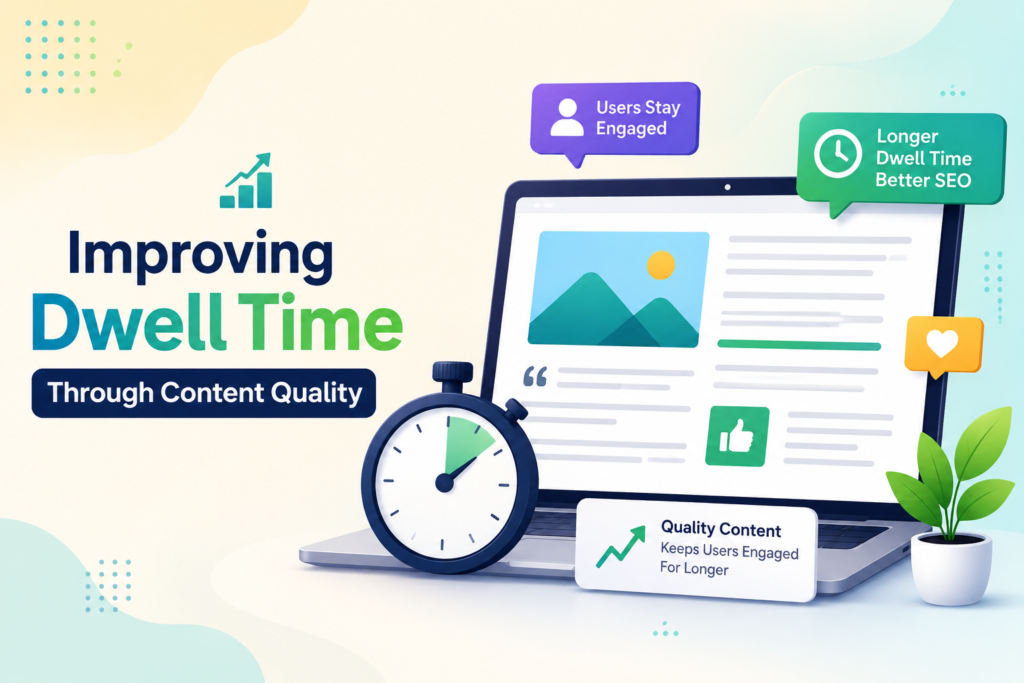
Transforming a casual visitor into an engaged reader requires a strategic approach to content creation that improves user signals. When your material provides genuine value, users naturally spend more time exploring your site. High-quality content is the foundation of a successful user experience, signaling to search engines that your page satisfies user intent.
Structuring Content for Readability and Engagement
The way you organize your text significantly impacts how long a visitor stays on your page. Large blocks of text often overwhelm readers, causing them to leave quickly. Instead, you should break your content into small, digestible paragraphs that are easy to scan.
Utilizing clear headings and subheadings helps guide the reader through your narrative. You can also use bulleted lists to highlight key points, which keeps the information organized and accessible. Clear structure ensures that your audience finds exactly what they need without feeling frustrated by dense walls of text.
The Importance of Multimedia and Interactive Elements
Text alone is rarely enough to keep a modern audience fully engaged for extended periods. By incorporating multimedia elements, you create a more immersive and dynamic experience for your visitors. High-quality images, infographics, and videos can effectively illustrate complex concepts that words might struggle to convey.
Interactive elements, such as quizzes, calculators, or embedded polls, invite users to participate rather than just observe. These tools encourage active engagement, which naturally increases the time spent on your domain. Strategic use of media keeps the user journey exciting and prevents the bounce behavior that often occurs with static, text-heavy pages.
Reducing Bounce Rates with Effective UX Design
Your website’s design serves as the digital handshake that determines whether a visitor stays or leaves immediately. When users encounter a cluttered or confusing layout, they are far more likely to exit, which negatively impacts your bounce rate. By prioritizing intuitive navigation and clean aesthetics, you create a welcoming environment that encourages deeper exploration of your content.
User Experience Drives Better Rankings
Enhance page speed, navigation, and mobile usability to keep visitors engaged. A seamless browsing experience reduces bounce rates and strengthens your website’s overall SEO performance.
Optimizing Page Load Speed for User Retention
Speed is a critical factor in modern web performance. Even a one-second delay in page loading can lead to a significant increase in user abandonment, as modern audiences expect near-instant access to information. If your site takes too long to render, visitors will likely return to search results, which signals to engines that your page failed to meet their needs.
To keep your bounce rate low, consider these technical improvements:
- Compress high-resolution images to reduce file sizes without sacrificing quality.
- Minimize the use of heavy scripts that block the initial rendering of your content.
- Utilize browser caching to ensure returning visitors experience faster load times.
Ensuring Mobile Responsiveness and Accessibility
A seamless experience across all devices is no longer optional; it is a requirement for success and stronger user signals. If your site is difficult to navigate on a smartphone, users will quickly lose interest and leave. Mobile responsiveness ensures that your layout adapts fluidly to any screen size, providing a consistent experience for every visitor.
Furthermore, accessibility is a vital component of effective design. By ensuring your site is usable for people with disabilities, you broaden your reach and improve overall usability for everyone. A site that is easy to read and navigate on mobile devices will naturally help you maintain a healthy bounce rate while signaling to search engines that your platform is user-friendly and inclusive.
The Impact of Pogo-Sticking on Your Search Rankings
The phenomenon known as pogo-sticking can silently erode your search engine rankings by sending negative user signals. This behavior occurs when a user clicks on your website from a search engine results page (SERP) but quickly returns to the results to try another link. Search engines interpret this action as a sign that your page failed to provide the value the user expected.
When this happens repeatedly, it signals to algorithms that your content might be irrelevant or misleading. Consequently, your site may lose its competitive position for specific queries. Minimizing this behavior is vital for long-term SEO success.
Identifying Why Users Return to Search Results
Users often return to search results because their immediate needs remain unmet. This usually happens when the meta title or description promises one thing, but the landing page delivers something entirely different. Alignment between user intent and content is the foundation of a positive experience.
Technical issues also play a significant role in driving users away. If your page takes too long to load or displays broken elements, visitors will likely leave before even reading your content. Furthermore, a cluttered design or intrusive pop-ups can frustrate users, forcing them to seek a cleaner, more accessible alternative.
“User experience is not just about how a site looks, but how it functions to solve the user’s problem efficiently.”
Strategies to Keep Users on Your Domain
To keep visitors engaged, you must ensure your content directly addresses the query that brought them to your site. Start by providing a clear, concise answer at the top of the page. This immediate gratification encourages users to stay and explore further.
Improving your internal navigation is another effective way to reduce pogo-sticking. By linking to related articles or providing a clear path to deeper information, you guide the user through a meaningful journey. The following table highlights the key differences between high-engagement pages and those prone to pogo-sticking.
| Feature | High-Engagement Page | Pogo-Sticking Page |
|---|---|---|
| Content Relevance | Matches search intent perfectly | Misleading or thin content |
| Loading Speed | Under 2 seconds | Over 5 seconds |
| Navigation | Intuitive and helpful | Confusing or absent |
| User Outcome | Problem solved | User returns to search |
Ultimately, your goal is to provide a seamless experience that satisfies the user’s curiosity. By focusing on high-quality content and a user-friendly interface, you demonstrate to search engines that your domain is a trusted authority for your target audience.
Analyzing User Signals with Google Analytics and Search Console
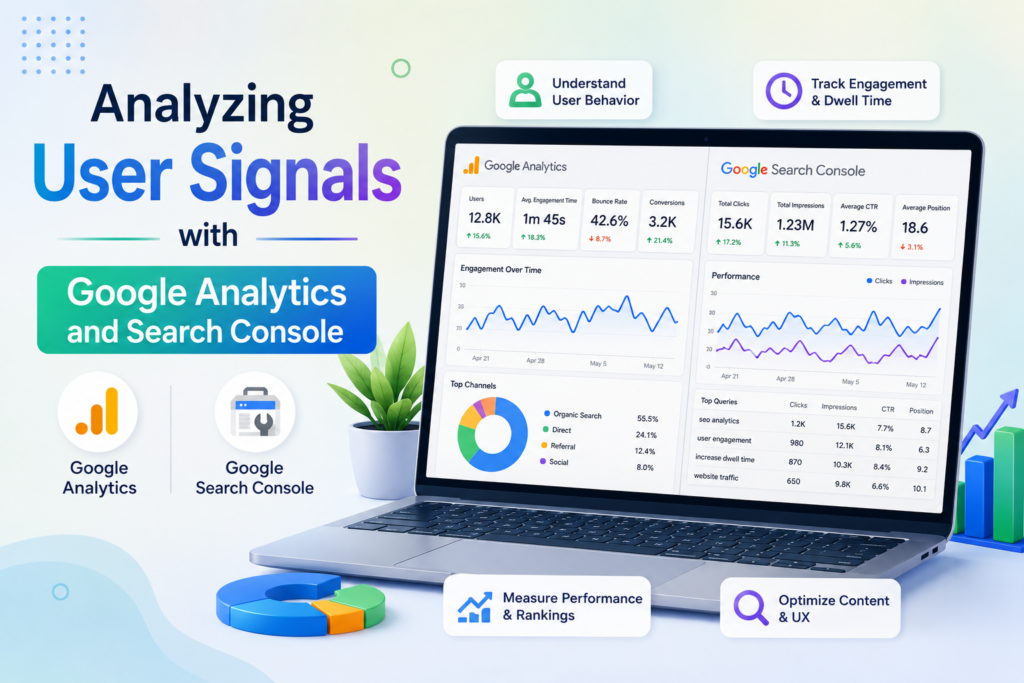
You can unlock powerful insights about your audience by leveraging Google Analytics and Search Console. These platforms serve as the foundation for monitoring how visitors interact with your site, providing the raw data necessary to evaluate user signals effectively.
Setting Up Custom Dashboards for Behavioral Tracking
To gain a clear view of your performance, you should create custom dashboards that highlight specific engagement metrics. Instead of navigating through generic reports, a tailored dashboard allows you to focus on dwell time, bounce rates, and click-through rates in one convenient location.
Start by identifying the key performance indicators that matter most to your business goals. You can configure Google Analytics to track specific events, such as button clicks or video plays, which act as vital user signals for your content strategy.
Interpreting Data Trends to Refine Your SEO Strategy
Once your tracking is in place, the next step involves analyzing the data to spot meaningful patterns. Look for trends where high engagement correlates with specific topics or formats, as these user signals indicate what your audience finds most valuable.
If you notice a high bounce rate on certain pages, use Search Console to investigate the search queries driving that traffic. This data-driven approach helps you identify whether your content matches the user’s intent or if your meta descriptions need adjustment to better align with search results.
Consistently reviewing these metrics allows you to make informed updates to your website. By prioritizing user signals, you ensure that your SEO strategy remains flexible and responsive to the actual behavior of your visitors over time.
The Connection Between User Signals and Core Web Vitals
Core Web Vitals serve as the bridge between machine-measured performance and human-perceived quality. When your website loads quickly and remains stable, visitors are far more likely to stay and engage with your content. These technical metrics act as a foundation for positive user signals, which ultimately inform search engines about the quality of your site.
Understanding Largest Contentful Paint and Cumulative Layout Shift
Largest Contentful Paint (LCP) measures how long it takes for the main content of a page to become visible to the user. If this metric is slow, visitors often leave before seeing your value proposition, which negatively impacts your user signals. A fast LCP ensures that your audience feels the site is responsive and ready for interaction immediately.
Cumulative Layout Shift (CLS) tracks visual stability as a page loads. When elements jump around unexpectedly, it creates a frustrating experience that forces users to abandon the page. By maintaining a low CLS score, you provide a consistent and professional environment that encourages longer dwell times.
Aligning Technical Performance with User Expectations
Aligning your technical infrastructure with what users expect is essential for long-term success. Modern visitors demand instant gratification, and even a one-second delay can lead to a significant drop in engagement. By prioritizing these vitals, you ensure that your site remains competitive in a fast-paced digital landscape.
The following table illustrates how specific technical metrics influence the behavior of your visitors:
| Metric | Technical Goal | Impact on User Signals |
|---|---|---|
| Largest Contentful Paint | Under 2.5 Seconds | Higher engagement rates |
| Cumulative Layout Shift | Less than 0.1 | Reduced bounce rates |
| First Input Delay | Under 100 Milliseconds | Improved interaction depth |
Focusing on these technical foundations allows you to cultivate stronger user signals over time. When you remove friction from the browsing experience, you create a seamless path for your visitors to consume your content. This proactive approach to performance is a key factor in maintaining high search rankings and building brand trust.
Common Misconceptions About User Signals
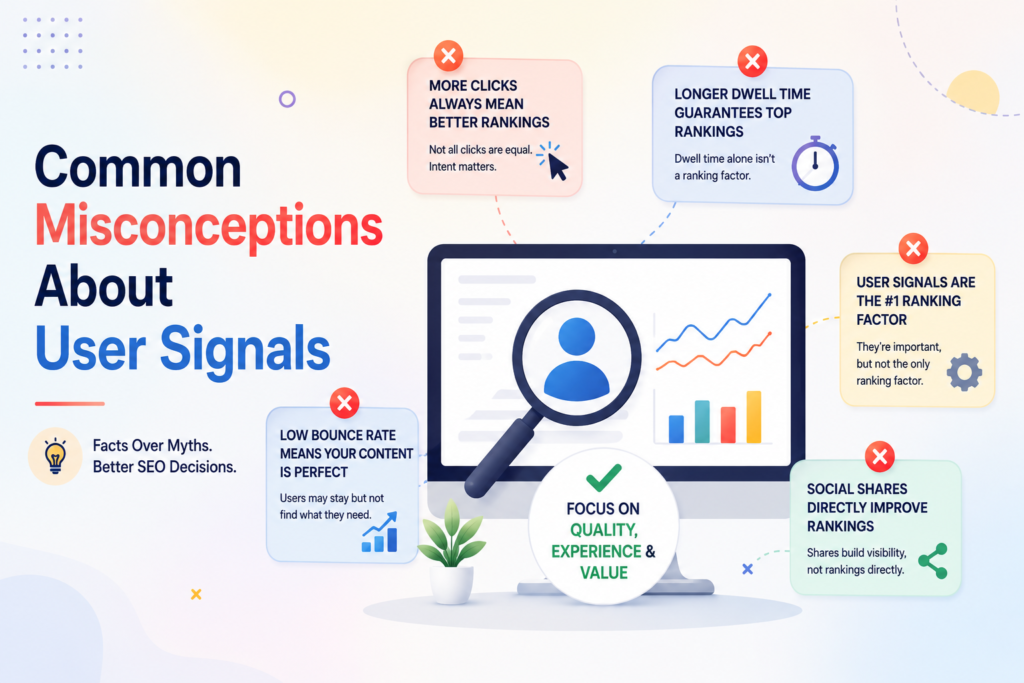
Navigating the world of search engine optimization often leads to confusion regarding how user behavior truly influences your site’s visibility. Many digital marketers mistakenly believe that specific engagement metrics act as direct, isolated ranking factors. In reality, search engines view these data points as part of a much larger, complex ecosystem designed to measure overall quality.
Debunking Myths Regarding Direct Ranking Factors
A common myth suggests that if you simply increase your click-through rate or dwell time, your rankings will automatically climb. This perspective ignores the fact that search engines use these signals to validate the relevance of your content rather than to reward it in a vacuum. If your content does not satisfy the searcher, no amount of artificial traffic will sustain your position in the results.
Search algorithms are designed to detect patterns that deviate from natural human activity. Attempting to manipulate these metrics often results in penalties rather than growth. You should view these signals as feedback loops that help you understand how well your site meets the needs of your audience.
Focusing on User Intent Over Manipulative Tactics
The most effective way to improve your standing is to prioritize genuine user intent. When you align your content with what your visitors are actually looking for, positive signals occur naturally. This approach creates a sustainable foundation that is far more resilient than any short-term trick.
Focusing on the user experience ensures that your site remains valuable regardless of algorithm updates. By providing clear answers and intuitive navigation, you naturally encourage the type of positive engagement that search engines reward. The following table highlights the difference between short-sighted tactics and long-term growth strategies.
| Strategy Type | Focus Area | Long-term Result |
|---|---|---|
| Manipulative | Artificial Clicks | Risk of Penalties |
| Sustainable | User Behavior | Consistent Growth |
| Manipulative | Keyword Stuffing | Lowered Trust |
| Sustainable | Content Value | Higher Authority |
Advanced Techniques for Enhancing User Signals
Moving beyond basic metrics requires a sophisticated approach to user engagement. When you refine how visitors interact with your platform, you naturally improve your seo signals and overall search visibility. By focusing on the specific needs of your audience, you create a more rewarding digital experience.
Personalization Strategies for Returning Visitors
Returning visitors represent a high-value segment of your audience. You can leverage dynamic content to greet these users with recommendations based on their previous browsing history. This level of customization makes your site feel intuitive and highly relevant.
Implementing personalized landing pages helps foster long-term loyalty. When a user sees content that aligns with their past interests, they are more likely to stay longer, which sends positive seo signals to search engines. You should consider using cookies or account-based tracking to tailor these experiences effectively.
Using Internal Linking to Guide User Journeys
Strategic internal linking acts as a roadmap for your readers. By connecting related articles, you encourage users to explore deeper into your site architecture. This logical flow keeps visitors engaged and reduces the likelihood of them returning to search results prematurely.
You must ensure that your links provide genuine value rather than just serving as navigation tools. A well-structured internal link profile helps search engines understand the hierarchy of your content while boosting your seo signals. Use descriptive anchor text to guide users toward the next logical step in their journey.
| Strategy | Primary Benefit | Impact on SEO Signals |
|---|---|---|
| Dynamic Content | Increased Retention | High |
| Contextual Linking | Lower Bounce Rate | High |
| Personalized Offers | Higher Conversion | Medium |
| Breadcrumb Navigation | Improved Crawlability | Medium |
Data-Driven SEO Delivers Long-Term Growth
Track user behavior with analytics, identify optimization opportunities, and refine your SEO strategy using real insights to achieve consistent rankings, higher traffic, and sustainable business growth.
Conclusion
Your journey toward search engine dominance relies on your ability to interpret and act upon user signals. These metrics provide a direct window into how your audience interacts with your digital assets.
You now possess the knowledge to refine your approach by focusing on behavioral data. By prioritizing the needs of your visitors, you create a sustainable path for long-term growth. Consistent monitoring of user signals allows you to adapt to shifting trends in search behavior.
Success in modern search optimization requires a commitment to quality, relevance, and positive user signals. You should view every click and page view as an opportunity to learn more about your audience. Aligning your technical performance with human expectations ensures that your brand remains competitive.
Take these insights and apply them to your current web strategy today. Start by auditing your existing content to see where you can better serve your visitors. Your dedication to improving user signals will lead to better rankings and a more loyal audience over time.
FAQs
What exactly are user signals and why are they critical for your website?
User signals are behavioral data points that search engines like Google collect to evaluate how visitors interact with your content. These seo signals include actions such as clicking a link, staying on a page, or returning to the search results. By analyzing this user behavior, search engines can determine the actual relevance and quality of your pages, ensuring that the most helpful content ranks highest for your target audience.
How does your click-through rate (CTR) influence your search engine rankings?
Your click-through rate measures the efficiency of your search snippets in attracting clicks. When you craft compelling meta titles and utilize Schema Markup to create rich snippets, you increase the likelihood of a user selecting your site over a competitor. A high CTR suggests to Google Search Console that your page is a primary match for a specific query, which can positively impact your long-term visibility.
What is the difference between a bounce rate and pogo-sticking?
While often confused, these two metrics indicate different types of user behavior. A bounce rate refers to a visitor leaving your site after viewing only one page, which might simply mean they found the answer they needed immediately. Pogo-sticking, however, occurs when a user clicks your result and immediately returns to the search engine to click a different link. This is a strong negative signal suggesting your content failed to meet their intent.
How do Core Web Vitals affect the way users engage with your content?
Core Web Vitals, such as Largest Contentful Paint (LCP) and Cumulative Layout Shift (CLS), are technical metrics that define the user experience. If your page loads slowly or elements jump around unexpectedly, it creates a poor experience that leads to a high bounce rate. By optimizing these vitals, you align your technical performance with user expectations, encouraging longer dwell times and more positive user signals.
How does RankBrain use machine learning to interpret user signals?
RankBrain is a sophisticated component of Google’s algorithm that uses machine learning to understand the intent behind search queries. It looks at how users interact with search results to refine its rankings. If RankBrain observes that users consistently spend a significant amount of time on your page (high dwell time), it interprets this as a sign of high relevance, which can help sustain or improve your position in the search results.
Can you improve your SEO performance by focusing on internal linking?
Yes, strategic internal linking is an advanced technique used by top digital agencies like HubSpot to guide the user journey. By providing clear paths to related content, you encourage visitors to explore more of your domain. This not only reduces your bounce rate but also increases the total number of pages viewed per session, sending powerful positive seo signals regarding the depth and value of your website.
Why is dwell time considered a vital metric for content quality?
Dwell time measures the duration a visitor spends on your page before returning to the search results. High-quality, readable content that incorporates multimedia, such as videos or interactive charts, naturally keeps users engaged for longer periods. This duration is a key indicator for search engines that your content is providing a comprehensive solution, thereby reinforcing your site’s authority and relevance.
How can you improve user signals on your website?
You can improve user signals by creating valuable content that matches search intent, optimizing page speed, enhancing mobile usability, and making your site easy to navigate. Encouraging visitors to spend more time on your pages and explore related content sends positive engagement signals that can strengthen your overall SEO performance.
Do user signals directly affect Google rankings?
Google has not confirmed that every user signal is a direct ranking factor. However, metrics such as click-through rate, dwell time, and user engagement help search engines evaluate whether your content satisfies search intent. Strong user signals often correlate with higher search visibility because they indicate a positive user experience.
Why is matching search intent important for user signals?
Matching search intent ensures visitors quickly find the information they are looking for, increasing engagement and reducing the likelihood of returning to the search results. When your content consistently fulfills user expectations, it generates stronger user signals that support better search performance and long-term organic growth.