
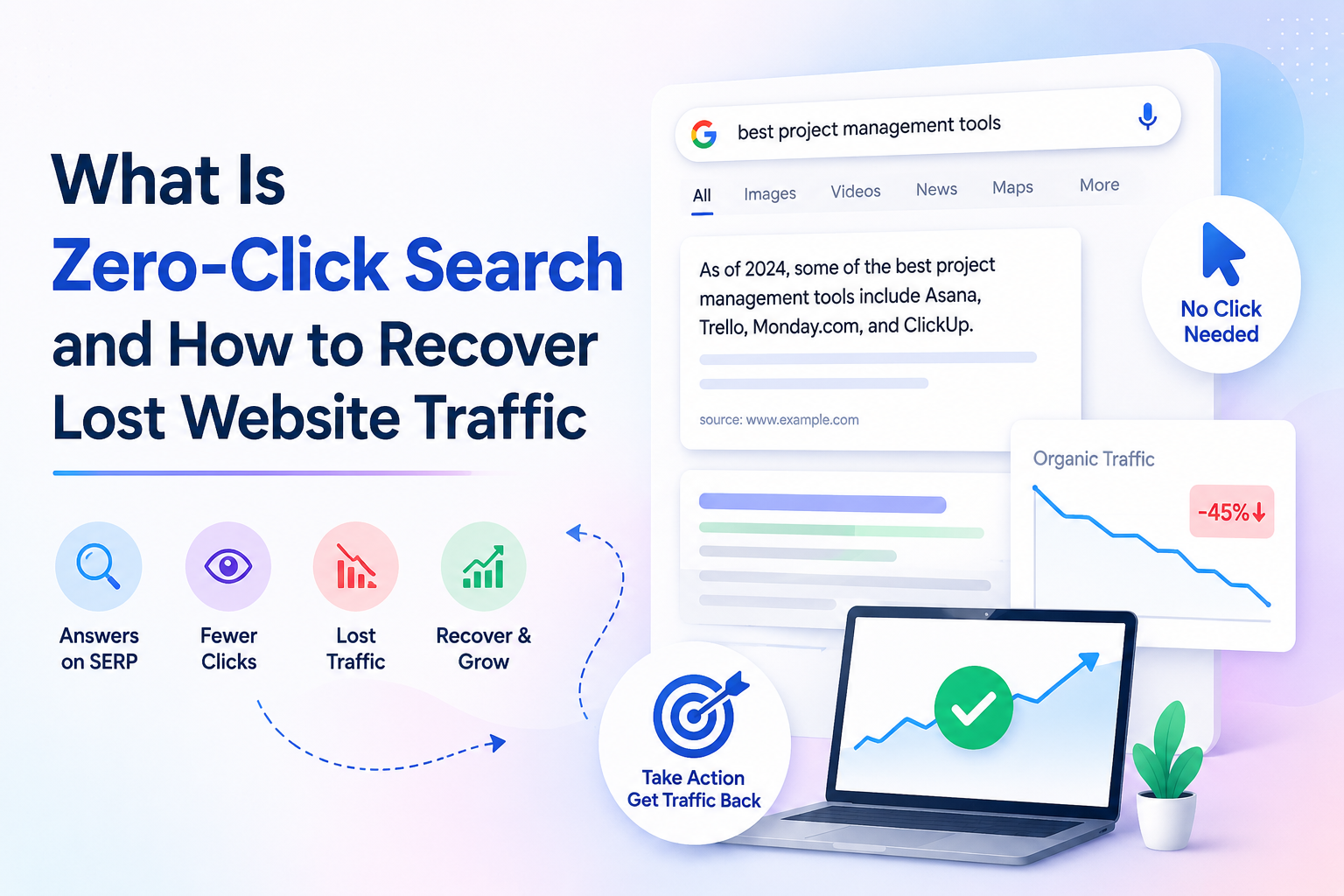
Have you ever wondered why your website rankings remain high, yet your organic traffic continues to decline? You are not alone in this struggle. Many site owners face a growing challenge where users find answers directly on the results page without ever visiting a destination site.
Understanding what is zero click search is the first step toward reclaiming your digital presence. This phenomenon occurs when Google provides immediate information, such as snippets or maps, directly at the top of the page. Because the user gets their answer instantly, they have no reason to navigate further.
This shift in behavior significantly impacts your bottom line and overall visibility. If you want to maintain a competitive edge, you must adapt your content strategy to thrive in this new environment. Mastering zero click search dynamics allows you to pivot your approach and capture value even when traditional visits are harder to secure.
Key Takeaways
- Recognize that modern engine results often prioritize instant answers over external links.
- Identify how this trend directly impacts your site’s organic traffic volume.
- Learn why adapting your content strategy is essential for long-term digital success.
- Discover actionable methods to maintain visibility despite changing user behaviors.
- Shift your focus toward high-value content that encourages deeper engagement.
Recover Your Lost Search Traffic Today
Adapt your SEO strategy for zero-click searches and AI results. Improve visibility, attract visitors, and regain valuable organic traffic with expert optimization solutions.
What are the Mechanics of Zero Click Search?
To protect your website traffic, you must first understand what is zero click search and how it functions within the modern digital ecosystem. This phenomenon occurs when a user finds the answer to their query directly on the search engine results page (SERP) without ever needing to visit an external website.
The evolution of the search engine results page
Search engines have evolved from simple directories of blue links into sophisticated answer engines. In the past, you relied on search results to provide a list of potential destinations for your research.
Today, the interface prioritizes speed and convenience by surfacing data directly at the top of the page. Features like featured snippets, knowledge panels, and local packs are designed to satisfy user intent instantly. This shift means that a zero click search is often considered a success by the search engine, even if it results in a loss of traffic for content creators.
Distinguishing between informational and transactional queries
Not all search queries are equally susceptible to becoming zero-click events. You can categorize most searches into two primary buckets to better predict your traffic risks.
Informational queries are the most vulnerable to this trend. When a user asks a question like “how to bake a cake” or “what is the capital of France,” they are looking for a quick fact. Because these answers are easily summarized, search engines provide them immediately, which often leads to a zero click search.
Conversely, transactional queries typically drive higher click-through rates. When a user intends to buy a product or sign up for a service, they usually need to visit a specific website to complete the action. By identifying which of your pages target informational versus transactional intent, you can better prepare your strategy for the current search landscape.
Why Do Zero Click Searches Happen
Google is no longer just a directory; it has transformed into a sophisticated answer engine. This evolution prioritizes user convenience by delivering information directly on the results page. When you search for a quick fact, you rarely need to visit a website to find what you need.
Understanding why do zero click searches happen is essential for any digital marketer. The primary goal of the search engine is to reduce the time between a user’s query and the final answer. By providing immediate value, Google keeps users within its ecosystem, which is the core driver of the zero click search phenomenon.
Google’s shift toward becoming an answer engine
The transition toward an answer engine model is a strategic move to improve user satisfaction. Modern searchers expect instant gratification, and Google meets this demand through featured snippets and knowledge panels. This shift fundamentally changes how traffic flows to external websites.
“The future of search is not just about providing links, but about providing the most accurate and immediate answer to the user’s intent.”
To better understand this transition, consider the following comparison between traditional search models and the modern answer engine approach:
| Feature | Traditional Search | Answer Engine |
|---|---|---|
| Primary Goal | Provide relevant links | Provide direct answers |
| User Journey | Click to explore | Read and exit |
| Content Focus | Keyword density | Structured clarity |
The role of structured data and schema markup
You might ask why do zero click searches happen so frequently for technical or factual queries. The answer lies in the technical implementation of structured data and schema markup. These tools act as a translator, allowing search engines to parse your content and display it in a machine-readable format.
By using schema, you are essentially handing Google a map of your content. This makes it easier for the algorithm to extract specific data points, such as prices, ratings, or event dates. While this increases your visibility, it also facilitates the zero click search experience by giving the user the information they need without requiring a click.
The Impact of Zero Click Search on Your Organic Traffic
If you are seeing fewer visitors despite high rankings, you are likely feeling the effects of zero click search. This phenomenon occurs when search engines provide the answer directly on the results page, removing the need for a user to visit your site. While this improves user experience, it creates a significant challenge for website owners who rely on organic traffic for growth.
Analyzing the decline in click-through rates
The primary metric affected by this shift is your click-through rate (CTR). As search engines become more efficient at summarizing information, users find what they need without ever leaving the search results page. This leads to a scenario where your site might rank in the top three positions but still receive a fraction of the expected traffic.
Data suggests that informational queries are the most heavily impacted by this trend. When a user asks a simple question, the search engine provides a snippet that satisfies their intent immediately. Consequently, your organic traffic may stagnate even if your brand visibility remains high.
“The future of search is not about driving traffic to a destination, but about providing the answer at the point of intent.” — Industry Analyst
Identifying which content types are most vulnerable
Not all content is equally susceptible to these changes. You must evaluate your current library to see which pages are at risk of losing their utility. Generally, content that provides quick, factual answers is the most likely to be replaced by a featured snippet or a knowledge panel.
| Content Type | Vulnerability Level | Traffic Risk |
|---|---|---|
| Dictionary Definitions | High | Extreme |
| Basic How-To Guides | Medium | Moderate |
| Opinionated Editorials | Low | Minimal |
| Data-Driven Case Studies | Low | Minimal |
The vulnerability of simple definition-based articles
Articles that focus on simple definitions or basic facts are highly vulnerable to zero click search. Search engines prioritize these pages for snippets because they offer concise, easily extractable data. If your site relies on “what is” or “how to” content that can be answered in one sentence, you are likely losing potential visitors to the search engine interface.
The resilience of long-form, opinionated content
Conversely, long-form, opinionated content remains highly resilient. Users seeking deep analysis, unique perspectives, or complex narratives will always need to click through to your website. By focusing on thought leadership and original research, you create a value proposition that automated snippets cannot replicate. This strategy ensures that your audience remains engaged with your brand rather than just consuming a quick, surface-level answer.
How to Measure ROI from Zero-Click Searches
Understanding how to measure ROI from zero-click searches changes how you view your content strategy. When users find their answers directly on the search engine results page, they may not visit your website immediately. However, this does not mean your content lacks value or fails to drive business results.
Moving beyond traditional click-based metrics
Relying solely on click-through rates often paints an incomplete picture of your digital performance. You should start tracking engagement metrics that occur outside of your site, such as brand mentions or social shares. These signals indicate that your content is providing real utility to your audience.
Consider the following table to understand the shift in how you evaluate your search performance:
| Metric Type | Traditional Focus | Modern Focus |
|---|---|---|
| Primary Goal | Website Traffic | Brand Authority |
| Key Indicator | Click-Through Rate | Impression Share |
| User Action | Page Views | Brand Recall |
| Success Metric | Conversion Rate | Direct Search Volume |
Tracking brand awareness and authority signals
A zero click search often serves as a powerful touchpoint for brand recognition. When your brand appears consistently in snippets, users begin to associate your domain with expertise. You can track this by monitoring spikes in direct traffic or branded search queries in your analytics dashboard.
Increased brand authority often leads to higher conversion rates later in the customer journey. Even if a user does not click today, they are more likely to return to your site when they need a deeper solution. This long-term trust is a vital component of your overall return on investment.
Using Google Search Console to identify impression growth
Google Search Console remains your most reliable tool for tracking visibility. By filtering for high-impression queries, you can identify which topics allow your brand to dominate the search results. A steady rise in impressions for relevant keywords confirms that your content is successfully reaching your target audience.
Focus on the average position and total impressions to gauge your reach. When you see growth in these areas, you are effectively building a digital footprint that persists even without a direct click. This data provides the evidence needed to justify your content investments in an evolving search environment.
Optimizing for Featured Snippets and Knowledge Panels
If you want to thrive in an era of zero click search, you must learn to speak the language of AI. Search engines now prioritize platforms that provide immediate, accurate answers to user queries. By refining your content structure, you increase your chances of appearing in prominent positions like featured snippets and knowledge panels.
Boost Rankings That Generate Results
Strengthen your online presence with proven SEO solutions. Increase search visibility, drive qualified traffic, and convert more visitors into loyal customers.
Structuring content for quick answer extraction
Search crawlers favor content that is easy to parse and categorize. You should place your most important information at the very beginning of your articles. Using clear, descriptive headings allows algorithms to identify the core topic of your page instantly.
When you provide a direct answer to a common question, keep it brief and focused. Structuring your content with clear H2 and H3 tags helps search engines map your information to specific user intents. This logical flow makes it much easier for AI to extract your content for display in search results.
The importance of concise, high-quality summaries
Quality is just as important as brevity when aiming for the top of the results page. You should aim to provide a summary that is roughly 40 to 60 words long. This length is ideal for featured snippets because it offers enough detail to be useful without requiring the user to click through.
Focus on delivering value immediately to the reader. If your summary is accurate and authoritative, you build trust with both the search engine and the user. This strategy helps mitigate the negative impact of a zero click search by establishing your brand as the primary source of truth.
Formatting tables and lists for search engine readability
Search engines love structured data because it is easy to read and compare. Whenever possible, convert long paragraphs into bulleted lists or tables. This formatting style is highly effective for technical or comparative data.
| Content Type | Best Format | Goal |
|---|---|---|
| Step-by-step guides | Ordered Lists | Clarity |
| Feature comparisons | Tables | Quick Analysis |
| Key takeaways | Unordered Lists | Retention |
By using these formats, you ensure that your information remains accessible even when it is pulled into a snippet. Consistent formatting is a powerful tool for maintaining visibility in a competitive digital landscape.
Leveraging Entity SEO to Maintain Visibility
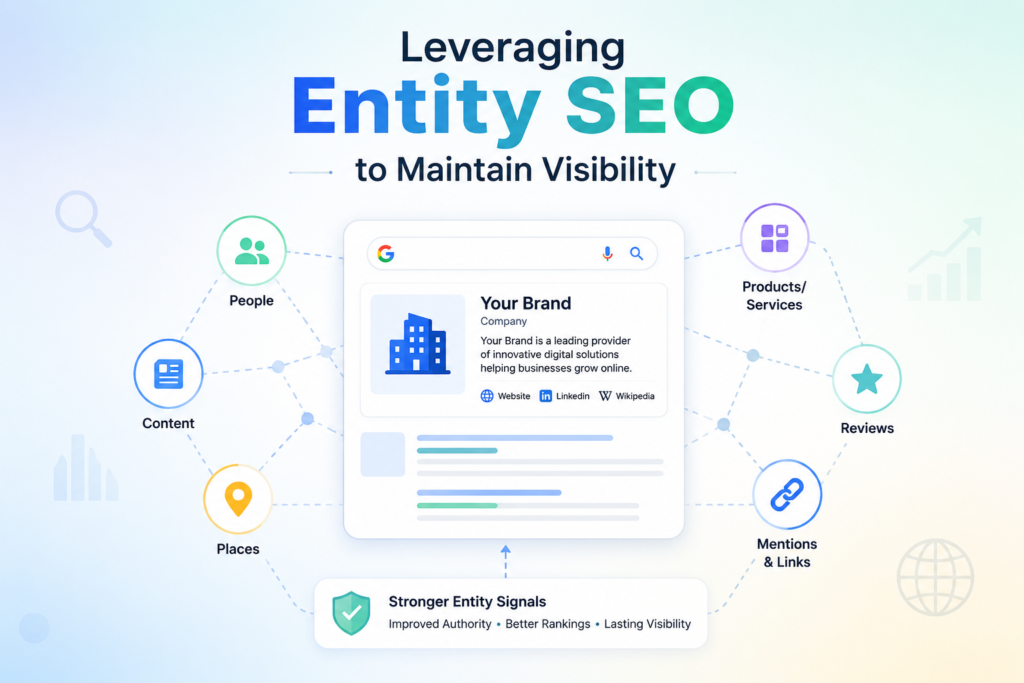
To combat the rise of zero click search, you must shift your focus toward becoming a recognized entity in your industry. Rather than fighting for every single click, you should aim to be the definitive source that search engines trust. This approach ensures that even when users do not click, your brand remains the primary authority associated with the topic.
Establishing your brand as a topical authority
Topical authority is built by creating comprehensive content that covers a subject from every angle. When you consistently provide high-quality answers, Google begins to view your site as a subject matter expert. This depth of knowledge makes it easier for your brand to be cited as a reliable source in various search features.
Connecting your content to the Google Knowledge Graph
The Google Knowledge Graph acts as a massive database of facts and relationships between entities. By using structured data, you can explicitly tell search engines who you are and what you offer. This connection helps you maintain visibility even in a zero click search environment, as your brand information becomes part of the engine’s core knowledge.
The power of consistent NAP data and digital footprints
Your digital footprint is defined by how consistently your business information appears across the web. Maintaining accurate Name, Address, and Phone (NAP) data is essential for building trust with search algorithms. When your details match across social media, directories, and your own site, you solidify your brand authority. This consistency is a critical factor in mitigating the negative impacts of a zero click search trend on your overall traffic.
Diversifying Your Traffic Sources Beyond Google
If you want to insulate your brand from the negative effects of a zero click search, you must diversify your traffic sources. Relying exclusively on organic search rankings leaves your business vulnerable to sudden shifts in engine algorithms. By expanding your reach, you create a more stable foundation for long-term growth.
Building a loyal audience through email marketing
Email marketing remains one of the most effective ways to own your audience and bypass search engine gatekeepers. When you capture email addresses, you gain a direct line of communication that is not subject to a zero click search or ranking fluctuations. This allows you to nurture relationships and keep your brand top-of-mind for your subscribers.
Focus on providing exclusive value through newsletters that encourage repeat visits to your site. By delivering high-quality content directly to their inboxes, you foster a sense of community and trust. This strategy turns casual visitors into loyal brand advocates who return to your site independently.
Harnessing the power of social media referral traffic
Social media platforms offer a dynamic way to drive traffic that complements your search engine efforts. Platforms like LinkedIn, X, or Instagram allow you to engage with your target audience in real-time. You can share snippets of your content to spark interest and drive users back to your primary website.
Consistency is key when building a social media presence that generates reliable referral traffic. Use these channels to showcase your expertise and humanize your brand. By participating in conversations, you can mitigate the impact of a zero click search by building a community that seeks you out directly.
Exploring community-driven platforms for content distribution
Community-driven platforms like Reddit, Quora, and niche-specific forums are goldmines for targeted traffic. These spaces allow you to answer questions and provide solutions, which establishes your authority in your industry. When you contribute genuinely helpful information, you naturally attract users who are interested in your expertise.
Avoid aggressive self-promotion, as these communities value authentic engagement over marketing tactics. Instead, focus on solving problems and linking to your content only when it adds significant value to the discussion. This approach helps you maintain visibility even when a zero click search prevents users from finding your site through traditional queries.
Building a Brand That Users Seek Out Directly
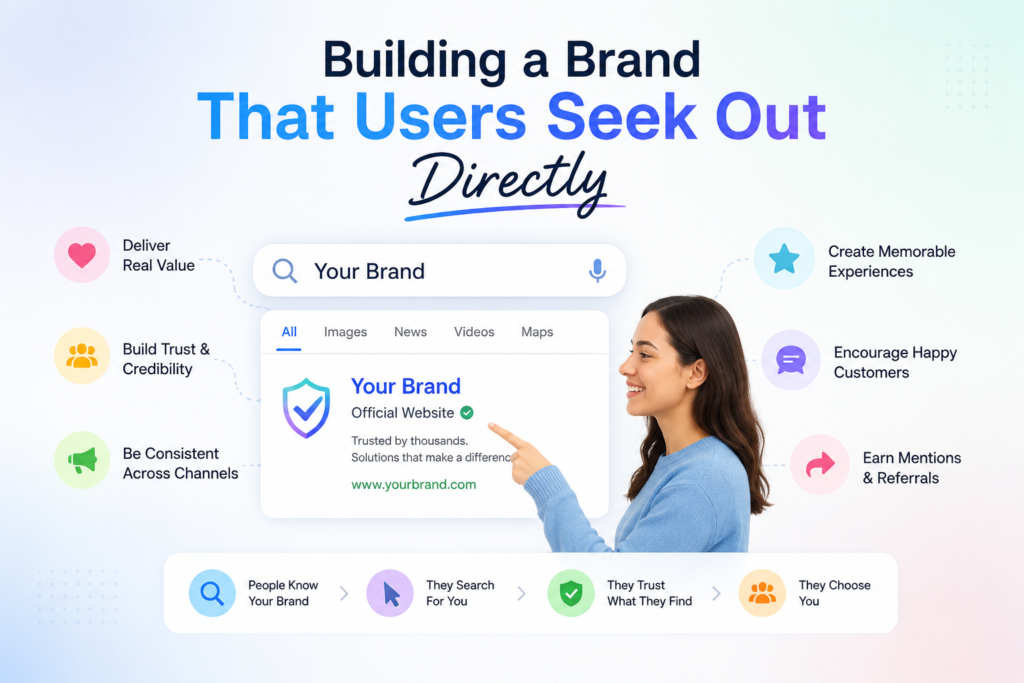
You can reclaim your digital destiny by transforming your website into a destination that users visit by choice. While the rise of zero click search results has changed how people find information, it has also created a unique opportunity to prioritize direct relationships over algorithmic traffic.
The shift from search-dependent to brand-dependent traffic
Relying exclusively on search engines leaves your business vulnerable to sudden changes in ranking logic. By shifting your focus toward brand-dependent traffic, you ensure that your audience returns to your site because they value your specific perspective. This transition turns casual visitors into loyal followers who bypass search engines entirely.
Creating unique value propositions that AI cannot replicate
Artificial intelligence is excellent at summarizing facts, but it often struggles to provide genuine human insight or original research. To stay ahead of the zero click search trend, you must infuse your content with personal experiences, proprietary data, and unique opinions. Authenticity is your greatest competitive advantage when competing against automated answer engines.
Consider focusing on deep-dive analysis that requires a human touch. When you offer insights that cannot be found in a quick snippet, you provide a reason for users to click through to your site. This strategy effectively mitigates the impact of a zero click search by making your brand the primary source of truth.
Fostering community engagement to drive repeat visits
Building a community is the most effective way to ensure long-term growth. When you engage with your audience through newsletters, forums, or social platforms, you create a direct line of communication that does not rely on search rankings. Consistent engagement fosters trust, which is the foundation of any successful brand.
Encourage your readers to interact with your content by asking questions and inviting feedback. By creating a space where your audience feels heard, you turn one-time visitors into repeat customers. This loyalty is the ultimate shield against the changing landscape of modern search.
Turn AI Search Into Growth Opportunities
Stay ahead of evolving search trends with smart SEO strategies. Optimize your content, improve rankings, and capture more opportunities from modern search platforms.
Conclusion
Search engine landscapes change rapidly, but your commitment to quality remains your greatest asset. You now possess the tools to navigate zero-click search environments with confidence. By focusing on entity authority and direct audience relationships, you protect your site against shifting algorithms.
Adapt your content strategy to prioritize unique value that automated systems cannot replicate. Google Search Console provides the data you need to track your progress and refine your approach. Use these insights to pivot when necessary and keep your brand relevant.
Building a resilient online presence requires patience and consistent effort. You are moving beyond simple click-based metrics to establish a lasting digital footprint. Your brand becomes the destination users seek out regardless of search engine behavior.
Start implementing these strategies today to reclaim your authority. Share your experiences with your team and monitor how these adjustments impact your overall visibility. Your path to sustainable growth starts with the choices you make right now.
FAQs
What is zero click search and how does it affect my website?
What is zero click search? It is a search result where the user’s query is answered directly on the Google results page, meaning the user does not click through to any external website. This phenomenon can lead to a decline in traditional organic traffic. However, it also presents an opportunity to establish your brand as a definitive authority right at the top of the search results.
Why do zero click searches happen more frequently now?
When asking why zero click searches happen, the answer lies in Google’s evolution into an “answer engine.” By utilizing structured data and schema markup, search engines can extract specific data points to provide immediate value. This shift prioritizes user convenience, especially on mobile devices where quick answers are preferred over navigating multiple web pages.
How to measure ROI from zero-click searches if users aren’t clicking?
Learning how to measure ROI from zero-click searches requires a shift from click-based metrics to visibility-based metrics. You should monitor Google Search Console to track impression growth and brand mentions. High impression volume for your brand in featured snippets increases “share of mind,” which builds long-term trust and authority that eventually converts into direct brand-name searches.
Which content types are most vulnerable to losing traffic?
Content that provides simple, factual answers such as definitions, basic “how-to” steps, or data tables—is the most susceptible to being captured in a snippet. To protect your traffic, you should focus on producing long-form, opinionated content and deep-dive analyses that provide a level of nuance and expert insight that a search engine summary cannot replicate.
How can I optimize my content for featured snippets and knowledge panels?
To capture these high-visibility positions, you must structure your content for quick extraction. Use concise, high-quality summaries at the beginning of your articles and employ clear formatting such as bulleted lists and HTML tables. By making your data easy for Google to parse, you increase your chances of becoming the featured source for a query.
What is the benefit of connecting my content to the Google Knowledge Graph?
Leveraging Entity SEO allows you to connect your brand to the Google Knowledge Graph, which helps search engines understand your specific expertise and topical authority. By maintaining a consistent digital footprint and accurate NAP (Name, Address, Phone) data, you ensure that your brand is recognized as a reliable entity, making your content more likely to appear in rich results.
How can I reduce my brand’s dependency on search engine traffic?
You should diversify your traffic sources by investing in channels you own, such as email marketing and direct community engagement. By building a loyal audience that seeks out your brand directly, you insulate your business from fluctuations in search engine algorithms and the rising prevalence of zero-click results.