
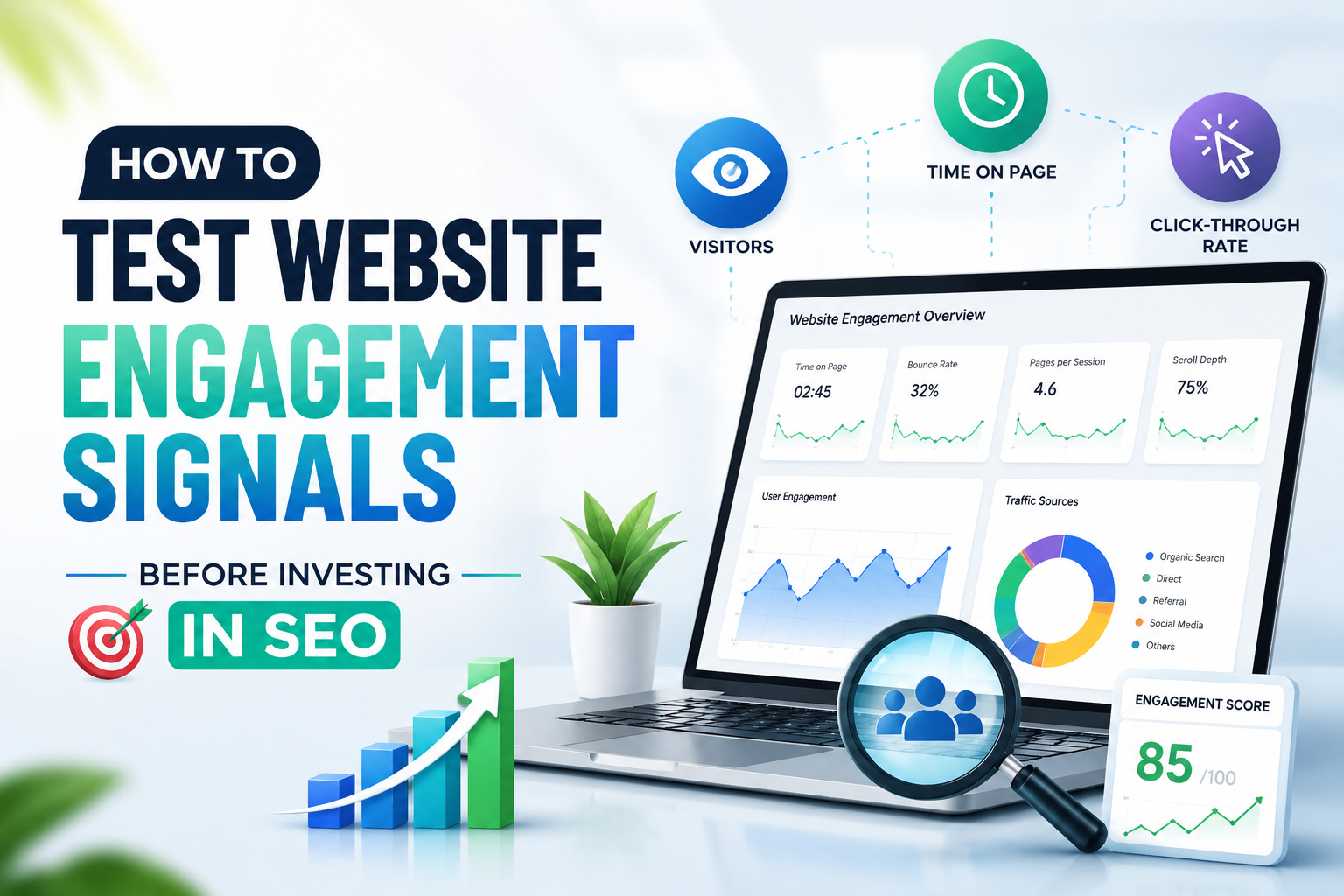
Did you know that nearly 70% of online visitors leave a page within seconds if the content fails to capture their interest immediately? This staggering reality proves that pouring money into search rankings is a gamble if your digital destination is not ready to convert.
Before you commit your hard-earned capital to complex search campaigns, you must prioritize website engagement. By analyzing how real people interact with your pages, you gain the clarity needed to build a sustainable strategy.
Focusing on data-driven insights ensures your future efforts rest on a solid foundation. When you validate user behavior first, you create a platform that truly resonates with your target audience. Smart optimization starts by proving your value to visitors and improving website engagement before you chase higher traffic numbers.
Key Takeaways
- Validate user behavior before spending your marketing budget.
- High bounce rates often signal a need for better content quality.
- Data-driven insights prevent wasted investment in search campaigns.
- Prioritizing website engagement builds a sustainable digital foundation.
- Focus on user resonance to ensure long-term growth and success.
Test Your Website Engagement Before Investing in SEO
Not sure if your website is ready for SEO? Send real visitors to your pages, measure engagement signals, and uncover optimization opportunities before scaling traffic campaigns.
The Strategic Value of Testing Before SEO
Investing in search engine optimization without first auditing your site’s engagement is like pouring water into a leaky bucket. You might successfully drive thousands of new visitors to your domain, but if those users leave immediately, your efforts will yield little return. Strategic testing ensures that your foundation and website engagement are solid before you attempt to scale your organic reach.
Why SEO Investment Fails Without Engagement Data
Search engines prioritize user satisfaction as a core ranking factor. If your website suffers from high bounce rates or low interaction depth, search algorithms may interpret this as a sign of poor quality. Even if you achieve a top ranking, a lack of engagement signals can cause your site to drop in the results pages over time.
Website Engagement data acts as a diagnostic tool for your business. It reveals exactly where users lose interest and why they choose to exit your site. Without this insight, you are essentially flying blind, hoping that your content resonates with your target audience.
The Cost of Driving Traffic to an Unoptimized Experience
Driving traffic to an unoptimized landing page is a costly mistake that drains your marketing budget. Every click you pay for, or earn through hard work, represents a potential customer who expects a seamless experience and strong website engagement. When that experience fails to meet expectations, you lose both the immediate sale and the long-term trust of the visitor.
The financial impact of ignoring these metrics is significant. You are not just losing a single visitor; you are losing the cumulative value of your brand’s reputation and future conversion potential. The following table illustrates the difference between a proactive testing approach and a reactive strategy.
| Metric | Unoptimized Site | Optimized Site |
|---|---|---|
| Bounce Rate | High (Above 70%) | Low (Below 40%) |
| Conversion Rate | Minimal | High |
| Customer Acquisition Cost | Expensive | Efficient |
| Long-term ROI | Negative | Positive |
By prioritizing data-driven improvements, you protect your investment and ensure that every dollar spent on SEO contributes to sustainable growth. Taking the time to refine your user experience and website engagement today will pay dividends in your future marketing campaigns.
Defining Key Website Engagement Metrics
Measuring success in website engagement requires a clear distinction between superficial numbers and meaningful user behavior. When you analyze your website engagement, it is easy to get lost in a sea of data that looks impressive but offers little insight into your actual business performance.
Differentiating Between Vanity Metrics and Actionable Signals
Vanity metrics are data points that make you feel good but do not necessarily correlate with revenue or long-term growth. For example, high page views might suggest popularity, but they often mask a lack of genuine interest if the visitors leave immediately.
Actionable signals, by contrast, provide concrete evidence of how users interact with your content. To refine your strategy, focus on these key differences:
- Vanity Metrics: Total page views, social media likes, and raw visitor counts.
- Actionable Signals: Dwell time, scroll depth, click-through rates on internal links, and form completions.
Understanding Dwell Time and Interaction Depth
Dwell time measures the duration a visitor spends on your page before returning to the search results. A longer dwell time often indicates that your content successfully answers the user’s query, which is a strong indicator of high-quality website engagement.
Interaction depth goes a step further by tracking how deeply a user explores your site. This includes actions like clicking on related articles, watching embedded videos, or expanding menu items. By monitoring these behaviors, you gain a clearer picture of whether your audience finds your site valuable or merely a temporary stop, which directly impacts website engagement.
Prioritizing these metrics allows you to move beyond guesswork. When you focus on how users actually consume your content, you can make data-driven decisions that improve your overall website engagement and search visibility.
Essential Website Engagement Tools for Data Collection
Your path to higher conversions begins with implementing the correct website engagement tools to capture every interaction. Without a robust technical stack, you are essentially flying blind while trying to grow your digital presence. You need to combine quantitative data with qualitative insights to see the full picture of how users navigate your site and influence website engagement.
See How Real Visitors Interact With Your Website
Stop relying on assumptions. Get real human traffic to analyze bounce rate, pages per session, and user behavior before making expensive SEO decisions.
Utilizing Google Analytics 4 for Behavioral Insights
Google Analytics 4 serves as the backbone of your data strategy. Unlike older versions, it focuses on event-based tracking, which allows you to monitor complex user journeys across multiple sessions. This shift is vital for understanding how a visitor moves from an initial landing page to a final conversion point.
By setting up custom events, you can track specific actions that define website engagement, such as button clicks, video plays, or form interactions. This platform provides the raw numbers needed to identify which pages keep users interested and which ones cause them to leave prematurely.
“Data is the bridge between your assumptions and the reality of your user’s experience.”
Leveraging Heatmapping Tools Like Hotjar and Microsoft Clarity
While analytics platforms provide the “what,” heatmapping tools provide the “why.” Platforms like Hotjar and Microsoft Clarity offer visual representations of user behavior, such as scroll depth and click patterns. These website engagement tools reveal exactly where users get stuck or distracted on your pages.
You can use these insights to identify friction points that quantitative data might miss. For instance, you might notice that users frequently click on non-clickable elements, signaling a need for better design clarity. The following table highlights the core differences between these two essential data collection methods:
| Feature | Quantitative (GA4) | Qualitative (Heatmaps) |
|---|---|---|
| Primary Focus | Numerical Trends | User Behavior |
| Data Format | Graphs and Tables | Visual Overlays |
| Key Insight | Traffic Volume | Interaction Friction |
| Best Use Case | Performance Tracking | UX Optimization |
Integrating these tools into your workflow ensures that every decision you make is backed by hard evidence. By monitoring both the volume of traffic and the quality of interactions, you create a sustainable foundation for long-term growth.
Analyzing Current User Behavior Patterns
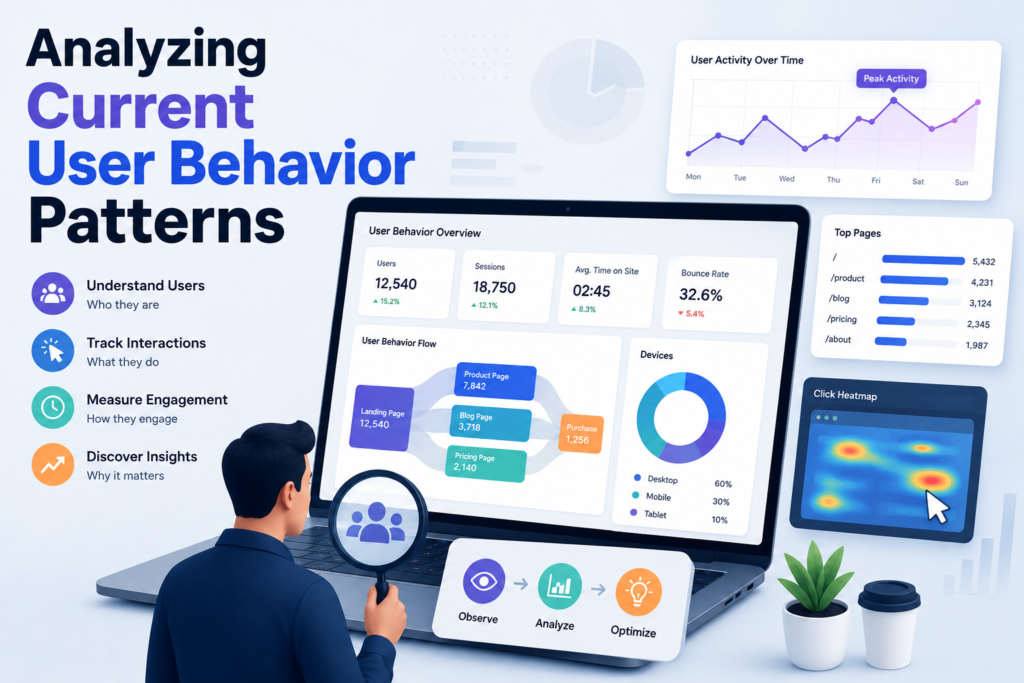
Analyzing your current traffic patterns reveals the hidden story behind every click and scroll. By observing how visitors interact with your site, you gain actionable insights that improve website engagement beyond simple page views. This process allows you to see exactly where your visitors find value and where they encounter frustration.
Mapping the User Journey Through Your Existing Pages
To understand your site’s performance, you must visualize the path a visitor takes from entry to exit. Many users start on a landing page, but their journey often stalls when the value proposition does not align with their immediate needs. You should look for common exit points where website engagement drops sharply.
When you map these journeys, you can identify specific pages that act as bottlenecks. If a visitor lands on a product page but leaves immediately, the content might be missing a clear call to action or relevant information. Tracking these flows helps you pinpoint exactly where you need to improve your messaging or design.
Identifying High-Intent Versus Low-Intent Traffic Segments
Not all visitors are created equal, and treating them as a single group is a common mistake. High-intent users are those who actively seek solutions, often visiting pricing pages or reading detailed case studies. In contrast, low-intent traffic might consist of casual browsers who are simply gathering information without a clear goal.
Distinguishing between these groups allows you to prioritize your optimization efforts effectively. You should focus your resources on the segments that show the highest potential for conversion. By tailoring your content to meet the specific needs of high-intent visitors, you can significantly improve your return on investment and website engagement.
| Segment Type | Primary Behavior | Conversion Potential | Optimization Focus |
|---|---|---|---|
| High-Intent | Visits pricing or demo pages | High | Clear CTAs and social proof |
| Mid-Intent | Reads blog posts and guides | Medium | Lead magnets and newsletters |
| Low-Intent | Bounces after one page | Low | Site speed and navigation |
By categorizing your traffic, you stop wasting time on users who are not ready to buy. Instead, you create a streamlined experience that guides high-intent visitors toward the final sale. This strategic approach ensures that every change you make has a measurable impact on your bottom line.
How to Increase User Engagement on Website Content
Learning how to make a website more engaging starts with the way you present information to your audience. When visitors land on your page, they should immediately understand the value you offer without feeling overwhelmed by clutter.
By refining your layout, you create a seamless path for the reader to follow. This approach ensures that your message remains the primary focus while keeping the user experience intuitive and professional.
Optimizing Content Readability and Visual Hierarchy
Visual hierarchy is the secret to guiding a reader’s eye across your page. You should use clear headings, bullet points, and generous white space to break up dense blocks of text. This structure allows users to scan your content quickly and find the information that matters most to them.
Choosing the right typography is equally vital for readability. Ensure your font size is large enough for mobile devices and that your line spacing provides enough room for the text to breathe. When you prioritize these design elements, you significantly improve the overall user experience.
Implementing Interactive Elements to Boost Time on Page
If you want to know how to increase user engagement on website pages, you must move beyond static text. Interactive elements transform passive readers into active participants by inviting them to click, scroll, or calculate.
Consider adding tools like ROI calculators, interactive quizzes, or dynamic infographics to your site. These features provide immediate value and encourage users to spend more time interacting with your brand, improving website engagement. Below is a comparison of how different content types impact your site performance.
| Content Type | User Interaction Level | Primary Benefit |
|---|---|---|
| Standard Blog Post | Low | SEO Authority |
| Interactive Quiz | High | Lead Qualification |
| ROI Calculator | Very High | Conversion Readiness |
| Video Content | Medium | Brand Trust |
By integrating these elements, you learn how to make a website more engaging while gathering valuable behavioral data. This strategy helps you understand what your audience truly cares about, allowing you to refine your content strategy over time.
Identifying and Fixing Friction Points
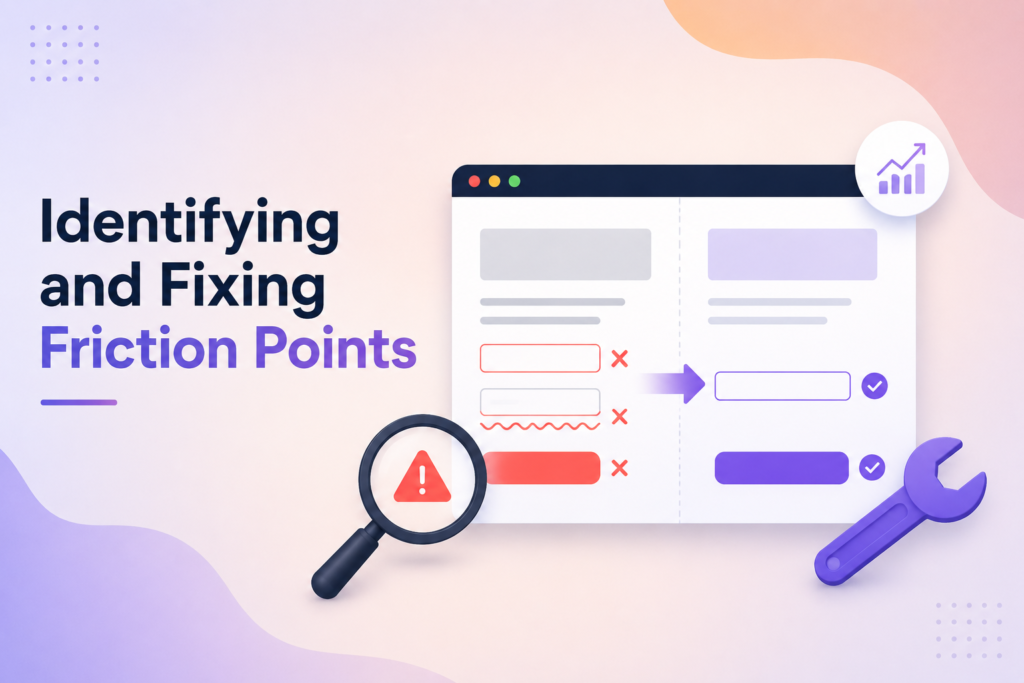
You might be losing valuable leads simply because your site contains hidden friction points that frustrate your audience. These obstacles act as invisible walls that stop users from completing their journey. By diagnosing these issues, you can transform a stagnant website into a high-performing engine for growth.
Analyzing Bounce Rates on Critical Landing Pages
High bounce rates often signal that your landing page fails to meet user expectations immediately. When visitors arrive and leave without interacting, they are likely encountering a barrier that prevents them from finding what they need. You must look beyond the surface numbers to understand the intent behind these exits.
To diagnose these issues effectively, consider the following steps:
- Segment your traffic: Compare bounce rates between organic search, paid ads, and social media referrals to see if specific channels are underperforming.
- Check page load speed: A slow-loading page is the most common cause of immediate abandonment.
- Evaluate content relevance: Ensure the headline and primary offer on the page match the promise made in your ad or search snippet.
Streamlining Navigation and Call-to-Action Placement
Once you have identified where users drop off, you must simplify their path to conversion. A cluttered interface often overwhelms visitors, leading to decision paralysis. By streamlining your navigation, you guide the user toward the most important actions without unnecessary distractions and improve website engagement.
Effective placement of your call-to-action (CTA) is equally vital for driving results. If your primary button is buried at the bottom of a long page, you are likely missing out on conversions from users who do not scroll. Consider these best practices for better placement:
- Use the “above the fold” rule: Place your primary CTA where it is visible without requiring the user to scroll.
- Maintain visual hierarchy: Use contrasting colors and whitespace to make your CTA stand out from the rest of the page content.
- Limit choices: Reduce the number of links in your header and footer to keep the user focused on the primary goal.
Consistency is the key to a smooth user experience. When you remove unnecessary steps and make your intentions clear, you create a frictionless environment that naturally encourages higher conversion rates.
How to Re-engage Closed-Lost Deals with New Signals
You can transform past rejections into future revenue by analyzing recent user behavior. Many companies treat lost leads as dead ends, but these prospects often remain in the market for a solution. Understanding how to re-engage closed-lost deals with new signals allows you to reach out at the exact moment your services become relevant again.
Using Behavioral Data to Trigger Personalized Outreach
Modern analytics platforms provide a wealth of information regarding what your former prospects are doing on your site today. When a lead returns to your platform, it serves as a critical engagement signal that they are actively evaluating their options. You should monitor these visits to identify when a prospect is reviewing updated features or pricing structures.
Once you detect this activity, you can trigger an automated yet highly personalized outreach sequence. Instead of a generic check-in, reference the specific pages they visited to show you are paying attention. Personalization increases the likelihood of a response because it demonstrates that you understand their current journey.
Crafting Targeted Content for Re-engagement Campaigns
Your re-engagement strategy must focus on solving the specific problems that caused the initial loss. If a prospect previously cited a lack of integration as a deal-breaker, your new content should highlight recent updates that address that exact gap. Tailoring your message to their unique pain points proves that you have evolved alongside their business needs.
Consider creating case studies or white papers that speak directly to the challenges of your lost leads. By providing high-value resources, you position your brand as a helpful partner rather than a pushy salesperson. This approach builds trust, strengthens website engagement, and keeps your solution top-of-mind when they are finally ready to commit.
Validating Your Website Engagement Strategy
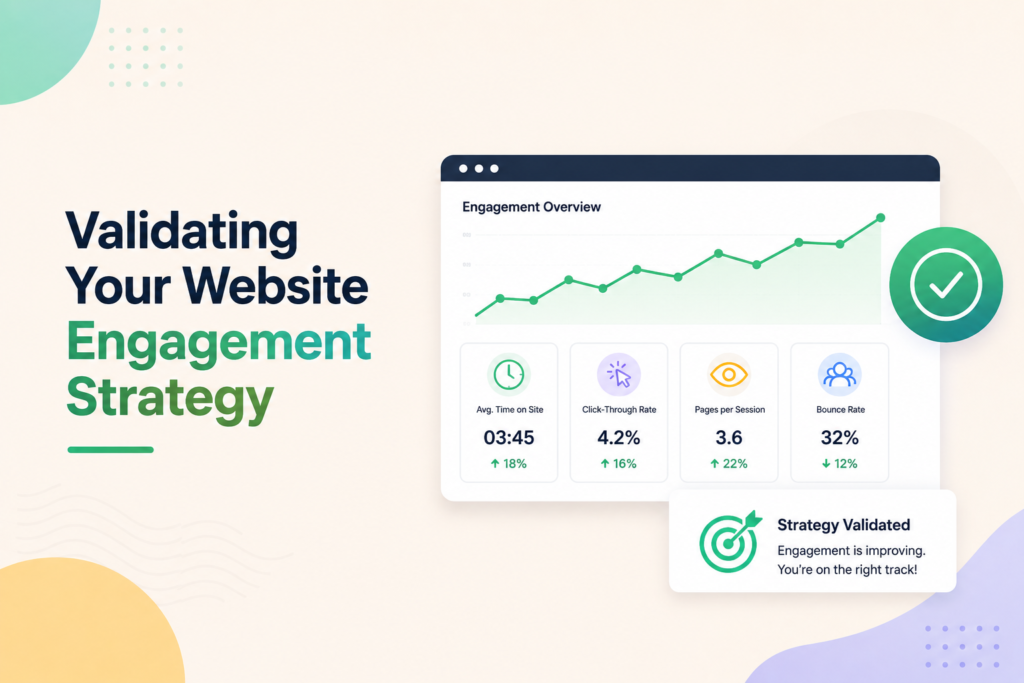
Testing your site architecture ensures that every engagement signal you track is both meaningful and repeatable. Before you commit significant resources to a full-scale SEO campaign, you must verify that your current site structure supports your business goals. Rigorous validation acts as a final gatekeeper, preventing you from scaling a broken user experience.
Running A/B Tests to Confirm Engagement Improvements
A/B testing allows you to compare two versions of a page to see which one performs better. By isolating specific variables, you can determine exactly which changes drive positive user behavior. This process removes guesswork and provides statistical evidence for your design decisions.
- Define a clear hypothesis before starting any test.
- Ensure your sample size is large enough to reach statistical significance.
- Focus on one primary metric, such as click-through rate or form completion.
When you validate your hypotheses through controlled experiments, you minimize the risk of negative impacts. You gain the confidence to implement changes that are proven to boost your site performance. This data-driven approach ensures that your optimizations are based on real user preferences rather than intuition.
Establishing Benchmarks for Success Before Scaling
Before you increase your traffic volume, you need to know what “success” looks like for your specific site. Establishing clear benchmarks helps you identify when your pages are ready to handle more visitors. A reliable engagement signal serves as a baseline for measuring future growth and identifying potential bottlenecks.
You should track these metrics consistently to monitor your progress over time. If your current pages fail to meet these established standards, you should pause your SEO investment to focus on further refinements. Consistency is key when building a foundation for long-term search engine visibility and strong website engagement.
Scaling Your SEO Investment Based on Proven Signals
You can now transform your validated insights into a powerful engine for long-term search visibility. By moving beyond initial experiments, you focus your budget on the areas that truly drive results. Every engagement signal you have collected serves as a roadmap for your future growth.
Allocating Budget Toward High-Performing Content Clusters
Once you identify which topics resonate with your audience, you should concentrate your resources there. High-performing content clusters act as pillars that support your entire domain authority and improve website engagement. Instead of spreading your budget thin, you can double down on the pages that already show strong interaction depth.
This targeted approach ensures that every dollar spent contributes to a measurable engagement signal. You are no longer guessing which topics might work; you are investing in proven winners. This strategy maximizes your return on investment while building a library of content that users actually value.
Aligning SEO Keywords with Demonstrated User Interests
Your keyword strategy must reflect the actual behavior of your visitors. By mapping your SEO targets to the specific interests identified during your testing phase, you create a seamless experience. This alignment ensures that the traffic you attract is primed for conversion from the very first click.
When your keywords match the intent behind each engagement signal, your bounce rates drop and your time on page increases. This creates a positive feedback loop that search engines reward with higher rankings. Use the following table to prioritize your investment areas based on performance data.
| Content Category | Engagement Level | Investment Priority | Expected Outcome |
|---|---|---|---|
| High-Intent Guides | Exceptional | Primary | Increased Conversions |
| Educational Blogs | Moderate | Secondary | Brand Authority |
| General Industry News | Low | Maintenance | Traffic Volume |
Ready to Improve Your Website Engagement Signals?
Drive targeted human traffic to your pages and discover what keeps visitors engaged. Optimize your website first, then invest confidently in long-term SEO growth.
Conclusion
Your path to digital success relies on the bridge between raw traffic and meaningful user action. By validating your website engagement signals before you commit to a large SEO budget, you protect your resources from waste.
Tools like Google Analytics 4 and Hotjar provide the clarity you need to make informed decisions. You gain the power to refine your user experience based on real behavior rather than guesswork.
This proactive approach ensures that every visitor finds value in your content and improves overall website engagement. You build a foundation that supports long-term authority and higher conversion rates.
Take the time to audit your current performance metrics today. Your commitment to data-driven optimization will yield a stronger return on your marketing investment. Start testing your pages now to see how your audience truly interacts with your brand.
FAQs
Why is it critical to analyze website engagement before launching a full SEO campaign?
Prioritizing website engagement ensures that you are not driving traffic to a “leaky bucket.” If your site fails to resonate with users, increasing visibility through SEO will only result in high bounce rates and wasted budget. By validating your engagement signal data first, you confirm that your content and user experience are ready to convert the traffic that Google Search sends your way.
How to increase user engagement on website pages for better search rankings?
You can improve interaction by optimizing your visual hierarchy and content readability. Implementing interactive elements, such as calculators or targeted polls, transforms passive readers into active participants. When visitors spend more time interacting with your pages, it sends a positive signal to search engines that your site provides high-quality value.
What are the most effective website engagement tools for collecting behavioral data?
To get a complete picture of user behavior, you should leverage a combination of quantitative and qualitative tools. Google Analytics 4 (GA4) is essential for tracking user journeys and interaction depth, while heatmapping tools like Hotjar or Microsoft Clarity allow you to see exactly where users click or lose interest. These tools help you identify the friction points that prevent conversions.
How to make a website more engaging for high-intent visitors?
To engage high-intent segments, you must streamline your navigation and ensure your Call-to-Action (CTA) placement is intuitive. By mapping the user journey, you can identify where qualified leads drop off and replace those friction points with personalized content that addresses their specific pain points and needs.
How to re-engage closed-lost deals with new signals from your website?
Knowing how to re-engage closed-lost deals with new signals involves monitoring when past prospects return to your site. By using behavioral data—such as a former lead viewing a specific pricing page or a new case study—you can trigger personalized outreach. This allows your sales team to reconnect with a relevant solution exactly when the prospect is showing renewed interest.
What is the difference between vanity metrics and actionable engagement signals?
Vanity metrics, like total page views, often provide a false sense of success. Actionable engagement signals, such as dwell time and interaction depth, tell you how users are actually consuming your content. Focusing on these deeper metrics allows you to optimize for behaviors that correlate directly with long-term business growth and higher ROI.
How do I validate my engagement strategy before scaling my SEO budget?
Before increasing your investment, you should run rigorous A/B tests using platforms like Optimizely or VWO to confirm that your engagement improvements are statistically significant. Establishing clear benchmarks for success ensures that your website is fully optimized to handle a larger volume of organic traffic successfully.
1 thought on “How to Test Website Engagement Signals Before Investing in SEO”