
Did you know that over 100 million people now rely on AI-driven platforms to find information every single week? This massive shift in user behavior marks the end of the traditional search era. Users no longer want to click through dozens of blue links to find answers.
Instead, they prefer direct, conversational responses generated by large language models. This change forces digital marketers to rethink their visibility strategies entirely. Learning how to optimize your website for ChatGPT is no longer optional, it is a requirement for survival in the modern digital landscape.
As AI search engines become the primary gateway to the internet, your content must evolve. You need to provide clear, authoritative, and structured data that machines can easily interpret. By adjusting your approach now, you ensure that your brand remains a trusted source in this new, automated ecosystem.
Understanding how to optimize your website for ChatGPT today gives your business a competitive advantage as AI search continues to evolve.
Key Takeaways
- AI search engines are rapidly replacing traditional link-based discovery methods.
- Conversational AI prioritizes direct answers over standard keyword-stuffed content.
- Adapting your digital strategy is essential to maintain online visibility.
- Structured data helps AI models understand and index your content accurately.
- Focusing on authority and relevance remains the best way to rank in AI results.
Ready to Rank in AI Search?
Give your website the speed, structure, and reliability AI search engines reward. Explore our optimized hosting and SEO-ready plans built for future growth today.
Understanding the Shift from Traditional SEO to AI Search
The digital landscape is undergoing a massive transformation as search engines evolve from simple link directories into intelligent conversational partners. If you want to understand how to optimize your website for ChatGPT, you must first grasp how AI fundamentally changes the search experience. This transition moves us away from a world of static lists toward a dynamic environment of synthesized knowledge.
How Large Language Models Process Web Data
Large Language Models (LLMs) do not simply crawl pages to index keywords; they ingest vast amounts of information to understand context and relationships. These models use a process called tokenization to break down text into smaller units, allowing them to predict and generate human-like responses. By identifying patterns across billions of data points, AI systems build a sophisticated map of human knowledge.
“The future of search is not about finding a page; it is about finding the answer. AI models are becoming the bridge between raw data and actionable intelligence.”
This knowledge forms the foundation of how to optimize your website for ChatGPT effectively.
The Difference Between Keyword Ranking and Answer Generation
Traditional SEO focuses on achieving high rankings for specific search terms to drive clicks to your site. In contrast, AI search engines prioritize answer generation, where the goal is to provide a direct, accurate response within the chat interface itself. This shift means that your content must be structured to be easily parsed and verified by machine learning algorithms.
| Feature | Traditional SEO | AI Search Optimization |
|---|---|---|
| Primary Goal | Click-through rate | Direct answer accuracy |
| Output Format | List of blue links | Synthesized summaries |
| Success Metric | Keyword ranking position | Entity authority and trust |
| User Interaction | Passive browsing | Active conversation |
Learning how to optimize your website for ChatGPT requires you to pivot your strategy toward providing high-quality, verifiable information. By focusing on clarity and entity-based content, you ensure that your site remains a valuable resource for both human users and AI systems.
How to Optimize Your Website for ChatGPT Through Authority Building
When you focus on authority, you naturally improve how to optimize your website for ChatGPT and other intelligent search tools. Building a reputation as a reliable source of information is critical for long-term visibility in AI-driven search results. By prioritizing high-quality signals, you ensure that your content remains a preferred choice for automated systems.
Establishing E-E-A-T for AI Trustworthiness
The E-E-A-T framework—Experience, Expertise, Authoritativeness, and Trustworthiness—is the gold standard for proving your value to AI models. You should clearly display author bios, cite original research, and maintain a consistent tone across your platform. These elements act as digital markers that help AI systems verify your credibility.
Demonstrating expertise requires you to provide deep, nuanced insights that go beyond surface-level summaries. When you consistently produce accurate and well-researched content, you build a foundation of trust. This trust is essential for any strategy regarding how to optimize your website for ChatGPT.
Leveraging Backlinks as Citations for AI Models
In the world of AI, backlinks function much like academic citations in a research paper. When reputable websites link to your content, they provide a vote of confidence that AI models use to validate your information. You should focus on earning high-quality links from industry-leading domains to strengthen your authority.
These citations help AI engines distinguish between factual data and low-quality noise. By treating your link-building strategy as a way to earn citations, you improve your standing in the eyes of sophisticated algorithms. Authoritative backlinks remain an important part of how to optimize your website for ChatGPT. The following table highlights how these signals differ from traditional metrics.
| Signal Type | Traditional SEO Focus | AI-Driven Focus |
|---|---|---|
| Backlinks | Ranking power | Source verification |
| Content Depth | Keyword density | Expertise and accuracy |
| Brand Presence | Traffic volume | Entity recognition |
| Trust Signals | Domain authority | E-E-A-T compliance |
Ultimately, understanding how to optimize your website for ChatGPT involves a shift toward quality over quantity. By focusing on these authority-building pillars, you create a sustainable path for your brand in the evolving search landscape.
Structuring Content for AI Readability and Extraction
Proper formatting acts as a roadmap for AI crawlers navigating your website. When you organize your information logically, you allow AI models to parse your content with greater accuracy and depth. This level of website optimization ensures that your message remains clear even when processed by complex algorithms. Clear formatting is one of the easiest ways to learn how to optimize your website for ChatGPT.
Using Schema Markup to Define Data Relationships
Schema markup serves as a standardized language that helps search engines understand the specific entities on your page. By implementing structured data, you explicitly define the relationships between different data points, such as authors, dates, and product specifications. Using JSON-LD is the most recommended method for embedding this data, as it keeps your code clean and easy for machines to read.
When you provide this explicit context, you reduce the guesswork for AI models. This form of website optimization is a core part of how to optimize your website for ChatGPT because helps your content appear in rich snippets and knowledge panels. It effectively bridges the gap between raw text and machine-readable data, making your site a preferred source for AI-generated answers.
Implementing Semantic HTML for Better Contextual Understanding
Semantic HTML provides the necessary cues for AI crawlers to understand the hierarchy and intent of your information. Instead of using generic tags, you should utilize elements like <header>, <nav>, <article>, and <section> to define the structure of your page. Semantic tags tell the AI exactly which parts of your content are the main focus and which are supplementary.
This structural clarity is vital for modern website optimization strategies. By clearly labeling your content, you help AI engines distinguish between primary topics and secondary details. This leads to more accurate indexing and better alignment with user queries in conversational search environments. Semantic structure strengthens how to optimize your website for ChatGPT across AI search platforms.
Crafting High-Quality Content That AI Engines Prefer
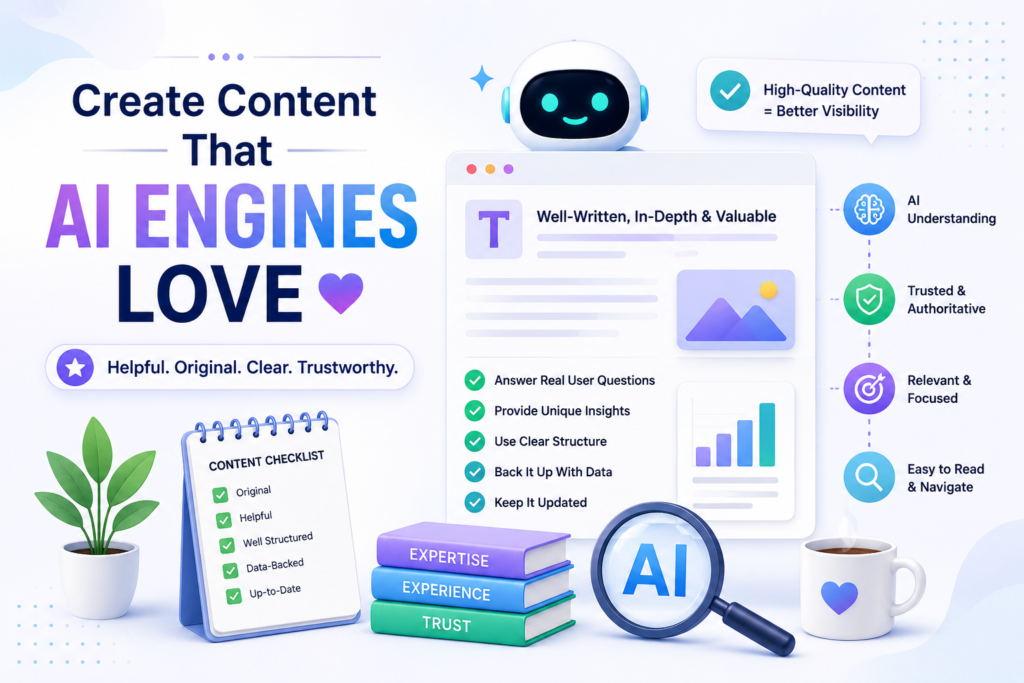
Mastering how to optimize your website for ChatGPT starts with creating content that delivers genuine value to both users and AI systems. These systems prioritize content that delivers immediate value through clear, logical, and precise communication. By refining your writing style, you can better align your pages with the requirements of conversational search interfaces.
Focusing on Direct Answers and Concise Explanations
AI models excel at extracting specific facts from your text to answer user queries. To improve your visibility, you should structure your content to provide direct answers early in the page. Avoid excessive fluff or long-winded introductions that delay the core information.
Consider these best practices for concise writing:
- Use short, punchy sentences to convey complex ideas.
- Place the most important answer in the first paragraph.
- Utilize bullet points to break down technical data for easier extraction.
- Ensure your website optimization efforts include clear headings that mirror common user questions.
Providing concise answers is central to how to optimize your website for ChatGPT successfully.
The Importance of Original Research and Unique Insights
While clarity is essential, AI engines also look for depth and authority. Original research serves as a primary differentiator that helps your content stand out from generic, AI-generated summaries. When you provide unique insights, you establish your brand as a primary source of truth.
You should aim to include proprietary data, case studies, or expert interviews that cannot be found elsewhere. This approach not only builds trust with human readers but also signals to AI models that your site offers high-value, authoritative content.
Consistent website optimization through original research ensures that your platform remains a preferred destination for both users and search algorithms. Original research separates average content from content that demonstrates how to optimize your website for ChatGPT properly.
Optimizing for Conversational Search Queries
Modern search habits are changing as users increasingly rely on voice commands and conversational AI. To stay ahead in the digital landscape, you must adapt your content to match how people speak to AI assistants.
Taking this approach will help you improve website ranking by aligning your pages with the natural language patterns of your audience. Natural language optimisation is an important aspect of how to optimize your website for ChatGPT.
Targeting Long-Tail Natural Language Keywords
Traditional keyword research often focuses on short, fragmented phrases. However, AI models process queries that sound like complete sentences or questions. You should identify long-tail keywords that mirror the way a person speaks during a casual conversation.
By integrating these natural language phrases into your headers and body text, you make it easier for AI to extract relevant information. This is another essential step in how to optimize your website for ChatGPT for conversational search. This strategy is a proven way to improve website ranking in an era where search engines prioritize context over simple keyword matching.
Addressing User Intent Behind Complex Questions
Users often turn to AI to solve specific problems or gain deep insights. When you address the intent behind these complex questions, you position your website as a definitive resource. Providing clear, concise, and structured answers ensures that your content remains highly relevant to the user’s needs.
The following table highlights the key differences between traditional SEO and conversational AI optimization strategies to help you improve website ranking effectively. Meeting user intent is another pillar of how to optimize your website for ChatGPT.
| Feature | Traditional SEO | Conversational AI |
|---|---|---|
| Query Style | Short, fragmented keywords | Natural, full-sentence questions |
| Content Focus | Keyword density and volume | Direct answers and intent |
| User Goal | Finding a specific link | Solving a complex problem |
| Success Metric | Click-through rate | Answer accuracy and authority |
Technical Website Optimization for AI Crawlers
Technical health remains the backbone of your digital presence in an era dominated by AI. While content quality is vital, your site must be accessible and fast for automated systems to process it correctly. Effective website optimization ensures that your pages are not just visible, but also easy for AI models to interpret and index.
Power Your AI-Ready Website
Fast hosting, strong security, and optimized performance create the perfect foundation for AI visibility. Compare our affordable plans and prepare your website for tomorrow.
Improving Page Speed and Core Web Vitals
AI crawlers and large language models prioritize sites that load quickly and offer a seamless user experience. When your pages load instantly, you reduce the bounce rate and provide a cleaner data stream for search algorithms. Core Web Vitals serve as the standard for measuring this performance, focusing on loading speed, interactivity, and visual stability.
You should compress images, leverage browser caching, and minimize heavy scripts to boost your site speed. These performance improvements are fundamental to how to optimize your website for ChatGPT because AI systems favour fast, accessible websites.
These technical improvements make it easier for AI bots to crawl your entire site architecture without hitting bottlenecks. By prioritizing these metrics, you create a reliable environment for both human visitors and machine intelligence.
Managing Robots.txt and AI Bot Access
Your robots.txt file acts as the gatekeeper for your site, dictating which parts of your architecture are open to crawlers. As new AI bots emerge, you must decide which ones should access your proprietary data and which should be restricted. Proper website optimization involves keeping this file updated to reflect your current content strategy.
You can use specific directives to allow or disallow access for various AI agents. This control helps you protect sensitive information while ensuring that your most valuable content remains discoverable.
Effective crawler management is another important aspect of how to optimize your website for ChatGPT while maintaining a healthy website infrastructure. Proper crawler management supports how to optimize your website for ChatGPT without sacrificing performance.
The Role of Brand Mentions and Entity SEO
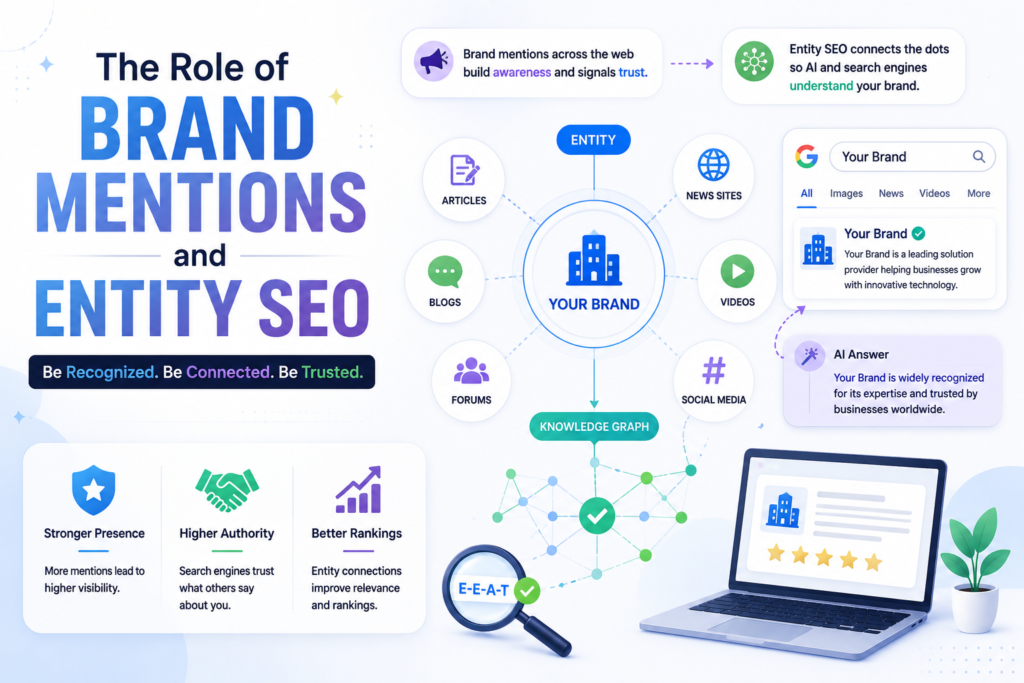
Modern search engines are shifting their focus from simple keyword matching to understanding your brand as a distinct entity. By focusing on how AI models perceive your business, you can effectively improve website ranking in an increasingly automated landscape. This approach requires a shift in strategy toward building a cohesive digital identity that machines can easily recognize and trust.
Building a Strong Knowledge Graph Presence
A knowledge graph acts as a digital map that connects your brand to specific topics, industries, and locations. When you establish a presence here, you provide AI models with a clear context for your content. This clarity helps search engines verify your authority, which is a proven way to improve website ranking over time.
You can strengthen this presence by using structured data to define your organization on your website. Ensure that your business name, logo, and social profiles are consistent across all platforms. This consistency helps AI crawlers link your various digital assets into one unified entity. Entity recognition plays a growing role in how to optimize your website for ChatGPT.
Managing Your Brand Reputation Across AI Platforms
Your brand reputation is no longer just about human perception; it is a data point for AI algorithms. These systems analyze mentions across news sites, social media, and review platforms to gauge your trustworthiness. Maintaining a positive sentiment is essential to improve website ranking and ensuring your brand appears in relevant AI-generated answers.
Proactive reputation management involves monitoring where your brand is mentioned and addressing negative feedback quickly. When AI platforms see a consistent, positive narrative surrounding your business, they are more likely to prioritize your content. Building trust through high-quality interactions and verified mentions remains a cornerstone of modern search success. A strong online reputation reinforces how to optimize your website for ChatGPT by improving your brand’s credibility across AI-driven platforms.
Monitoring Your Performance in AI Search Results
You must adapt your measurement strategy to capture the impact of conversational search on your digital presence. Traditional analytics often overlook the specific ways that large language models interact with your web pages.
By shifting your focus, you can gain a clearer picture of how users discover your brand through modern interfaces. Regular analysis helps refine how to optimize your website for ChatGPT over time.
Tracking Referral Traffic from AI-Powered Tools
Identifying traffic from AI platforms requires a proactive approach to your analytics setup. Many conversational search engines do not pass standard referral headers, making it difficult to see where visitors originate. You should utilize custom UTM parameters and server-side logging to bridge this data gap effectively.
Consider these essential steps to monitor your reach:
- Implement unique tracking tags for AI-specific landing pages.
- Monitor direct traffic spikes that correlate with AI model updates.
- Use log file analysis to identify bot activity from known AI crawlers.
Analyzing Changes in Organic Search Visibility
Fluctuations in your search presence often signal how well your content aligns with AI requirements. When you notice shifts in your rankings, you should investigate whether your content is being cited as a primary source. These insights allow you to improve website ranking by refining your answers to match the intent of complex queries. Continually refining your content is essential if you want to master how to optimize your website for ChatGPT over the long term.
To maintain a competitive edge, you must treat your content as a living entity that evolves with user needs. Regularly auditing your performance helps you identify which topics resonate with AI models, allowing you to continuously refine how to optimize your website for ChatGPT as AI search evolves. Taking these data-driven steps will ultimately improve website ranking and ensure your brand remains a trusted authority in the eyes of both users and machines.
Common Pitfalls to Avoid in AI Search Optimization
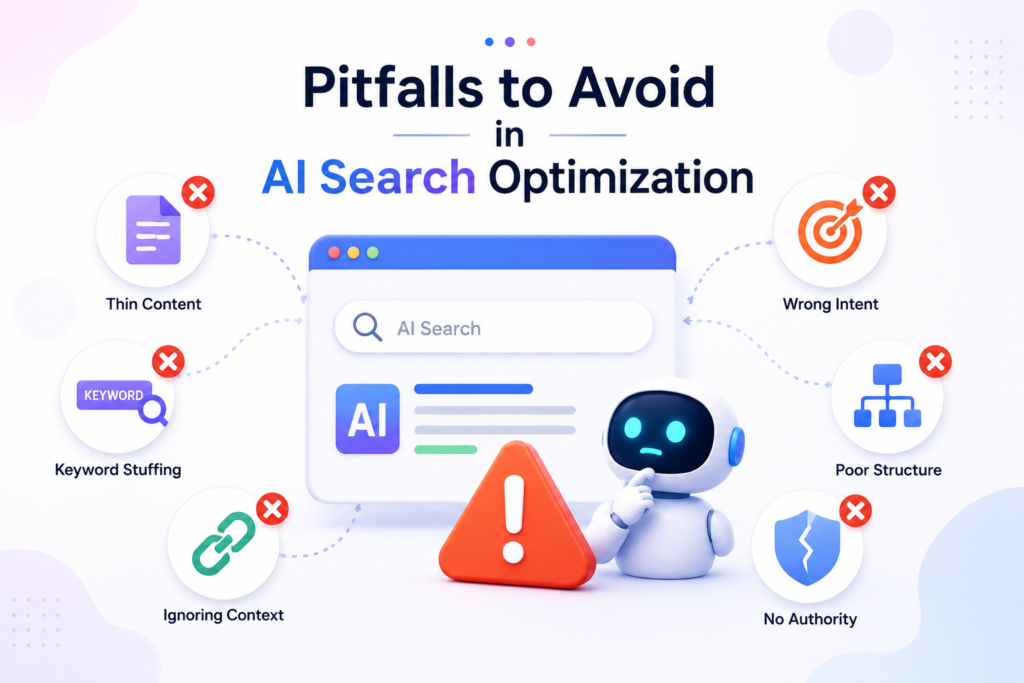
Achieving high visibility in AI-driven results is not just about what you do, but also about what you avoid. Many site owners struggle because they rely on legacy tactics that no longer align with how modern models interpret data. Learning how to optimize content for chatgpt effectively means recognizing which actions might actually hinder your progress.
Avoiding Keyword Stuffing and Low-Value Content
Keyword stuffing remains one of the most damaging practices for any website. When you force keywords into sentences, you disrupt the natural flow of information, which AI models now identify as low-quality. Instead of repeating terms, focus on providing comprehensive answers that satisfy user intent.
Low-value content often lacks depth or original insight. If your pages simply aggregate information found elsewhere without adding unique value, AI engines will likely ignore them. You must prioritize high-quality, authoritative information to remain relevant in the eyes of advanced algorithms.
Preventing Over-Optimization That Triggers Spam Filters
Over-optimization occurs when you try to manipulate search results through excessive technical tweaks. This includes unnatural internal linking patterns or hiding text to influence rankings. These behaviors often trigger spam filters, which can lead to a significant drop in your site’s visibility.
To succeed, you should focus on creating a natural user experience. When you learn how to optimize content for chatgpt, prioritize clarity and structure over aggressive manipulation. Maintaining a clean, honest approach ensures your site remains compliant with evolving quality standards.
| Optimization Strategy | Outdated Practice | Modern AI-Friendly Approach |
|---|---|---|
| Keyword Usage | Repetitive stuffing | Natural, contextual usage |
| Content Depth | Thin, surface-level text | Comprehensive, unique insights |
| Link Building | Massive link exchanges | Authoritative, relevant citations |
| Technical Focus | Manipulative meta-tagging | Semantic HTML and Schema |
Future-Proof Your Online Presence
Turn these AI SEO strategies into measurable results with hosting designed for speed, reliability, and scalability. Discover the perfect plan and grow confidently today.
Conclusion
The landscape of search is shifting toward intelligent, conversational interfaces. Mastering how to optimize content for chatgpt requires a blend of technical precision and a commitment to genuine authority.
You must prioritize clear, structured data to help models like OpenAI or Google Gemini interpret your expertise. Businesses that understand how to optimize your website for ChatGPT today will be better prepared for the future of AI-powered search. Building trust through verified research remains the most effective way to secure your position in these new search environments.
Your long-term success depends on your ability to provide direct, high-value answers to complex user queries. Learning how to optimize content for chatgpt is an ongoing process that rewards those who focus on human-centric information.
Stay agile as these technologies evolve. Keep refining your technical infrastructure and your content strategy to maintain a competitive edge. Your dedication to quality will ensure your brand remains visible and relevant in the age of AI-driven discovery.
Ultimately, knowing how to optimize your website for ChatGPT will help your content remain discoverable as AI search becomes mainstream.
FAQs
Why is it necessary to learn how to optimize your website for ChatGPT compared to traditional search engines?
Unlike Google, which provides a list of links, ChatGPT and SearchGPT synthesize information to provide direct answers. You need to focus on website optimization that prioritizes data extraction and readability, ensuring that OpenAI’s models can easily pull your content to form their responses.
How does the way Large Language Models process data affect your SEO strategy?
Large Language Models (LLMs) ingest vast amounts of web data to understand context rather than just matching keywords. To improve website ranking in this environment, you must shift your focus from simple keyword density to providing high-quality, verifiable information that AI crawlers like GPTBot can categorize as authoritative.
What role does Google’s E-E-A-T play in AI-driven search results?
Experience, Expertise, Authoritativeness, and Trustworthiness (E-E-A-T) are critical because AI models prioritize credible sources to avoid “hallucinations.” When you demonstrate these qualities, you ensure your site remains a primary citation source for Microsoft Bing and ChatGPT, effectively building trust with both the AI and your audience.
Can Schema markup really help you understand how to optimize content for ChatGPT?
Yes, Schema.org markup acts as a translator for AI. By using structured data, you explicitly define the relationships between your products, reviews, and articles. This makes it significantly easier for AI engines to extract specific details and present them accurately in conversational results.
How should you structure your writing to appeal to conversational AI search engines?
You should focus on providing direct, concise answers at the beginning of your content. How to optimize content for ChatGPT involves using an “inverted pyramid” style—leading with the most important facts—followed by original research and unique insights that differentiate your brand from generic AI-generated filler.
What are conversational search queries and why should you target them?
Conversational queries are long-tail, natural language phrases users speak or type into AI interfaces, such as “What is the best way to…” or “How do I…”. By targeting these specific intents, you align your website optimization with the way humans actually interact with Siri, Alexa, and OpenAI tools.
How do you manage your website’s relationship with AI crawlers via robots.txt?
You can control how bots interact with your site by updating your robots.txt file. While allowing access to GPTBot or Common Crawl (CCBot) can increase your visibility in AI responses, you must balance this with protecting your intellectual property and managing server load to maintain optimal Core Web Vitals.
What is Entity SEO and how does it impact your brand’s reputation in AI?
Entity SEO involves establishing your brand as a recognized “entity” within the Google Knowledge Graph. When AI models see your brand mentioned consistently alongside specific topics on reputable sites like Wikipedia or LinkedIn, they are more likely to recommend you as a trusted solution for relevant user queries.
How can you track if your traffic is coming from AI-powered search tools?
You should monitor your referral traffic in Google Analytics 4 for sources like `chatgpt.com` or `perplexity.ai. Since traditional organic click-through rates may shift, tracking these specific referrers helps you measure the success of your efforts to improve website ranking within AI search ecosystems.
What common mistakes should you avoid when learning how to optimize your website for ChatGPT?
Avoid keyword stuffing and producing low-value, repetitive content, as these “black hat” tactics are easily flagged by sophisticated AI filters. Furthermore, stay away from over-optimization that compromises user experience; AI engines prioritize content that is genuinely helpful and easy for a human to read.
4 thoughts on “How to Optimize Your Website for ChatGPT and AI Search Engines”