
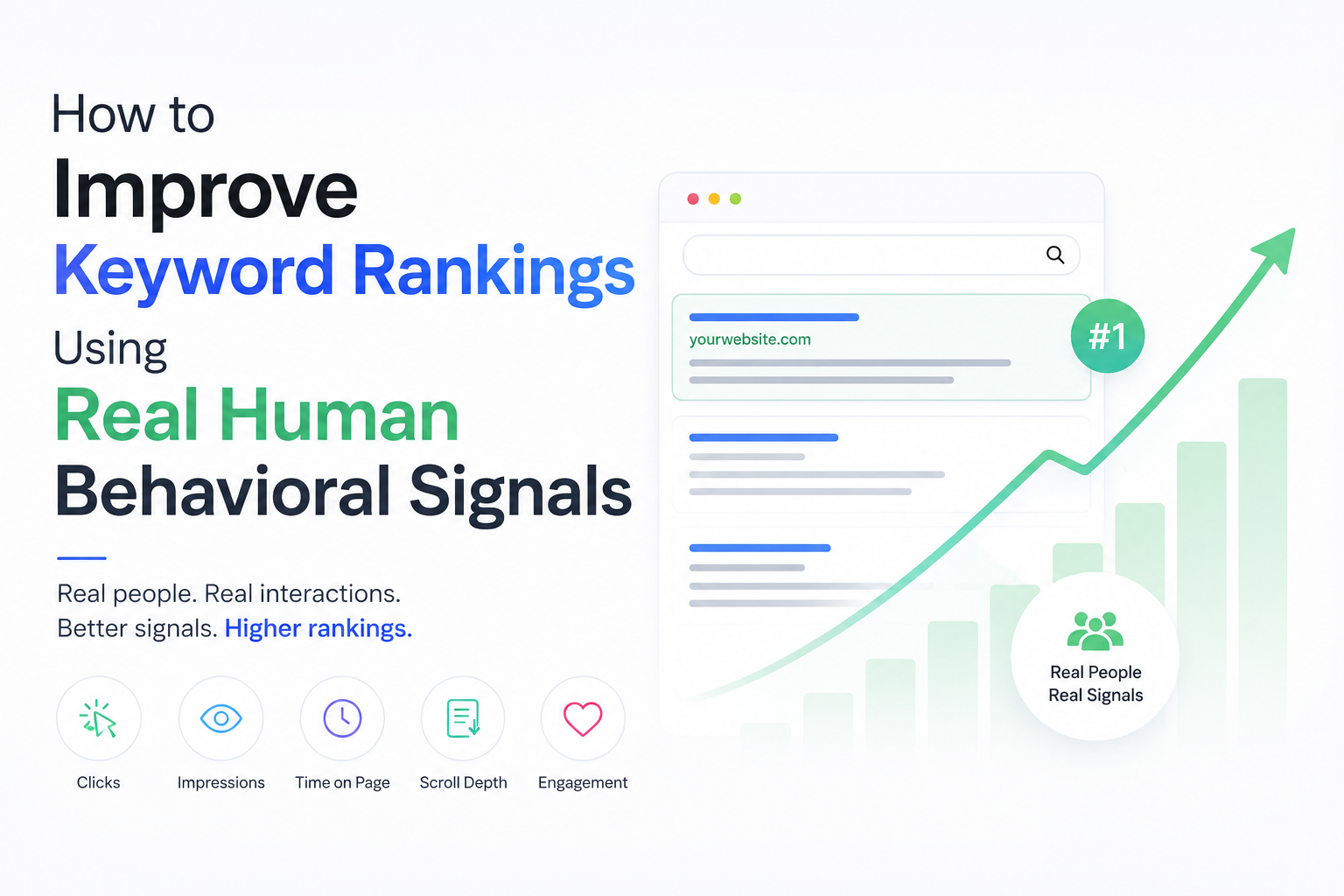
Have you ever wondered why some websites dominate search results while others struggle to gain visibility, despite having perfect technical setups? The secret often lies in how users interact with your content. Modern search engines prioritize human behavioral signals to determine the true value of a page.
By focusing on user satisfaction, you can effectively boost organic traffic, improve keyword rankings and build a sustainable digital presence. These signals act as a vital bridge between complex algorithms and actual human intent. When you align your strategy with what people truly want, you create a more resilient foundation for long-term success and improve keyword rankings in the United States market.
Prioritizing these metrics allows you to adapt to the ever-changing landscape of modern search. It is time to move beyond basic optimization and start listening to what your audience is telling you through their actions.
Key Takeaways
- Human behavioral signals are now a primary factor in search engine algorithms.
- Focusing on user intent helps you achieve better visibility in competitive markets.
- Technical SEO must be paired with high-quality user experiences to succeed.
- Analyzing engagement metrics provides a roadmap for content refinement.
- Adapting to user behavior creates a sustainable strategy for long-term growth.
Struggling to Rank Higher?
Improve user signals, boost engagement, and improve keyword rankings for stronger visibility, and lasting organic growth.
Understanding the Role of Behavioral Signals in Modern SEO
To truly master search rankings, you must look at how real people interact with your website. While traditional strategies focused heavily on external links, the current digital landscape prioritizes the actual experience of your visitors. By focusing on these interactions, you can effectively increase search visibility, improve keyword rankings, and build a more sustainable online presence.
Defining User Behavioral Metrics
User behavioral metrics are the specific data points that reveal how visitors engage with your content. These metrics include dwell time, click-through rates, and the frequency of users returning to search results. Monitoring these seo behavioral factors allows you to identify what keeps your audience interested and ultimately improve keyword rankings over time.
When you track these metrics, you gain a clearer picture of your site’s performance. It is not just about getting traffic; it is about ensuring that the traffic finds value in your pages. High engagement levels serve as a strong indicator to search engines that your content satisfies user intent.
How Search Engines Interpret Human Interaction
Modern search algorithms use machine learning to process vast amounts of interaction data. They analyze patterns to determine if a user found the information they needed or if they felt frustrated by the experience. This interpretation process helps search engines rank pages that provide the most relevant answers and helps businesses improve keyword rankings for targeted searches.
If a user clicks your link and stays on your page for a significant amount of time, the algorithm views this as a positive signal. Conversely, if a user immediately clicks the “back” button, it suggests that your page failed to meet their expectations. Understanding these nuances is essential to increase search visibility in a competitive market.
The Shift from Backlinks to User Satisfaction
The industry has moved away from relying solely on backlinks as the primary measure of authority. While links remain important, search engines now place a higher premium on user satisfaction as a core ranking factor. This shift forces marketers to prioritize the quality of the user journey over manipulative link-building tactics.
The following table highlights the fundamental differences between the old approach and the modern, behavior-focused strategy:
| Metric Category | Traditional SEO Focus | Modern Behavioral Focus |
|---|---|---|
| Primary Goal | Quantity of Backlinks | Quality of User Experience |
| Success Indicator | Domain Authority Score | Dwell Time and Engagement |
| Content Strategy | Keyword Density | User Intent Satisfaction |
| Ranking Driver | External Validation | Human Interaction Signals |
By aligning your strategy with these seo behavioral factors, you ensure that your website remains resilient against algorithm updates. Focusing on the human element of your traffic is the most reliable way to achieve long-term growth.
Analyzing Click-Through Rate as a Primary Ranking Factor
High engagement starts long before the click, beginning with the first impression you make in the search results. Your click-through rate (CTR) serves as a vital indicator of how well your content matches search intent and helps improve keyword rankings. Businesses looking to increase organic CTR often see stronger engagement and improved search visibility. By refining these initial touchpoints, you can effectively increase search visibility and capture the attention of your target audience.
Optimizing Meta Titles for Higher Engagement
Your meta title is the most prominent element of your search listing. To capture interest, keep your titles under 60 characters to ensure they appear fully in search results. Focus on including your primary keyword near the beginning to improve keyword rankings while adding a compelling hook that encourages users to click.
Avoid generic titles that fail to stand out against competitors. Instead, use power words or specific benefits to improve seo rankings by signaling high relevance to both users and search engines.
Crafting Meta Descriptions That Drive Action
Think of your meta description as a short advertisement for your page. While it does not directly influence rankings, it plays a massive role in driving the traffic that eventually boosts your performance. Use active voice and include a clear call to action to entice users to visit your site and improve keyword rankings naturally.
Ensure your description accurately reflects the content on the page to maintain user trust. When users find exactly what they expect, they are more likely to stay, which helps to increase search visibility over time.
Leveraging Schema Markup to Enhance Search Snippets
Schema markup allows you to provide search engines with structured data about your content. By implementing this code, you can display rich snippets, such as star ratings, product prices, or event dates, directly in the search results. These visual enhancements make your listing stand out, which is a proven way to improve seo rankings through higher engagement.
Do not overlook the power of visual cues in a crowded search environment. Using schema helps search engines understand your content better, ensuring that your most important pages reach the right audience at the right time.
Reducing Pogo-Sticking to Improve Keyword Rankings
Many marketers focus on behavioral engagement as part of a broader strategy for improving Google Search Console rankings. When visitors quickly bounce back to search results, your rankings suffer. This behavior, known as pogo-sticking, signals to search engines that your page failed to provide the value the user expected. By mastering these seo behavioral factors, you can keep visitors on your site longer and improve keyword rankings with stronger engagement.
More Traffic Starts With Better User Signals
If visitors are leaving too soon, your rankings are paying the price. Keep users engaged and turn clicks into lasting growth.
Identifying Why Users Return to Search Results
Users typically return to search results when they encounter immediate friction. This often happens because the content does not match the query or the page is difficult to navigate. Identifying these pain points is essential to stop the cycle of abandonment.
Common reasons for this behavior include misleading titles, broken links, or content that is too thin to answer the user’s question. When you address these issues, you directly improve keyword rankings by proving your site is a reliable destination.
Aligning Content Intent with Search Queries
Your content must satisfy the specific intent behind a search query. If a user searches for a “how-to” guide, they expect a clear, step-by-step process rather than a sales pitch. Matching your content structure to the user’s goal is a powerful way to reduce bounce rates and improve keyword rankings.
Review your top-performing pages to see if the information provided matches the search intent. If you find a mismatch, rewrite your headers and body text to better serve the user’s needs. This alignment is a critical component of modern search optimization.
Improving Page Load Speed and Core Web Vitals
Technical performance plays a massive role in user retention. If a page takes too long to load, users will leave before they even see your content. Improving your Core Web Vitals ensures a smooth, fast experience that encourages visitors to stay and and improve keyword rankings.
| Issue Type | Impact on User | Recommended Fix |
|---|---|---|
| Slow Loading | High frustration | Optimize image sizes |
| Layout Shift | Poor readability | Set fixed dimensions |
| Irrelevant Content | Immediate exit | Refine keyword targeting |
Focusing on these technical elements will help you improve keyword rankings over time. By prioritizing a seamless user experience, you turn casual visitors into engaged readers. Addressing these seo behavioral factors is a proven strategy for long-term success.
Optimizing Dwell Time and Engagement Depth
Mastering the art of engagement is essential for those looking to boost organic traffic. Dwell time serves as a critical metric that reflects how long a visitor stays on your page before returning to the search results. When you provide immediate value, you encourage users to explore further, which signals to search engines that your content satisfies their needs.
Creating Compelling Above-the-Fold Content
The first few seconds of a user’s visit determine whether they stay or leave. You must ensure your above-the-fold content is both visually striking and highly relevant to the search query. By placing a clear value proposition at the very top, you capture interest immediately.
Avoid cluttering the top of your page with excessive ads or pop-ups. Instead, focus on a strong headline and a concise summary that promises a solution to the user’s problem. This approach helps to boost organic traffic by reducing the likelihood of an immediate exit.
Using Multimedia to Increase Time on Page
Text alone may not always be enough to keep a reader engaged for long periods. Integrating high-quality multimedia elements like videos, infographics, or interactive charts can significantly increase the time spent on your page and improve keyword rankings. These assets provide a break from dense text and offer information in a more digestible format.
“User experience is the silent partner of SEO; when you prioritize the human, the algorithm follows.”
When you embed a relevant video, you provide an alternative way for users to consume your content. This strategy is highly effective for complex topics where visual aids clarify difficult concepts. As users watch or interact with these elements, your session duration naturally climbs.
Structuring Content for Readability and Scannability
Most online readers scan content before they commit to reading it in full. You can improve your engagement depth by using short paragraphs, bullet points, and descriptive subheadings. This structure makes your information accessible and prevents users from feeling overwhelmed by large blocks of text to improve keyword rankings.
Consider the following table to understand how different engagement strategies impact your site performance:
| Strategy | Primary Benefit | Impact on Dwell Time |
|---|---|---|
| Video Integration | Visual Engagement | High Increase |
| Bullet Points | Improved Scannability | Moderate Increase |
| Clear Headings | Better Navigation | Moderate Increase |
| Interactive Tools | Active Participation | Very High Increase |
By implementing these formatting techniques, you make it easier for visitors to find exactly what they need. A well-organized page encourages users to stay longer, which is a proven way to boost organic traffic over time. Always prioritize the user’s journey to ensure your content remains both helpful and engaging.
Utilizing Internal Linking to Guide User Journeys
You can transform your website into a cohesive ecosystem by strategically connecting your pages through internal links. This practice is far more than a technical requirement; it is a powerful tool for guiding users through your site in a logical, intuitive manner. When you map out these connections, you help your visitors find exactly what they need to solve their problems.
By creating a clear path, you directly influence how people interact with your content. This proactive approach is essential to improve seo rankings because it signals to search engines that your site is well-organized and authoritative. When users find value in every click, they are more likely to stay longer, which is one of the most critical seo behavioral factors to monitor.
Mapping User Paths for Better Navigation
Effective navigation starts with understanding the natural progression of your reader’s interest. You should structure your internal links to mirror the way a user moves from a broad topic to a specific solution. By organizing your content into logical clusters, you create a seamless journey that keeps visitors moving forward rather than hitting a dead end.
Think of your internal links as signposts on a trail. If a reader is learning about a complex subject, provide links to foundational articles or advanced guides that deepen their understanding. This intentional mapping ensures that your audience remains engaged with your brand for longer periods.
Reducing Bounce Rates Through Contextual Links
Contextual links are the most effective way to keep a reader on your site after they finish a single article. By embedding links directly into your prose, you offer immediate value that encourages further exploration. This strategy is highly effective at reducing bounce rates, as it provides a natural next step for the curious reader.
When you provide relevant, high-quality links, you demonstrate that your site is a comprehensive resource. This reinforces your relevance in the eyes of search engines and helps improve seo rankings over time. Ultimately, mastering these seo behavioral factors allows you to build a site that users love and search engines trust.
Utilizing Heatmaps and Session Recordings for Insights
If you want to improve seo rankings, you need to see your website through the eyes of your actual users. Standard analytics tools often provide a broad overview of traffic, but they rarely explain the specific reasons behind user behavior. By integrating heatmaps and session recordings, you gain a clear window into how visitors interact with your content in real-time and can improve keyword rankings.
Identifying Friction Points in User Experience
Friction points are the hidden obstacles that cause users to abandon your site prematurely. When visitors struggle to find information or encounter broken elements, they often leave, which signals to search engines that your page may not satisfy their intent. You can use heatmaps to visualize exactly where users click, scroll, and hover.
Common issues that often hinder your performance include:
- Confusing navigation menus that lead users away from your primary content.
- Dead zones where users expect a link but find only static text.
- Elements that look like buttons but are not clickable, causing frustration.
- Forms that are too long or complex, leading to high abandonment rates.
Testing Layout Changes Based on Real Behavior
Once you identify these obstacles, you should move toward data-driven design rather than relying on guesswork. Session recordings allow you to watch individual user journeys, providing context that static data cannot offer. You can see exactly where a user hesitates or gets distracted before they decide to leave your page.
Use these insights to perform strategic layout adjustments that streamline the user experience. By testing these changes, you ensure that every modification serves a clear purpose. This proactive approach helps improve seo rankings by fostering a smoother, more intuitive journey that encourages long-term visitor loyalty and engagement.
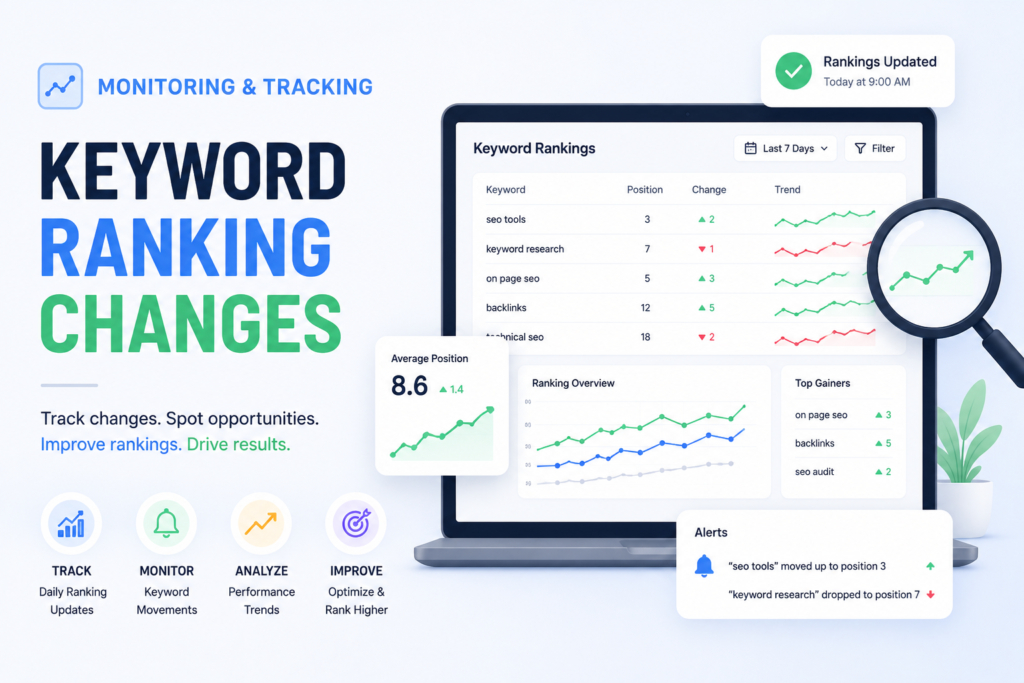
Monitoring and Tracking Keyword Ranking Changes
You cannot effectively manage your search performance without a clear view of your data. Measuring your progress is the most critical step in any successful search engine optimization strategy. By consistently working to track keyword ranking changes, you can refine your approach and continue to improve keyword rankings over time.
Setting Up Behavioral Tracking in Google Analytics
To gain actionable insights, you must configure Google Analytics 4 to capture specific user interactions. Start by defining custom events that align with your business goals, such as button clicks, video views, or scroll depth. These metrics provide a clear picture of how visitors engage with your content after arriving from a search engine.
Ensure that your tracking implementation is accurate by using Google Tag Manager. This tool allows you to deploy tags without modifying your website code directly. Consistent data collection is the only way to ensure your reports reflect real human behavior accurately.
Correlating Behavioral Improvements with Ranking Gains
Once you have established a baseline, you can begin to correlate behavioral shifts with your search visibility. Look for patterns where increased dwell time or lower bounce rates coincide with upward movement in search results. This data-driven validation helps you confirm which content updates help improve keyword rankings.
Use annotation features in your reporting tools to mark when you make significant changes to your pages. By comparing these dates against your ranking reports, you can see the direct impact of your efforts. This process allows you to improve keyword rankings by doubling down on the tactics that drive the most positive user signals.
Remember that SEO is an iterative process that requires constant vigilance. When you actively track keyword ranking changes, you gain the confidence to pivot your strategy based on evidence rather than guesswork. Staying informed through your analytics dashboard is the best way to maintain a competitive edge in the search landscape.
Advanced Strategies to Boost Organic Traffic
Taking your SEO strategy to the next level requires a shift toward more personalized and interactive experiences. Once you have mastered the fundamentals, you can implement these advanced tactics to increase search visibility and capture more attention from your target audience to improve keyword rankings. By focusing on how users behave after their first visit, you can effectively boost organic traffic over the long term.
Personalizing Content for Returning Visitors
Returning visitors represent a high-value segment of your audience. You can use behavioral data to show them content that aligns with their previous interests or browsing history. This creates a tailored experience that makes users feel understood and valued by your brand while helping improve keyword rankings through stronger engagement signals.
Consider using dynamic content blocks that change based on the user’s past interactions. For example, if a visitor previously read articles about home gardening, you might display a banner for a new gardening guide on their next visit. This level of personalization keeps your site relevant and encourages repeat visits, which signals to search engines that your content provides lasting value.
Implementing Interactive Elements to Encourage Interaction
Static content is often not enough to keep users engaged for long periods. By adding interactive tools, you can transform passive readers into active participants. These elements are excellent for providing unique value and helping improve keyword rankings over time.
Tools like calculators, quizzes, or interactive maps can significantly boost organic traffic by solving specific problems for your users. When a user spends time interacting with these tools, they are more likely to share your page or return later. This deeper level of engagement is a strong signal that helps to increase search visibility in competitive markets.
| Strategy | Primary Benefit | User Impact |
|---|---|---|
| Personalized Banners | Higher Click-Through | Increased Relevance |
| Interactive Quizzes | Longer Dwell Time | Active Participation |
| Custom Calculators | Utility Value | High Return Rate |
Want Better Rankings and More Traffic?
Strengthen user engagement, improve SEO performance, and turn search visibility into long term growth.
Conclusion
Search engines now prioritize the human experience above all else. Your ability to satisfy visitor needs determines your long-term visibility in results pages to improve keyword rankings. You gain a distinct advantage by focusing on genuine engagement metrics rather than outdated tactics.
Building a sustainable digital presence requires a commitment to constant refinement. You must track keyword ranking changes to understand how your adjustments impact your search visibility. This data provides the roadmap for your future content updates and site improvements.
Google and Bing reward websites that provide clear value to their users. You create a cycle of growth by aligning your pages with the specific intent of your audience. This approach builds trust with both your visitors and search algorithms.
Take action today by auditing your current performance metrics. Use the insights you gather to sharpen your strategy and refine your user experience. You will find that consistent effort leads to lasting success in the competitive digital landscape.
FAQs
How do behavioral signals impact my search engine position?
Search engines like Google have shifted their focus toward user satisfaction as a primary ranking signal. By analyzing seo behavioral factors, such as how users interact with your content, search engines determine the relevance and quality of your site. Prioritizing these signals allows you to improve keyword rankings by proving that your pages effectively satisfy user intent.
What is the most effective way to increase search visibility for my primary pages?
To increase search visibility, you must optimize your meta titles and descriptions to earn a higher click-through rate. Incorporating Schema.org markup to generate rich snippets can also make your listings stand out in competitive results. These improvements help you improve seo rankings by signaling to algorithms that your site is the preferred choice for searchers.
How can I prevent pogo-sticking from hurting my performance?
Pogo-sticking occurs when a visitor quickly leaves your site to return to the search results, suggesting your content didn’t meet their needs. To address this and improve keyword rankings, you must ensure your content matches the user’s search intent and that your technical performance, including Core Web Vitals, provides a seamless experience that encourages users to stay.
Can I boost organic traffic by improving dwell time?
Yes, dwell time is a critical metric that reflects engagement depth. By creating compelling above-the-fold content and integrating multimedia elements, you can keep visitors on your page longer. This increased engagement helps boost organic traffic and improve keyword rankings because search engines reward sites that provide deep, valuable interactions with higher positions in the search results.
How do I track keyword ranking changes in relation to user behavior?
You should utilize Google Analytics 4 to monitor specific behavioral metrics like engagement rate and average session duration. By correlating these insights with your performance in search tools, you can track keyword ranking changes, improve keyword rankings and determine which behavioral optimizations are driving the most significant growth for your brand.
How do tools like Hotjar or Microsoft Clarity help me improve seo rankings?
Visualizing user behavior through heatmaps and session recordings on platforms like Hotjar or Microsoft Clarity allows you to identify friction points that frustrate visitors. By removing these obstacles and testing new layouts based on real human data, you create a superior user experience that naturally leads to better seo behavioral factors, helps improve keyword rankings and drives higher search positions.
What advanced strategies can I use to increase search visibility over the long term?
Beyond basic optimizations, you can implement advanced tactics like personalizing content for returning visitors and adding interactive elements such as quizzes or calculators. These strategies not only help you boost organic traffic by providing unique value but also reinforce your authority to search engines, making it easier to track keyword ranking changes and improve keyword rankings over the long term.