
Achieving high visibility in the digital space requires more than just basic optimization. Many companies now look to increase website traffic through smart methods to boost their presence. This approach helps brands gain a strong edge in a crowded market.
When you buy real human traffic for gsc, you focus on getting authentic visitors who interact with your pages. These actual actions signal authority to major search tools. High-quality visits are vital for building trust with modern systems.
Improving your site performance involves a mix of great content and steady growth. By using strategic growth services, owners can see a clear difference in their results. This guide explains how to use these tactics with a professional mindset.
Key Takeaways
- Authentic interaction improves site credibility and authority.
- Consistent visitor flow signals relevance to modern algorithms.
- Strategic services help manage long-term digital growth.
- Quality visits lead to much better performance data.
- Professional methods ensure sustainable and safe results.
Boost Your GSC Rankings with Real Human Traffic
Drive authentic engagement, improve CTR, and strengthen your website’s authority with smart, targeted traffic strategies.
Understanding Real Human Traffic and Its Impact on GSC Rankings
To effectively boost your website’s GSC rankings, it’s vital to comprehend the characteristics of targeted website traffic and its influence on search engine algorithms. Real human traffic plays a pivotal role in determining a website’s visibility on search engines.
What Qualifies as Real Human Traffic
Real human traffic refers to visitors who interact with your website genuinely, without being automated or coerced. These are individuals who arrive at your site through various means, such as search engine results, referrals, or direct navigation.
Targeted website traffic is a subset of real human traffic that is specifically relevant to your business or niche, enhancing the likelihood of engagement and conversion.
How Google Search Console Tracks User Engagement
Google Search Console (GSC) tracks user engagement through various metrics, including click-through rates (CTR), impressions, and average position. These metrics provide insights into how users interact with your website’s presence in search results.
GSC helps webmasters understand whether their content is resonating with the target audience and identifies areas for improvement.
The Difference Between Bot Traffic and Genuine Users
The distinction between bot traffic and genuine users is crucial for understanding the quality of your website’s traffic. Bot traffic is generated by automated scripts or programs, often used for malicious purposes or to artificially inflate website metrics.
In contrast, genuine users are real people who engage with your content, providing valuable signals to search engines about your site’s relevance and quality.
A well-crafted traffic generation strategy focuses on attracting genuine users, as they are more likely to engage meaningfully with your content and contribute to a positive user experience.
Why Click-Through Rate Matters for Search Rankings
The impact of Click-Through Rate on search rankings cannot be overstated, as it directly influences a website’s visibility. A higher CTR indicates to search engines that a website is relevant and appealing to users, which can positively affect its ranking.
CTR is a key metric that reflects user behavior and preferences. When users click on a website’s link in the search results, it sends a signal to Google about the website’s relevance and quality.
How CTR Influences Google’s Algorithm
Google’s algorithm considers various factors when ranking websites, and CTR is one of them. A high CTR suggests that a website’s title and meta description are compelling and relevant to the search query, which can improve its ranking.
CTR manipulation is a controversial topic, as some argue it can unfairly boost rankings. However, genuine CTR improvement through better title tags and meta descriptions is a legitimate SEO strategy.
The Connection Between CTR and Organic Visibility
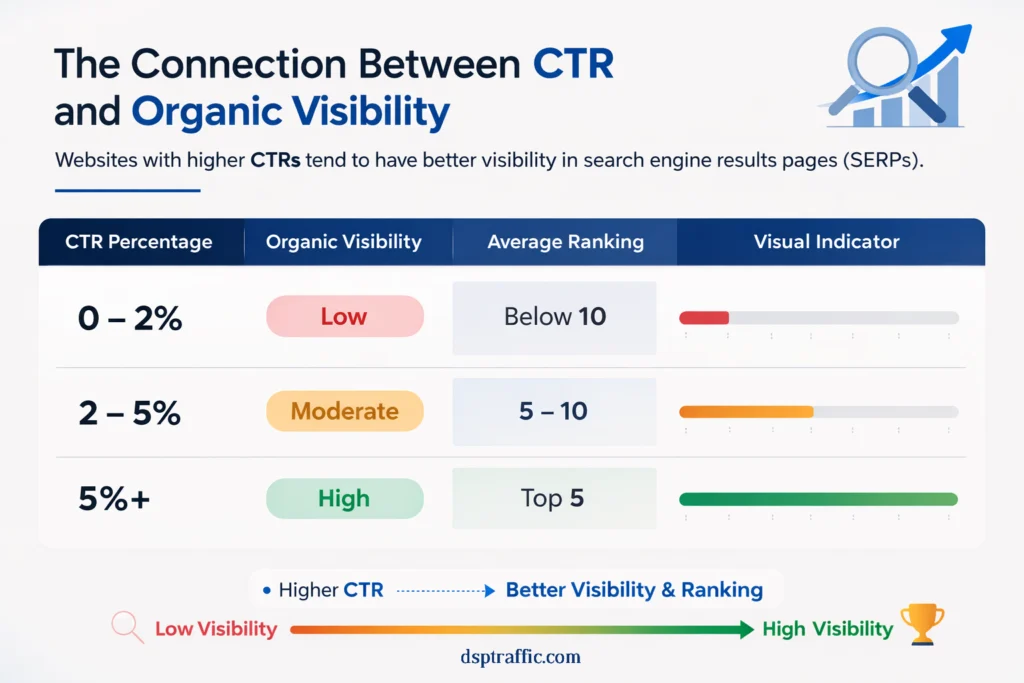
There’s a direct correlation between CTR and organic visibility. Websites with higher CTRs tend to have better visibility in search engine results pages (SERPs).
A table illustrating the relationship between CTR and organic visibility is shown below:
| CTR Percentage | Organic Visibility | Average Ranking |
|---|---|---|
| 0-2% | Low | Below 10 |
| 2-5% | Moderate | 5-10 |
| 5%+ | High | Top 5 |
User Engagement Signals That Impact Rankings
User engagement signals, such as time on page, bounce rate, and pages per session, also play a crucial role in determining search rankings. These metrics provide insights into how users interact with a website.
Improving organic search ranking requires a holistic approach that includes enhancing user experience, creating high-quality content, and optimizing CTR.
The Concept of CTR Manipulation and Organic Search Traffic
As the digital landscape continues to evolve, understanding CTR manipulation and its implications on organic search traffic has become crucial for businesses. CTR manipulation refers to the practice of artificially influencing click-through rates to impact search engine rankings.
What CTR Manipulation Actually Means
CTR manipulation involves using various techniques to increase the number of clicks on a website’s search engine listing, thereby improving its click-through rate. This can be achieved through various means, including paid traffic services that provide real human visitors.
CTR manipulation can be implemented in different ways, such as:
- Using paid traffic services to generate real human clicks
- Optimizing website content and meta tags to improve click-through rates
- Utilizing social media and other online platforms to drive traffic to a website
Ethical Considerations and Google’s Stance
The ethics of CTR manipulation are debated among SEO experts, with some arguing that it’s a legitimate way to improve search rankings, while others see it as a form of manipulation. Google’s stance on CTR manipulation is clear: it frowns upon any attempts to artificially inflate click-through rates or manipulate search rankings.
Google’s algorithm is designed to detect and penalize websites that engage in manipulative practices, including CTR manipulation. Therefore, businesses must be cautious when implementing CTR manipulation strategies to avoid violating Google’s guidelines.
| CTR Manipulation Method | Ethical Considerations | Google’s Stance |
|---|---|---|
| Paid Traffic Services | Debated among SEO experts | Frowns upon artificial inflation |
| Content Optimization | Generally considered legitimate | Encourages relevant and high-quality content |
| Social Media Promotion | Considered a legitimate marketing strategy | Does not directly impact search rankings |
When Traffic Generation Strategy Makes Business Sense
Despite the potential risks, a well-planned traffic generation strategy, including CTR manipulation, can make business sense in certain scenarios. For instance, businesses looking to buy organic search traffic can benefit from increased online visibility and improved search rankings.
To implement a successful traffic generation strategy, businesses should:
- Define their target audience and traffic goals
- Research reputable traffic providers
- Verify traffic quality and sources
Benefits of Buying Real Human Traffic for Your Website
Boosting your website’s visibility with real human traffic can lead to significant benefits. By acquiring genuine users, you can create a robust online presence that attracts and engages your target audience.
Improved Search Engine Rankings are one of the primary advantages of buying real human traffic. When search engines like Google detect a steady stream of genuine users visiting your site, they interpret this as a sign of relevance and quality.
Improved Search Engine Rankings
With increased traffic, your website becomes more visible to search engines, which can lead to higher rankings in search results. This, in turn, drives more organic traffic to your site, creating a positive feedback loop.
Enhanced Brand Visibility and Awareness
As more real users visit your website, your brand becomes more recognizable. This increased visibility can lead to greater brand awareness, making it more likely that users will remember your brand when searching for related products or services.
Accelerated Growth for New Websites
For new websites, buying real human traffic can be particularly beneficial. It helps to jumpstart the growth process, allowing you to establish a strong online presence from the outset.
By investing in real human traffic, you can accelerate your website’s growth, improve search engine rankings, and enhance brand visibility. This strategic approach can be a valuable component of your overall digital marketing strategy.
Risks and Potential Drawbacks to Consider
While buying real human traffic can be an effective way to drive more traffic to your website, it’s crucial to be aware of the potential risks involved. This strategy, like any other marketing tactic, comes with its own set of challenges and potential downsides.
One of the primary concerns when purchasing real human traffic is the potential for negative consequences. It’s essential to understand these risks to make informed decisions about your website’s traffic generation strategy.
Google Penalty Possibilities
One of the most significant risks associated with buying real human traffic is the possibility of incurring a Google penalty. Google has sophisticated algorithms designed to detect and penalize websites that engage in manipulative tactics, including artificial traffic generation.
If Google detects that you’re buying traffic to manipulate your website’s rankings, you could face penalties such as reduced visibility in search results or even removal from the index. To avoid this, it’s crucial to work with reputable traffic providers who offer high-quality, genuine human traffic.
Wasted Investment on Low-Quality Traffic
Another risk to consider is the potential for wasting your investment on low-quality traffic. Not all traffic providers offer the same level of quality, and some may deliver bot traffic or low-engagement users that don’t contribute to your website’s success.
To mitigate this risk, it’s essential to research and select a reputable traffic provider that can deliver high-quality, targeted traffic. This involves checking reviews, asking for referrals, and verifying the provider’s methods and sources.
Short-Term Gains Versus Long-Term Strategy
Buying real human traffic can provide a quick boost to your website’s traffic numbers, but it’s essential to consider whether this strategy aligns with your long-term goals. While short-term gains can be tempting, they may not be sustainable or beneficial in the long run.
A balanced approach that combines purchased traffic with organic traffic generation strategies can help you achieve more sustainable growth. This might involve investing in content marketing, SEO optimization, and other tactics that drive long-term results.
Unlock Higher Visibility with Strategic Traffic Growth
Increase website traffic using real users who enhance credibility, improve performance metrics, and support long-term SEO success.
How to Buy Real Human Traffic for GSC: Step-by-Step Process
Boosting your website’s GSC rankings requires a strategic approach, starting with acquiring genuine user traffic. Buying real human traffic for GSC can be an effective way to enhance your website’s visibility and credibility. Here’s a step-by-step guide to help you through the process.
Step 1: Define Your Traffic Goals and Target Audience
Before purchasing traffic, it’s essential to define your goals and identify your target audience. This step ensures that your traffic acquisition efforts are focused and effective.
Identifying Your Ideal Visitor Profile
Understanding your ideal visitor involves analyzing demographics, interests, and behaviors. This information helps in selecting the right traffic provider and configuring your campaign for optimal results.
Setting Measurable Traffic Objectives
Establish clear, measurable goals for your traffic campaign. This could include increasing website visits, boosting engagement, or driving conversions. Having specific objectives helps in evaluating the success of your traffic acquisition efforts.
Step 2: Research Reputable Traffic Providers
Finding a reliable traffic provider is crucial for the success of your campaign. Research potential providers based on their reputation, services offered, and client testimonials.
Evaluating Provider Credentials
Look for providers with a proven track record of delivering high-quality, targeted traffic. Check for certifications, industry affiliations, and any available case studies.
Reading Reviews and Testimonials
Client feedback is invaluable in assessing a provider’s reliability and service quality. Look for reviews on independent platforms and ask for references if necessary.
Step 3: Verify Traffic Quality and Sources
Ensuring the quality of the traffic you purchase is vital. Verify the sources of the traffic and assess its relevance to your target audience.
Requesting Traffic Source Documentation
Reputable providers should be able to provide documentation or insights into their traffic sources. This transparency is crucial for understanding the nature of the traffic you’re purchasing.
Testing with Small Sample Orders
Before committing to a large order, test the provider with a small sample. This allows you to assess the quality and relevance of the traffic firsthand.
Step 4: Select Targeted Website Traffic Options
Choosing the right targeting options is key to ensuring your traffic is relevant and effective.
Choosing Geographic and Demographic Filters
Select filters that align with your target audience’s geographic location and demographics. This ensures that your traffic is relevant and more likely to engage with your content.
Selecting Keyword-Based Traffic
Keyword-based targeting allows you to attract visitors who are searching for content related to your website. This can significantly improve engagement and conversion rates.
Step 5: Place Your Order and Configure Campaign Settings
Once you’ve selected your traffic options, it’s time to place your order and configure your campaign settings.
Setting Up Tracking Parameters
Ensure you have the necessary tracking in place to monitor the performance of your campaign. This includes setting up analytics tools and tracking codes.
Defining Budget and Duration
Determine your budget for the campaign and decide on its duration. Consider your goals and the provider’s recommendations when making these decisions.
Step 6: Monitor Initial Traffic Flow
After launching your campaign, monitor its performance closely. This involves checking real-time analytics and making adjustments as necessary.
Checking Real-Time Analytics
Use analytics tools to track the flow of traffic to your site. Monitor metrics such as visitor numbers, engagement, and conversion rates.
Adjusting Campaign Parameters
Based on your initial results, you may need to adjust your campaign parameters. This could involve tweaking targeting options, budget allocation, or traffic volume.
| Step | Action | Objective |
|---|---|---|
| 1 | Define Traffic Goals and Target Audience | Focus efforts and ensure effectiveness |
| 2 | Research Reputable Traffic Providers | Find a reliable provider |
| 3 | Verify Traffic Quality and Sources | Ensure high-quality traffic |
| 4 | Select Targeted Website Traffic Options | Attract relevant visitors |
| 5 | Place Your Order and Configure Campaign Settings | Execute the campaign effectively |
| 6 | Monitor Initial Traffic Flow | Optimize campaign performance |
Identifying Legitimate Traffic Providers
The success of your traffic generation strategy heavily relies on choosing a trustworthy traffic provider. With the rise in demand for real user traffic, the market has seen an influx of various service providers, making it crucial to differentiate between legitimate and fraudulent services.
Red Flags of Low-Quality Traffic Services
When evaluating traffic providers, there are several red flags to watch out for. These include:
- Providers guaranteeing overnight success or unrealistic traffic numbers
- Services that use bot traffic or other automated means to generate visits
- Lack of transparency regarding traffic sources and methods
- Poor customer reviews and unresponsive customer service
- Unclear or non-existent refund policies
Being aware of these warning signs can help you avoid low-quality traffic services that might harm your website’s credibility or waste your investment.
Key Features of Reputable Providers
Reputable traffic providers typically offer:
- Transparent reporting on traffic sources and quality
- Targeted traffic that aligns with your specified demographics and interests
- Gradual traffic increase to mimic natural growth patterns
- Clear communication channels and responsive customer support
- Flexible pricing plans and customizable services
These features are indicative of a legitimate traffic provider that can effectively support your traffic generation strategy.
Questions to Ask Before Making a Purchase
Before investing in a traffic service, it’s essential to ask the right questions. Consider inquiring about:
- The sources of their traffic and how they ensure quality
- Their policy on refunds and guarantees
- How they target specific demographics and interests
- The average duration of user engagement on visited sites
- Any case studies or success stories from previous clients
By asking these questions, you can better assess the credibility and effectiveness of a traffic provider, ensuring that your investment contributes positively to your website’s visibility and ranking.
Setting Up Your Campaign for Maximum Effectiveness
Effective campaign setup is key to improving your website’s organic search ranking. A well-configured campaign ensures that your efforts to attract real user traffic yield the best possible results.
Choosing the Right Geographic Targeting
Geographic targeting is crucial for reaching your desired audience. By focusing on specific regions, you can tailor your campaign to meet the needs of users in those areas.
For instance, if your business primarily serves the United States, you can target major cities or specific states to reach potential customers.
Selecting Relevant Keywords and Search Queries
Choosing the right keywords and search queries is vital for the success of your campaign. These should be closely related to your content and services.
Conduct thorough research to identify relevant terms that your target audience uses when searching for products or services like yours.
Determining Optimal Traffic Volume
Determining the optimal traffic volume is essential to avoid overwhelming your website or failing to generate sufficient interest.
Start with a manageable volume and gradually increase it based on your website’s capacity and performance metrics.
Setting Realistic Time Frames
Setting realistic time frames for your campaign is critical. This involves understanding how long it takes to achieve noticeable improvements in your organic search ranking.
Be patient and allow sufficient time for your campaign to mature and produce sustainable results.
| Campaign Element | Recommended Setting | Impact on Organic Search Ranking |
|---|---|---|
| Geographic Targeting | Specific regions or countries | Improves relevance and visibility |
| Keyword Selection | Relevant, high-traffic keywords | Enhances search engine ranking |
| Traffic Volume | Gradual increase based on capacity | Prevents overwhelming the website |
| Time Frames | Realistic, allowing for campaign maturation | Ensures sustainable results |
Best Practices to Increase Website Traffic Organically
Increasing organic traffic to your website involves implementing a range of best practices that enhance both user experience and search engine rankings. A balanced approach that includes quality content creation, strategic traffic generation, and optimization techniques is crucial.
Combining Paid Traffic with Quality Content
One effective strategy is to combine paid traffic with high-quality, engaging content. This approach not only drives immediate traffic but also enhances your website’s credibility and search engine rankings over time. Quality content is key to retaining visitors and encouraging them to explore your site further.
To achieve this, focus on creating content that is relevant, informative, and addresses the needs of your target audience. Consider the following:
- Conduct thorough keyword research to identify relevant terms and phrases.
- Develop content that provides value to your audience, such as tutorials, guides, or insightful articles.
- Ensure your content is well-structured, easy to read, and optimized for SEO.
Optimizing Landing Pages for User Retention
Optimizing landing pages is critical for retaining visitors and improving conversion rates. A well-designed landing page should be visually appealing, easy to navigate, and relevant to the visitor’s search query. Key elements to focus on include:
- Clear and concise headlines that match the visitor’s expectations.
- Compelling calls-to-action (CTAs) that guide the visitor through the desired action.
- Fast loading speeds and mobile responsiveness to cater to all devices.
Creating Natural User Behavior Patterns
Creating natural user behavior patterns is essential for avoiding suspicion from search engines and ensuring the longevity of your traffic generation efforts. This involves:
- Diversifying your traffic sources to include organic search, social media, and referrals.
- Mimicking natural traffic patterns by varying the volume and demographics of your visitors.
- Encouraging engagement through high-quality content and user-friendly design.
Gradual Traffic Increases to Avoid Suspicion
Gradually increasing traffic is a prudent strategy to avoid raising red flags with search engines. Sudden spikes in traffic can be viewed as suspicious and may result in penalties. Instead, aim for a steady, incremental growth in traffic over time.
To achieve gradual traffic increases, consider the following strategies:
- Start with small, manageable traffic targets and gradually scale up.
- Monitor your website’s performance and adjust your traffic generation strategies accordingly.
- Continuously evaluate and improve your content and user experience to support sustained growth.
Measuring Results and Tracking Performance in GSC
To effectively boost website visibility, it’s crucial to measure the results of your traffic generation efforts in Google Search Console. This involves understanding various metrics and how they impact your website’s performance.
Key Metrics to Monitor in Google Search Console
Google Search Console provides several key metrics that help you understand your website’s performance. These include impressions, clicks, click-through rate (CTR), and average position.
Impressions refer to the number of times your website appears in search results. Clicks are the number of times users click on your website’s link. CTR is the percentage of users who click on your link after seeing it in search results.
| Metric | Description | Importance |
|---|---|---|
| Impressions | Number of times your site appears in search results | Indicates visibility |
| Clicks | Number of times users click on your site’s link | Measures user engagement |
| CTR | Percentage of users who click on your link | Reflects the relevance of your content |
Understanding Impressions, Clicks, and CTR Data
Understanding the data provided by Google Search Console is crucial for optimizing your website’s performance. High impressions with low CTR may indicate that your meta titles or descriptions need improvement.
Using Google Analytics for Deeper Insights
While Google Search Console provides data on search engine performance, Google Analytics offers insights into user behavior on your website. By combining data from both tools, you can gain a comprehensive understanding of your website’s traffic and engagement.
Google Analytics helps you understand metrics such as bounce rate, session duration, and conversion rates, which are essential for assessing the quality of your website traffic.
Identifying Traffic Quality Indicators
To ensure that your traffic generation efforts are effective, it’s essential to monitor traffic quality indicators. These include metrics such as bounce rate, pages per session, and average session duration.
- Bounce Rate: Percentage of users who leave your site without interacting further.
- Pages per Session: Average number of pages viewed during a session.
- Average Session Duration: Average time users spend on your site.
By monitoring these indicators, you can identify whether your traffic is engaging with your content and taking desired actions.
Common Mistakes When Buying Organic Search Traffic
To successfully drive more traffic to your website, it’s crucial to avoid the frequent errors associated with buying organic search traffic. A well-planned traffic generation strategy is essential for enhancing your online visibility and achieving your business goals.
“The key to a successful traffic generation campaign lies in understanding the nuances of organic search traffic and avoiding common pitfalls,” says an expert in the field. One of the primary mistakes businesses make is related to the volume and quality of traffic they purchase.
Purchasing Too Much Traffic Too Quickly
One of the most significant errors is buying too much traffic too quickly. This can raise red flags with search engines, potentially leading to penalties or a decrease in your website’s credibility. A gradual increase in traffic is more natural and less likely to be flagged as suspicious.
Gradual traffic growth is essential for maintaining a natural appearance. It’s better to start with a small, targeted campaign and gradually scale up based on performance data.
Ignoring Traffic Quality Indicators
Another critical mistake is ignoring traffic quality indicators. Not all traffic is created equal; high-quality traffic comes from relevant sources and engages with your content. Focusing solely on quantity over quality can lead to wasted resources and poor ROI.
To ensure you’re getting high-quality traffic, look for providers that offer detailed analytics and transparent reporting. This will help you understand the sources of your traffic and their behavior on your site.
Failing to Optimize for User Experience
Failing to optimize your website for user experience is another common mistake. Even if you successfully drive more traffic to your website, a poor user experience can lead to high bounce rates and low engagement. Ensure that your site is user-friendly, loads quickly, and provides valuable content to your visitors.
A well-designed website not only retains visitors but also encourages them to explore further, thereby improving your site’s overall performance metrics.
Not Tracking ROI and Performance Metrics
Lastly, not tracking ROI and performance metrics can make it difficult to assess the effectiveness of your traffic generation strategy. It’s crucial to monitor key performance indicators (KPIs) such as conversion rates, bounce rates, and average session duration to understand the impact of your efforts.
“To maximize the return on investment, it’s essential to continuously monitor and adjust your traffic generation strategy based on data-driven insights.”
By avoiding these common mistakes and focusing on a well-rounded traffic generation strategy, you can effectively drive more traffic to your website and improve your online presence.
Transform Your SEO with Genuine User Engagement
Leverage high-quality human traffic to boost click-through rates, build trust, and outperform competitors in search rankings.
Alternative Strategies to Boost Website Visibility
In addition to purchasing targeted website traffic, there are several alternative strategies to enhance your online presence. A comprehensive approach to online marketing involves multiple channels and tactics.
Content Marketing and SEO Optimization
Content marketing is a powerful tool for improving organic search ranking. By creating high-quality, relevant, and consistent content, you can attract and retain a clearly defined audience. SEO optimization is crucial for ensuring that your content is visible to search engines and users alike. This involves using relevant keywords, meta tags, and optimizing images.
“Content is king” is a well-known phrase in the digital marketing world, and for good reason.
“The more you write, the more you can rank for different keywords and phrases, increasing your online visibility.”
A well-planned content strategy can drive targeted website traffic to your site.
Social Media Traffic Generation
Social media platforms offer a vast potential for generating targeted website traffic. By creating engaging content and leveraging platforms like Facebook, Twitter, and LinkedIn, you can drive traffic to your website. Social media marketing involves more than just posting content; it requires a strategic approach to engage with your audience and build brand awareness.
Influencer Partnerships and Collaborations
Influencer marketing has become a significant channel for driving traffic and improving brand visibility. By partnering with influencers in your niche, you can tap into their follower base and drive targeted traffic to your website. It’s essential to choose influencers who align with your brand values and target audience.
Email Marketing Campaigns
Email marketing remains a highly effective strategy for driving traffic and engaging with your audience. By building an email list and creating compelling campaigns, you can drive repeat traffic to your website and improve user retention. Email marketing automation can help personalize your messages and improve the effectiveness of your campaigns.
To improve organic search ranking, it’s crucial to adopt a multi-channel approach that includes content marketing, social media, influencer partnerships, and email marketing. By diversifying your strategies, you can create a robust online presence that drives targeted website traffic and enhances your visibility.
Conclusion
Buying real human traffic for GSC can be a strategic move for businesses aiming to boost their online visibility and search engine rankings. By understanding the importance of genuine user engagement and leveraging it effectively, businesses can create a robust online presence.
When executed correctly, buying real human traffic can complement SEO efforts, driving more qualified leads to your website and enhancing your Google Search Console rankings. It’s essential to partner with reputable traffic providers to ensure high-quality traffic that aligns with your target audience.
By combining this strategy with best practices in content creation and user experience optimization, businesses can achieve sustainable growth and improved search engine rankings. The key is to focus on delivering value to your users while using bought traffic as a catalyst for your online success.