
Have you ever checked your website analytics and wondered why some visitors arrive directly while others find your website through Google? Or perhaps you have noticed that your website receives hundreds of visits, but you are not sure where those visitors are coming from.
Understanding your traffic sources is one of the most important parts of growing a website. After all, getting visitors is not just about increasing numbers. It is about understanding how people discover your website, what brings them back, and which channels help you reach your business goals.
Two traffic sources that often create confusion among website owners are direct and organic traffic. Although both bring visitors to your website, they work differently and represent different ways people discover your online presence.
The discussion around direct vs organic traffic becomes particularly important when you want to improve your marketing strategy, measure SEO performance, or understand your website’s audience. Understanding direct vs organic traffic also helps website owners identify which acquisition channels contribute most to their growth.
For example, imagine someone types your website address into their browser because they remember your brand. Another person searches Google for a product or service, finds your website in the search results, and clicks on it. Both people visit your website, but their journeys are completely different.
So, what exactly separates these traffic sources? Is one more valuable than the other? And how can you use both to support your website’s growth? Understanding direct vs organic traffic can help you make better decisions about your website’s marketing and acquisition strategy.
Let’s explore everything you need to know, with practical examples, comparisons, and useful tips.
Key Takeaways
Before exploring the details, here are five important things to remember:
- Direct traffic generally comes from visitors who access your website without a recognized referral source, such as by entering your URL or using a bookmark.
- Organic traffic comes from unpaid search engine results, including listings on Google, Bing, and other search engines.
- Neither traffic source is automatically better. Their value depends on your audience, website goals, engagement, and conversions.
- Google Analytics 4 (GA4) helps you compare traffic sources, understand visitor behavior, and identify opportunities for improvement.
- A balanced marketing strategy that includes SEO, brand awareness, referrals, and carefully measured campaigns can help create more sustainable website growth.
What Is Direct Traffic?
Direct traffic refers to website visits for which analytics cannot identify a recognized referring source. In common situations, this happens when someone types your website address directly into their browser or opens a saved bookmark.
For example, imagine that you run an online clothing store called FashionHub. A customer has purchased from your store before and remembers your website address. Instead of searching for your store on Google, they enter FashionHub.com into their browser.
That visit may be recorded as direct traffic.
Similarly, someone who saves your homepage as a bookmark and opens it the following week may generate another direct visit.
However, there is something important to understand: direct traffic does not always mean that someone physically typed your website URL.
Sometimes, analytics tools cannot identify the original source of a visit because referral information is missing or unavailable. As a result, a visit that originally came from another marketing channel may appear under the Direct category.
This is why understanding direct vs organic traffic requires more than simply looking at two numbers in your analytics dashboard. A proper direct vs organic traffic analysis helps you understand visitor behavior and identify potential tracking issues.
How Does Direct Traffic Work?
When a visitor opens your website, analytics software attempts to identify how that person arrived.
It examines available information, such as referral details, campaign parameters, and other traffic-source signals.
If the system cannot identify a recognized source, the visit may be categorized as Direct.
Common examples include:
- A visitor entering your website address into a browser.
- Someone opening your website through a saved bookmark.
- A returning customer using a browser shortcut.
- A visitor following a link from an application that does not pass referral information.
- A person accessing a link from an offline document or another source without proper tracking.
- A visitor arriving through an improperly tagged marketing link.
The final examples explain why a direct traffic report can sometimes contain visits that were not literally direct. These examples make direct vs organic traffic easier to understand when reviewing website analytics.
Why Is Direct Traffic Important?
Direct traffic can provide useful clues about brand awareness and repeat visits.
When people remember your website and return without needing to search for it, that can indicate that your brand has become familiar to them.
For instance, consider a business that regularly publishes helpful industry guides. Readers may remember its website and return whenever they need more information.
This repeated activity can contribute to direct visits.
However, do not assume that every direct visit represents a loyal customer. Some visits may be incorrectly attributed because tracking information is missing.
To understand direct traffic properly, consider the following indicators:
1. Returning visitors: Are people coming back to your website?
2. Engagement: Are visitors exploring multiple pages or interacting with important website elements?
3. Conversions: Are visitors completing meaningful actions, such as submitting a form, requesting a quote, or making a purchase?
4. Landing pages: Which pages receive direct visits? A large number of visits to a specific landing page may deserve further investigation.
5. Traffic patterns: Does direct traffic increase after an email campaign, offline promotion, or brand-awareness activity?
These indicators help you understand whether your direct visits are contributing to meaningful business outcomes. Comparing direct vs organic traffic can also reveal how brand recognition and search visibility contribute to website visits.
What Is Organic Traffic?
Organic traffic refers to visitors who reach your website by clicking unpaid listings in search engine results.
Suppose someone wants to learn how to improve their website speed. They open Google and search for “how to make a website faster.”
Google displays several relevant results. The person clicks one of your blog articles and arrives at your website.
That visit is generally classified as organic search traffic.
This is the central difference when discussing direct vs organic traffic: organic visitors discover your website through unpaid search results, while direct visits are recorded without an identifiable referring source. Understanding direct vs organic traffic helps marketers identify how visitors discover their websites through different channels.
How Does Organic Traffic Work?
Organic traffic is closely connected to search engine optimization, commonly known as SEO.
Search engines use automated systems to discover, understand, and organize website content. When someone enters a search query, the search engine attempts to display pages that are relevant and useful for that query.
If your website has a page that matches the searcher’s needs, it may appear in the results.
For example, imagine that you operate a digital marketing website and publish an informative article about keyword research.
Someone searches for “how to find keywords for a blog.” If your article appears in the search results and the person clicks it, that visit can be recorded as organic traffic.
Google explains that its search process involves crawling, indexing, and serving search results. A page must be discovered and indexed before it can be considered for relevant search results.
However, publishing an article does not guarantee that it will rank or receive visitors.
Your content needs to be useful, relevant, accessible to search engines, and competitive with other pages targeting similar search queries. A clear understanding of direct vs organic traffic can help you identify opportunities to improve your website’s search visibility.
What Are the Main Benefits of Organic Traffic?
Organic traffic can become an important source of website visitors because it allows people to discover your content while actively searching for information, products, or services.
Here are some of its major benefits.
1. Reaches people with specific interests
A person searching for “best accounting software for small businesses” already has a particular interest.
A relevant page can connect that searcher with the information or solution they need.
2. Supports long-term visibility
A well-maintained article can continue attracting visitors from search engines after publication.
Although rankings and traffic can change, useful content may remain valuable for a long time.
3. Helps build credibility
People often use search engines to research businesses, compare solutions, and understand unfamiliar topics.
Publishing accurate, helpful content can make your website a useful resource.
4. Can reduce dependence on paid advertising
Organic search does not charge you for every individual click. However, creating and maintaining content, conducting SEO research, and improving your website still require time and resources.
5. Helps attract relevant visitors
When your content matches a search query closely, it can attract people who are genuinely interested in the subject.
This is one reason the comparison of organic vs direct traffic matters when evaluating the quality of your website’s audience. The direct vs organic traffic comparison also helps website owners understand the importance of attracting relevant visitors.
Does Organic Traffic Mean Free Traffic?
Not necessarily.
Organic search visitors do not arrive through paid search advertisements, but building organic visibility requires effort.
You may need to invest in:
- Keyword research.
- Content writing and editing.
- Technical SEO.
- Website development.
- Content updates.
- Internal linking.
- User experience improvements.
- Competitor research.
Therefore, organic traffic is better understood as unpaid search traffic rather than traffic that costs nothing to generate. When evaluating direct vs organic traffic, remember that both sources require different strategies to generate consistent results.
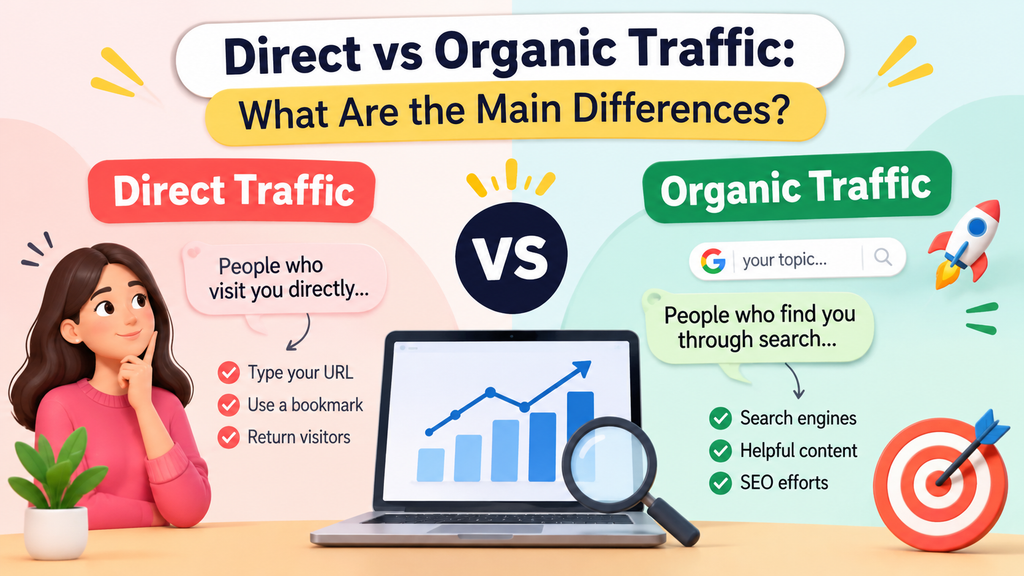
Direct vs Organic Traffic: What Are the Main Differences?
Now that we understand both traffic sources, let’s look at their differences more closely.
The comparison of direct vs organic traffic becomes easier when we examine how visitors discover a website, what influences each source, and how analytics records their visits. This direct vs organic traffic comparison also highlights the differences in visitor intent, acquisition methods, and growth opportunities.
| Comparison factor | Direct traffic | Organic traffic |
|---|---|---|
| Visitor journey | No recognized referral source | Click from unpaid search results |
| Common example | Typing a URL or opening a bookmark | Clicking a Google search listing |
| SEO dependency | Not directly dependent on search rankings | Strongly connected to search visibility |
| Brand awareness | May reflect familiarity and repeat visits | Can introduce new audiences |
| Search keywords | Usually not available as a direct acquisition keyword | Search queries can be investigated in Search Console |
| Tracking | May be affected by missing attribution | Usually identified as Organic Search |
| Growth strategy | Brand building and repeat engagement | SEO and useful content |
| Long-term opportunity | Repeat visits and brand recognition | Search visibility and evergreen content |
Difference 1: How Visitors Find Your Website
The biggest distinction in direct traffic vs organic traffic is the visitor’s discovery process.
Direct visits generally have no recognized referring source in analytics.
Organic visitors, on the other hand, arrive after clicking unpaid search results. This distinction is the foundation of any direct vs organic traffic analysis.
For example:
- A customer types your brand name as a website address and opens your homepage. This may be direct traffic.
- A customer searches for your brand on Google and clicks your website’s unpaid search listing. This is generally organic search traffic.
Notice that the same person can generate both types of visits on different occasions.
Difference 2: The Role of SEO
SEO plays a major role in attracting organic visitors.
When your pages are optimized for relevant search queries and provide useful information, they may become more visible in search results.
Direct traffic does not require search engine rankings in the same way.
Someone can visit your website directly even if your website does not rank for any particular keyword.
However, SEO and brand awareness can influence each other indirectly. Someone might discover your business through an organic search today and visit directly next week. Therefore, direct vs organic traffic should be evaluated as part of a broader strategy that combines SEO and brand development.
Difference 3: Visitor Intent
Visitor intent can differ depending on how someone reaches your website.
An organic visitor often has a question, problem, or specific requirement.
For instance, someone searching for “how to choose a website hosting provider” is probably researching hosting options.
A direct visitor may already know your business and be returning to complete an action.
However, this is not a fixed rule. A direct visitor could be a first-time visitor using an untracked link, while an organic visitor could be casually browsing.
Therefore, when evaluating organic traffic vs direct traffic, examine actual visitor behavior instead of making assumptions based only on the channel name. This makes direct vs organic traffic an important consideration when analyzing audience interests and website engagement.
Difference 4: Tracking and Attribution
Organic search traffic is generally identified through search engine source and medium information.
Direct traffic is assigned when analytics cannot identify a recognized acquisition source.
This makes direct traffic particularly sensitive to tracking problems.
For example, if you share an untagged campaign link in an email, some visits may be attributed to Direct instead of Email.
Similarly, missing campaign parameters, redirects, and referral information can make traffic attribution less accurate. Accurate tracking is necessary to ensure that your direct vs organic traffic comparison reflects the actual acquisition sources.
Difference 5: Growth Potential
Organic traffic can grow as your website develops useful content and gains visibility for relevant searches.
Direct traffic can grow as more people become familiar with your brand, save your website, or return regularly.
Both sources can support growth, but they require different approaches. Understanding direct vs organic traffic growth patterns can help you decide where to allocate your marketing resources.
If your website receives very little organic traffic, improving SEO may be a priority.
If many people discover your website but rarely return, you may need to improve the overall user experience, brand recall, and customer engagement.
insta
Direct Traffic vs Organic Search: Which Is More Valuable?
A common question among website owners is whether direct traffic or organic search is more valuable.
The honest answer is that it depends on what you want your website to achieve.
The comparison of direct vs organic traffic should not be treated as a competition in which one source always wins.
Imagine two businesses.
Business A receives 5,000 organic visits every month. Its visitors read blog posts, but very few contact the company.
Business B receives 1,500 direct visits every month. Many visitors are existing customers who regularly place orders.
Which business has better traffic?
You cannot answer that question by comparing visitor numbers alone.
Business A may be excellent at attracting new audiences but need better conversion paths.
Business B may have strong customer retention but need more visibility among potential customers.
The right evaluation depends on the purpose of each visit. A detailed direct vs organic traffic evaluation should consider business objectives rather than focusing only on monthly sessions.
When Is Direct Traffic More Valuable?
Direct traffic can be particularly useful when:
- You have an established brand.
- Customers regularly return to your website.
- You operate a subscription-based service.
- Your business receives repeat orders.
- You have an active community.
- You promote your website through offline channels.
For example, a customer who visits an online banking website directly to check an account is demonstrating an established relationship with that website.
However, analytics attribution should still be checked before treating all direct visits as evidence of customer loyalty.
When Is Organic Traffic More Valuable?
Organic traffic can be especially useful when:
- Your website is new.
- You want to attract people who have never heard of your brand.
- Your business publishes educational content.
- You sell products or services that people actively search for.
- You want to increase visibility for relevant keywords.
- You want to develop a sustainable source of search-driven visitors.
For example, a new software company can publish tutorials and comparison guides to attract people researching solutions in its industry.
This can help the company reach potential customers before they know its brand name.
Should You Prioritize One Over the Other?
Not necessarily.
A sensible strategy is to use organic search to attract new visitors and brand-building activities to encourage people to remember and revisit your website.
Think of organic search as one way to introduce your business and direct visits as one possible way people return.
This is a useful way to understand direct traffic vs organic traffic without assuming that the two channels operate independently. This approach makes direct vs organic traffic an important part of building a balanced and sustainable marketing strategy.
How to Check Direct and Organic Traffic in Google Analytics 4
Understanding traffic sources is useful only when you can measure them correctly.
Google Analytics 4, or GA4, provides reports that help you identify how visitors reach your website.
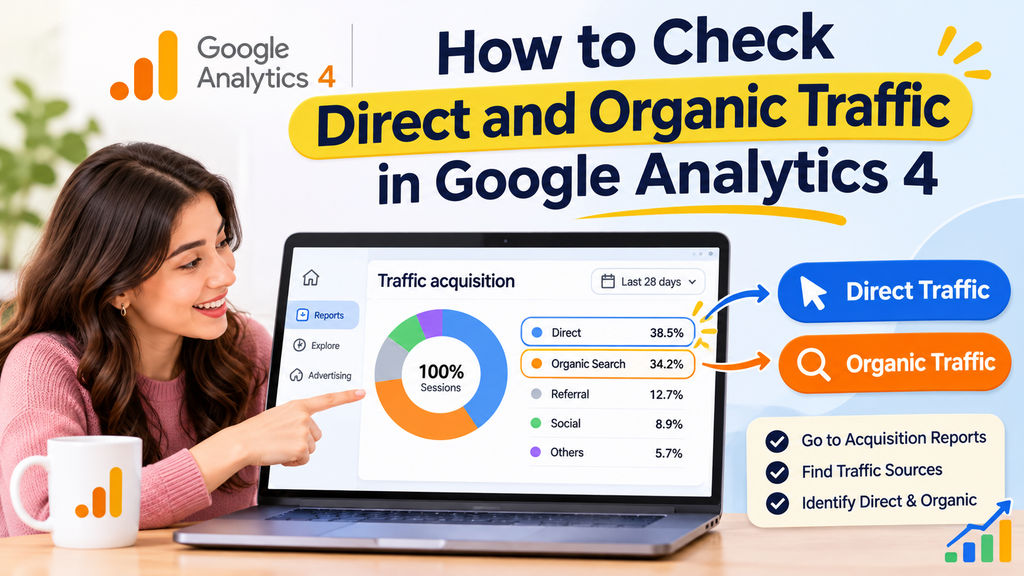
Here is how you can compare direct and organic search traffic using GA4. This process makes direct vs organic traffic analysis easier and helps you evaluate the performance of both acquisition channels.
Step 1: Open Google Analytics 4
Sign in to your Google Analytics account and select the property connected to your website.
Make sure the correct website property is selected before examining the data.
Step 2: Open the Traffic Acquisition Report
From the left-hand navigation menu:
- Select Reports.
- Open Acquisition.
- Select Traffic acquisition.
This report helps you understand where website sessions originate.
Step 3: Find the Default Channel Group
Look for the dimension named Session default channel group.
You should see different acquisition channels, depending on the traffic your website receives.
Common examples include:
- Direct.
- Organic Search.
- Paid Search.
- Organic Social.
- Paid Social.
- Referral.
- Email.
- Display.
Locate Direct and Organic Search to compare the two channels.
Step 4: Compare Important Metrics
Do not focus only on sessions.
Consider the following metrics:
Sessions: How many visits were generated by each channel?
Engaged sessions: How many sessions met GA4’s engagement criteria?
Engagement rate: What percentage of sessions were engaged?
Average engagement time: How much time did visitors spend actively engaging with your website?
Key events: How many important actions were completed?
Revenue: How much revenue was associated with each channel, if ecommerce measurement is properly configured?
For a practical example, imagine this monthly report:
| Metric | Direct | Organic Search |
|---|---|---|
| Sessions | 1,200 | 2,800 |
| Engaged sessions | 720 | 1,820 |
| Engagement rate | 60% | 65% |
| Key events | 48 | 112 |
In this example, organic search generates more sessions and key events.
However, the figures alone do not establish why the difference exists. You should also examine landing pages, audience characteristics, and conversion rates.
Step 5: Investigate Unexpected Direct Traffic
If direct traffic suddenly increases, investigate what happened.
Check whether:
- You launched an email campaign.
- You shared new links without tracking parameters.
- Your website underwent a redesign.
- Redirects were changed.
- Referral information is being lost.
- You received traffic from applications or documents.
- Your analytics implementation changed.
A sudden increase does not automatically mean your brand has become more popular.
Step 6: Use Google Search Console Alongside GA4
Google Search Console provides information about your website’s performance in Google Search.
You can use it to examine:
- Search queries.
- Impressions.
- Clicks.
- Click-through rate.
- Average search position.
- Pages appearing in search results.
GA4 helps you understand what visitors do after arriving, while Search Console provides information about how your pages perform in Google Search.
Using both tools gives you a more complete understanding of direct vs organic traffic and overall website performance. Combining these insights makes it easier to conduct a more accurate direct vs organic traffic analysis.
Why Is Your Website Getting More Direct Traffic Than Organic Traffic?
If your website receives more direct traffic than organic search traffic, you might wonder whether something is wrong.
Not necessarily.
There are several possible explanations.
1. Your Brand Has Strong Recognition
People may already know your website and visit it directly.
This is common among established businesses, online communities, and websites with loyal audiences.
2. Your Website Is Not Optimized for Search
If your website has limited useful content, weak keyword targeting, technical problems, or poor search visibility, it may receive fewer organic visits.
Review your pages and identify which search queries they should target.
3. Your Marketing Links Are Not Properly Tagged
Untaged email campaigns, social links, and other marketing URLs can sometimes lead to incorrect traffic attribution.
Use appropriate UTM parameters to identify campaign sources.
4. Your Website Has Tracking Issues
Problems with analytics installation, consent settings, redirects, or referral information can affect how visits are classified.
Check your GA4 configuration before making major marketing decisions.
5. Your Website Depends on Returning Customers
Some businesses naturally receive a large share of visits from people who already know them.
For example, a customer portal or online service dashboard may receive many returning visits.
The important thing is to determine whether your current traffic mix supports your business objectives. Reviewing direct vs organic traffic regularly can help you identify whether your website depends more on returning visitors or search discovery.
Why Is Organic Traffic Important for Website Growth?
Organic traffic is valuable because it connects your website with people who are already looking for information or solutions.
Instead of interrupting someone with an advertisement, organic search gives them an opportunity to discover your content while researching a topic.
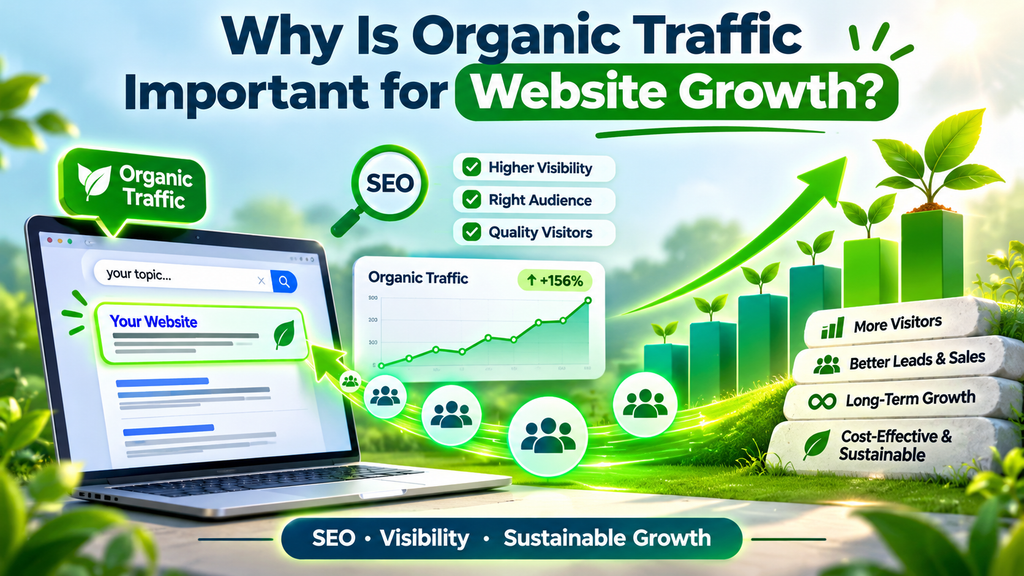
Here are several ways organic search can support website growth.
Build Visibility for Relevant Keywords
Keyword research helps you understand the phrases your potential audience searches for.
For example, a website selling fitness equipment might create content around:
- Best home workout equipment.
- How to choose resistance bands.
- Benefits of strength training.
- Beginner workout equipment.
Each article can target a specific audience need.
Create Content That Answers Real Questions
Useful content gives visitors a reason to click your pages and spend time exploring your website.
Try to answer questions clearly rather than writing articles solely to repeat keywords.
Improve Internal Linking
Internal links connect related pages on your website.
For example, a blog about SEO could link to another article explaining keyword research.
This helps visitors discover additional resources and makes it easier for search engines to find related pages.
Improve Technical Website Performance
Make sure your website is accessible, mobile-friendly, secure, and easy to navigate.
Fix broken links, review page loading performance, and ensure important content can be accessed by search engine crawlers.
Update Existing Content
Some pages may lose visibility because their information becomes outdated.
Review older articles and update examples, statistics, screenshots, and recommendations where necessary.
A useful content maintenance process can help preserve the value of your existing resources.
How to Increase Direct Traffic to Your Website
Increasing direct traffic is not simply about encouraging people to type your URL.
It is about making your website memorable and giving visitors reasons to return.
Here are practical ways to work toward that goal.
1. Build a Recognizable Brand
Use consistent branding across your website, social media profiles, emails, and marketing materials.
Your brand name, logo, and messaging should make it easy for people to recognize your business.
2. Publish Valuable Content Regularly
Create resources that visitors find useful enough to revisit.
Tutorials, industry guides, product comparisons, and practical checklists can help establish your website as a helpful resource.
3. Develop an Email Audience
Email newsletters give you a direct way to communicate with people who have chosen to hear from your business.
Include useful updates, new articles, product information, and relevant resources.
Use properly tagged campaign links so that email traffic is not incorrectly recorded as Direct.
4. Encourage Repeat Visits
Give visitors reasons to return.
You could publish weekly updates, add new resources, offer downloadable guides, or maintain a helpful knowledge base.
5. Make Your Website Easy to Remember
Use a clear domain name, consistent messaging, and a professional website experience.
When people can easily remember your brand, they may be more likely to visit again.
6. Improve the Visitor Experience
A confusing website can discourage repeat visits.
Make sure your navigation is simple, important information is easy to find, and pages work properly on mobile devices.
These improvements can support both direct visits and organic search performance.
How to Improve Both Traffic Sources Together
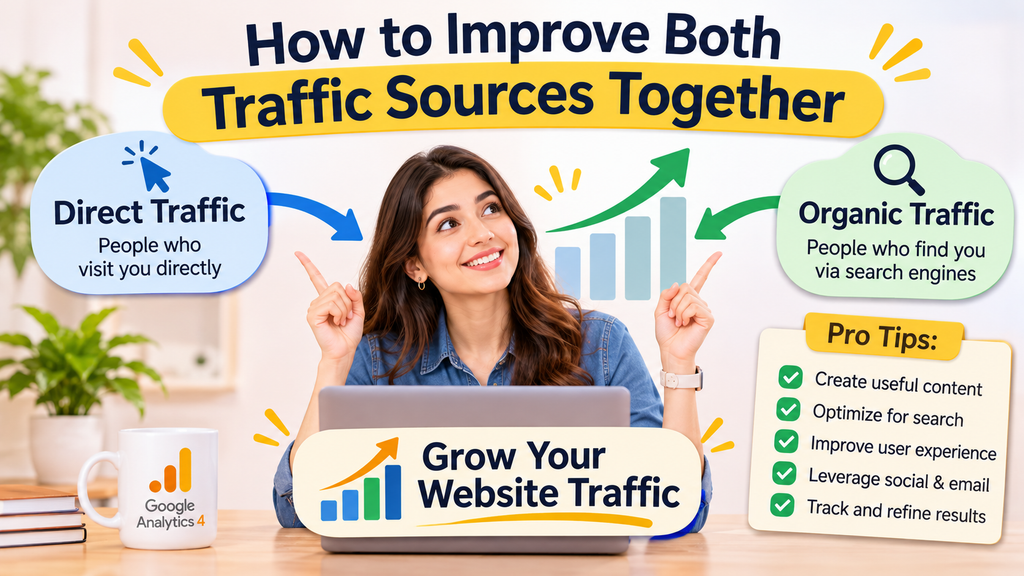
A strong website strategy should not depend entirely on one acquisition channel.
Instead, you should create a system in which different marketing activities support one another.
The relationship between direct vs organic traffic becomes particularly interesting when you look at the complete customer journey. A successful direct vs organic traffic strategy focuses on attracting new visitors while building long-term audience relationships.
A visitor might discover your brand through Google, subscribe to your newsletter, and return to your website directly several days later.
Another person might learn about your business through a recommendation and then search for your brand on Google.
Different channels can contribute to the same customer’s journey.
Here is how you can build a balanced strategy.
Combine SEO With Brand Awareness
Publish search-friendly content while also building recognition through social media, newsletters, and relevant industry communities.
This gives people multiple ways to discover your business.
Create Helpful Landing Pages
Every important marketing campaign should lead visitors to a relevant page.
For example, if you promote a website traffic service, send visitors to a page that explains the service rather than directing everyone to a generic homepage.
Track Every Campaign
Use consistent UTM naming conventions.
For example:
https://example.com/guide/?utm_source=newsletter&utm_medium=email&utm_campaign=monthly_guide
This makes it easier to identify campaign activity in analytics.
Measure Engagement and Conversions
Do not judge your marketing strategy by visitor numbers alone.
Measure whether visitors read your content, explore your services, submit inquiries, or make purchases.
Test and Improve
Experiment with different landing pages, content topics, headlines, and campaign audiences.
Record what changes and compare performance over a meaningful period.
This approach helps you understand which activities contribute to useful website outcomes.
How DSPTraffic Fits Into a Website Traffic Strategy
Once you understand the differences between traffic sources, the next question is how to bring more visitors to your website and evaluate the results.
This is where website traffic platforms can become relevant.
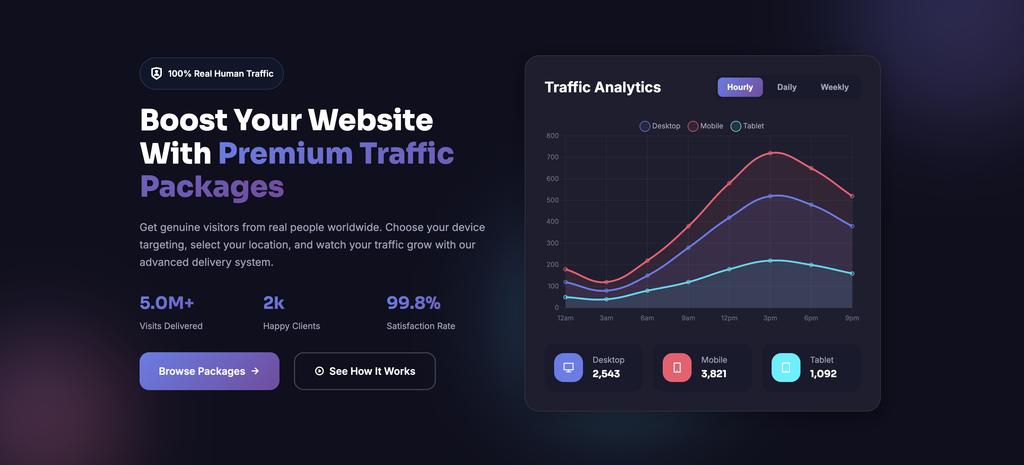
DSPTraffic is a website traffic service that offers traffic packages for website owners, marketers, bloggers, and businesses interested in increasing visits to their websites.
According to its website, DSPTraffic provides options that include device targeting, geographical targeting, and analytics integration.
The platform describes its service as delivering visitors through a network of websites, social media pages, and other online platforms.
You can learn more at DSPTraffic.
What Does DSPTraffic Offer?
Here are some of the features described on the DSPTraffic website.
1. Device Targeting
Different visitors use different devices.
Some browse through smartphones, while others prefer desktop computers or tablets.
DSPTraffic provides options to select mobile, desktop, or mixed-device traffic according to campaign requirements.
This can be useful when you want to examine how a landing page performs across different device experiences.
2. Geographical Targeting
Audience location can be important for businesses that serve specific markets.
For example, a company operating in the United States may want to focus its campaign on visitors from that region.
DSPTraffic describes geographical targeting options that allow customers to select countries and regions.
3. Traffic Packages
The platform offers different traffic packages and describes options for selecting visitor volumes and targeting preferences.
Website owners can review available packages and determine whether the offering fits their campaign objectives.
4. Analytics Integration
DSPTraffic describes analytics integration that allows website owners to monitor visits and examine website activity.
You should independently verify the actual source, medium, engagement, and quality of campaign visits in your own analytics property.
5. Website Promotion
Website traffic campaigns may be considered for specific promotional purposes, such as directing visitors to selected landing pages, increasing exposure, or observing how a page performs under additional visitor activity.
The value of a campaign depends on the relevance of its audience and the actions those visitors take.
Can DSPTraffic Replace Organic SEO?
No. A traffic service should not be treated as a replacement for an SEO strategy.
SEO is about making your website discoverable in unpaid search results.
A traffic campaign is a separate promotional activity that may send visitors to your website through other sources.
Even if a service describes its delivery as natural or organic-looking traffic, that does not automatically make the visits genuine organic search clicks.
For accurate reporting, traffic should be classified according to how visitors actually arrived.
Google’s organic search channel represents visits from unpaid search results. Traffic from other sources should not be relabelled as organic simply to improve an analytics report.
This distinction is especially important when comparing direct vs organic traffic and evaluating the effectiveness of different marketing activities. Understanding direct vs organic traffic is particularly important when evaluating promotional campaigns and their actual contribution to website growth.
How Can Website Owners Use DSPTraffic Practically?
Consider a small business that has recently launched a new landing page.
The business wants to examine whether the page is easy to navigate, whether the mobile layout works correctly, and whether its analytics tracking is functioning.
It could consider a carefully scoped traffic campaign as one part of its testing process.
A practical process would look like this:
- Identify the specific page you want to evaluate.
- Define the purpose of the campaign.
- Review the audience and geographical targeting options.
- Select the relevant device preferences.
- Confirm that analytics and conversion tracking are configured.
- Review the actual traffic sources after the campaign begins.
- Examine engagement, conversions, and other meaningful results.
- Use the findings to improve the landing page.
Do not assume that more visits automatically mean more customers.
A campaign that produces thousands of visits but no meaningful engagement may not be useful for your business.
Similarly, never treat purchased visits as proof of improved organic search rankings.
Who May Find DSPTraffic Relevant?
Depending on their objectives and the suitability of the audience, the platform may be worth exploring for:
- Website owners looking to evaluate promotional traffic options.
- Bloggers interested in increasing exposure to selected content.
- Digital marketers managing website promotion campaigns.
- Affiliate marketers examining landing-page activity.
- Businesses testing website experiences.
- Agencies comparing traffic delivery options.
Before choosing any traffic provider, review its delivery methods, targeting details, terms, reporting capabilities, and refund conditions.
You should also consider whether the traffic is appropriate for your advertising, analytics, and third-party platform requirements.
To explore the available features and packages, visit DSPTraffic’s official website.
The goal is to choose traffic sources that support your actual marketing objectives rather than simply increasing a number in your dashboard. Ultimately, direct vs organic traffic should be measured using accurate attribution, audience relevance, and meaningful conversion data.
Common Mistakes to Avoid When Comparing Traffic Sources
Even experienced website owners sometimes misunderstand their analytics data.
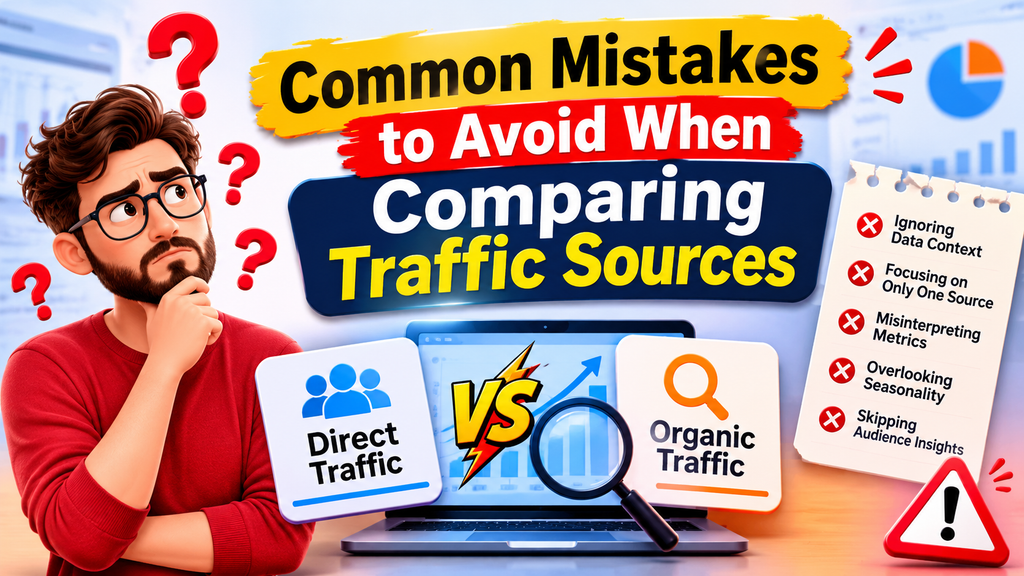
Here are some common mistakes worth avoiding.
Mistake 1: Assuming All Direct Traffic Is From Returning Visitors
Direct traffic can include visits with missing source information.
Check your attribution setup before using direct sessions as a measure of customer loyalty.
Mistake 2: Treating All Website Visits as Organic Traffic
A visit does not become organic simply because it looks natural.
Organic search traffic specifically comes from unpaid search results.
Mistake 3: Ignoring Conversion Data
A high number of visits is not necessarily a sign of success.
Compare the traffic with meaningful outcomes such as leads, purchases, registrations, and inquiries.
Mistake 4: Forgetting Campaign Tracking
Always tag campaign URLs where appropriate.
Without consistent tracking, you may struggle to understand whether visitors came from email, social media, paid campaigns, or another source.
Mistake 5: Expecting Immediate SEO Results
SEO is not an instant process.
Search engines need to discover and understand your pages, and ranking changes can take time.
Publishing an article today does not guarantee that it will receive significant organic traffic tomorrow.
Mistake 6: Using Keyword Stuffing
Repeating a keyword excessively can make content difficult to read.
Use your target keyword naturally in the title, introduction, relevant headings, and body.
Related terms and clear explanations can help readers understand the subject without unnecessary repetition.
Mistake 7: Ignoring Traffic Quality
A visitor count tells you how many visits occurred, not whether those visits were valuable.
Look at engagement, relevant audience characteristics, and conversions before deciding whether a traffic source is worth continuing.
A Practical Checklist for Evaluating Your Website Traffic
If you are unsure where to begin, use this checklist to review your website’s acquisition strategy.
- GA4 is installed and collecting data correctly.
- The correct website property is selected.
- Direct and Organic Search channels are being monitored.
- Marketing links use consistent UTM parameters.
- Important landing pages have clear goals.
- Google Search Console is connected or regularly reviewed.
- Search queries and landing-page performance are monitored.
- Engagement and key events are evaluated.
- Unusual direct traffic increases are investigated.
- Campaign traffic is evaluated separately from organic search.
- Website content is updated when necessary.
- Traffic spending is reviewed against measurable outcomes.
Following this checklist can help you make more informed decisions instead of relying on assumptions.
Conclusion
So, which is better: direct traffic or organic traffic?
The answer depends on your website’s goals, audience, and current stage of growth.
Direct traffic can indicate brand familiarity, repeat visits, and an existing relationship with your audience. Organic traffic can help new visitors discover your website when they search for relevant information, products, or services.
Understanding direct vs organic traffic is not simply about deciding which channel has the highest visitor count. A proper direct vs organic traffic analysis is about understanding how people discover your website, why they visit, and what they do after arriving.
If your goal is to attract new audiences, focus on useful content, keyword research, technical improvements, and a consistent SEO strategy. If you want to encourage repeat visits, invest in brand recognition, helpful resources, email communication, and a better user experience.
You can also explore additional website promotion options when they fit your objectives. Platforms such as DSPTraffic offer traffic packages with device and geographical targeting options that website owners may wish to evaluate as part of their broader promotional strategy.
However, keep your reporting accurate, measure real engagement, and never confuse purchased or promotional visits with unpaid search traffic.
Ultimately, sustainable website growth comes from understanding your audience and choosing the right combination of marketing activities. When you know where your visitors come from and what they need, you can make smarter decisions and build a website that delivers genuine value.
FAQs
1. What is the main difference between direct and organic traffic?
The main difference is how visitors reach your website. Direct traffic is generally recorded when analytics cannot identify a recognized referral source, often because someone enters your website address or uses a bookmark. Organic traffic comes from clicks on unpaid search engine results. Both sources can bring valuable visitors, but they represent different acquisition channels.
2. Is direct traffic better than organic traffic?
Neither is universally better. Direct traffic can be valuable for businesses with returning customers and strong brand recognition. Organic traffic is useful for attracting people searching for relevant information or services. The better source depends on your objectives, audience relevance, engagement, and conversions.
3. Does organic traffic help improve Google rankings?
Organic traffic itself should not be treated as a guaranteed ranking factor. Google uses many signals and systems to determine which pages appear in search results. Improving content quality, relevance, accessibility, and overall website experience can support search visibility, but simply increasing visitor numbers does not guarantee better rankings.
4. Why is my direct traffic increasing suddenly?
A sudden increase can happen because of greater brand awareness, email promotions, offline campaigns, untagged marketing links, referral-data problems, or changes in analytics configuration. Investigate the timing, landing pages, campaign activity, and tracking setup before concluding that your brand awareness has increased.
5. How can I increase organic traffic to my website?
Start with keyword research and identify topics your audience genuinely wants to understand. Publish useful content, improve page titles and headings, strengthen internal linking, fix technical SEO problems, and ensure your website works well on mobile devices. Monitor search impressions, clicks, and landing-page performance in Google Search Console.
6. How can I increase direct traffic?
Build a recognizable brand, create content that people want to revisit, develop an email audience, and provide a useful website experience. Make your website easy to remember and encourage repeat engagement. Remember that email and other campaign visits should be tracked correctly rather than automatically counted as direct traffic.
7. How do I check direct vs organic traffic in GA4?
Open Google Analytics 4, navigate to Reports, select Acquisition, and open Traffic acquisition. Find the Session default channel group dimension and compare Direct with Organic Search. Review sessions, engaged sessions, engagement rate, key events, and revenue where available to understand the performance of each channel.
8. Can purchased website traffic improve organic search rankings?
There is no guarantee that purchased website visits will improve organic search rankings. A promotional visit is not automatically an organic search click, and traffic volume alone does not establish improved SEO performance. Focus on genuine search visibility, useful content, relevant backlinks, and a positive user experience when developing an SEO strategy.
9. What is the difference between organic traffic and paid traffic?
Organic traffic comes from unpaid search engine results. Paid traffic comes from paid promotional activities, such as search advertisements or other advertising campaigns. Both can bring visitors to a website, but they have different acquisition methods, costs, and measurement requirements.
10. Can I use DSPTraffic to increase website visitors?
DSPTraffic describes itself as a website traffic service offering traffic packages, device targeting, geographical targeting, and analytics integration. Website owners can explore its options to determine whether they suit their promotional goals. Before using any traffic service, understand how visits are delivered, verify their actual acquisition sources, and measure engagement and conversions rather than focusing only on visitor numbers.